CELEBRITY FOOD & DIET
Reporting note: This article is based on an EatingWell interview syndicated by MSN. Epsilon Community Hub did not interview Rachael Ray. We reviewed the original report, Ray’s published recipe archive and FDA food-safety guidance to add context for home cooks.
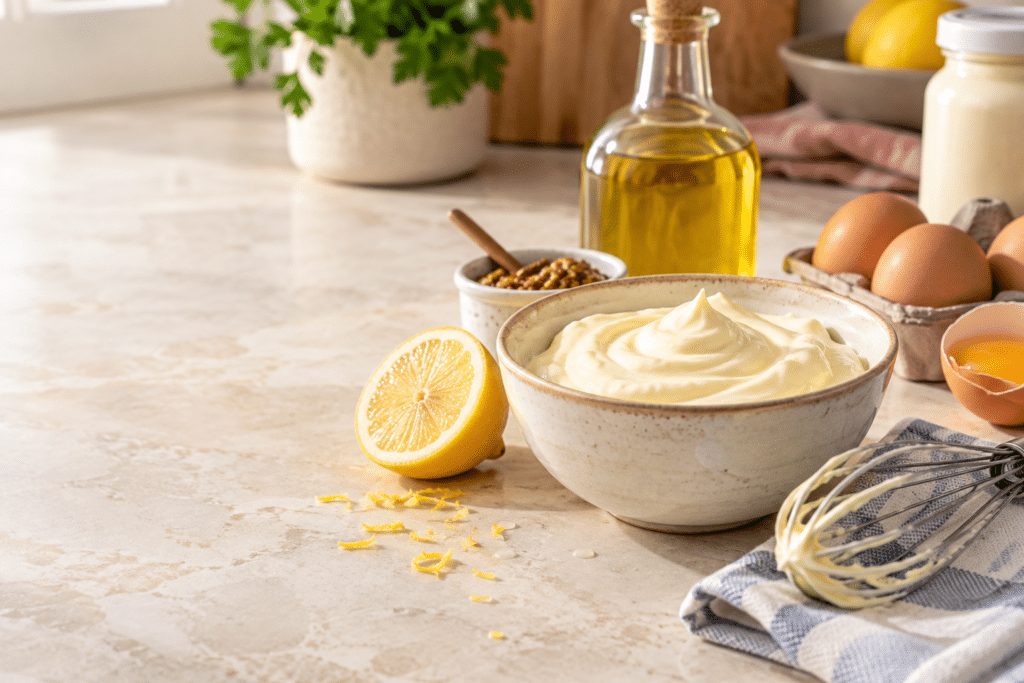
Rachael Ray has built her career around approachable cooking, but there is one familiar supermarket ingredient she prefers to keep out of her recipes: store-bought, shelf-stable mayonnaise.
In an interview originally conducted by EatingWell and distributed through outlets including MSN, Ray explained that she dislikes commercial mayonnaise. Her objection was not to mayonnaise itself: she said she enjoys mayonnaise or aioli when she makes it herself or knows who prepared it.
What ingredient does Rachael Ray avoid?
The ingredient is store-bought mayonnaise, particularly the shelf-stable version sold in jars. Ray’s comments reflect a personal preference about freshness and preparation rather than a general food-safety warning or a rule other cooks must follow.
That distinction matters. A headline can make the story sound as if Ray refuses all mayonnaise, but her full position is more specific. She is comfortable with homemade mayonnaise and aioli. What she does not like is the idea and character of mayonnaise designed to remain stable on a store shelf.
Ray’s preference is about how mayonnaise is made—not a claim that commercial mayonnaise is unsafe.
Why homemade mayonnaise feels different
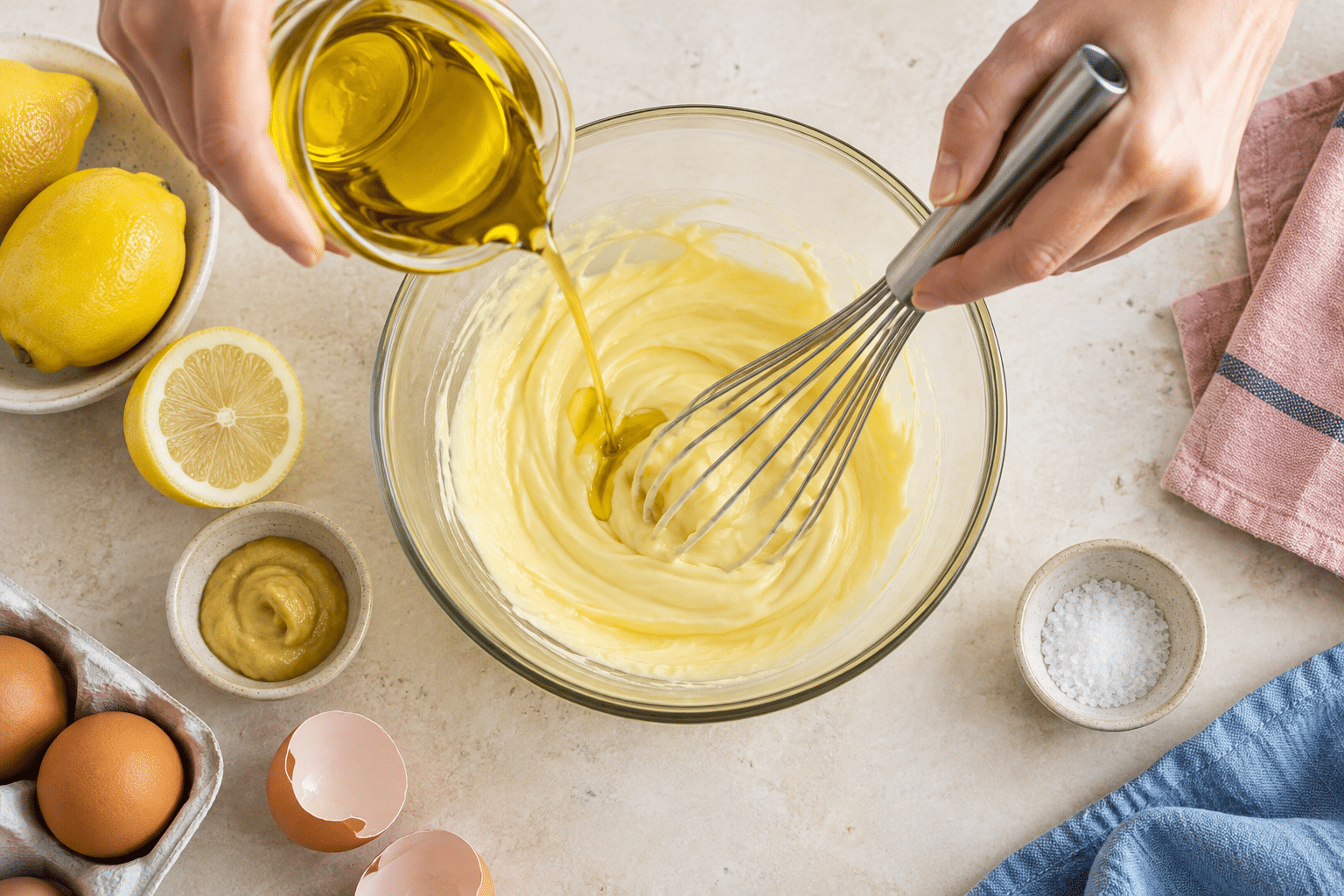
Mayonnaise is an emulsion: oil is dispersed into an egg-based mixture, usually with an acidic ingredient such as lemon juice or vinegar. Freshly made mayonnaise can taste brighter and richer than many packaged versions because the cook controls the oil, acidity, seasoning and texture.
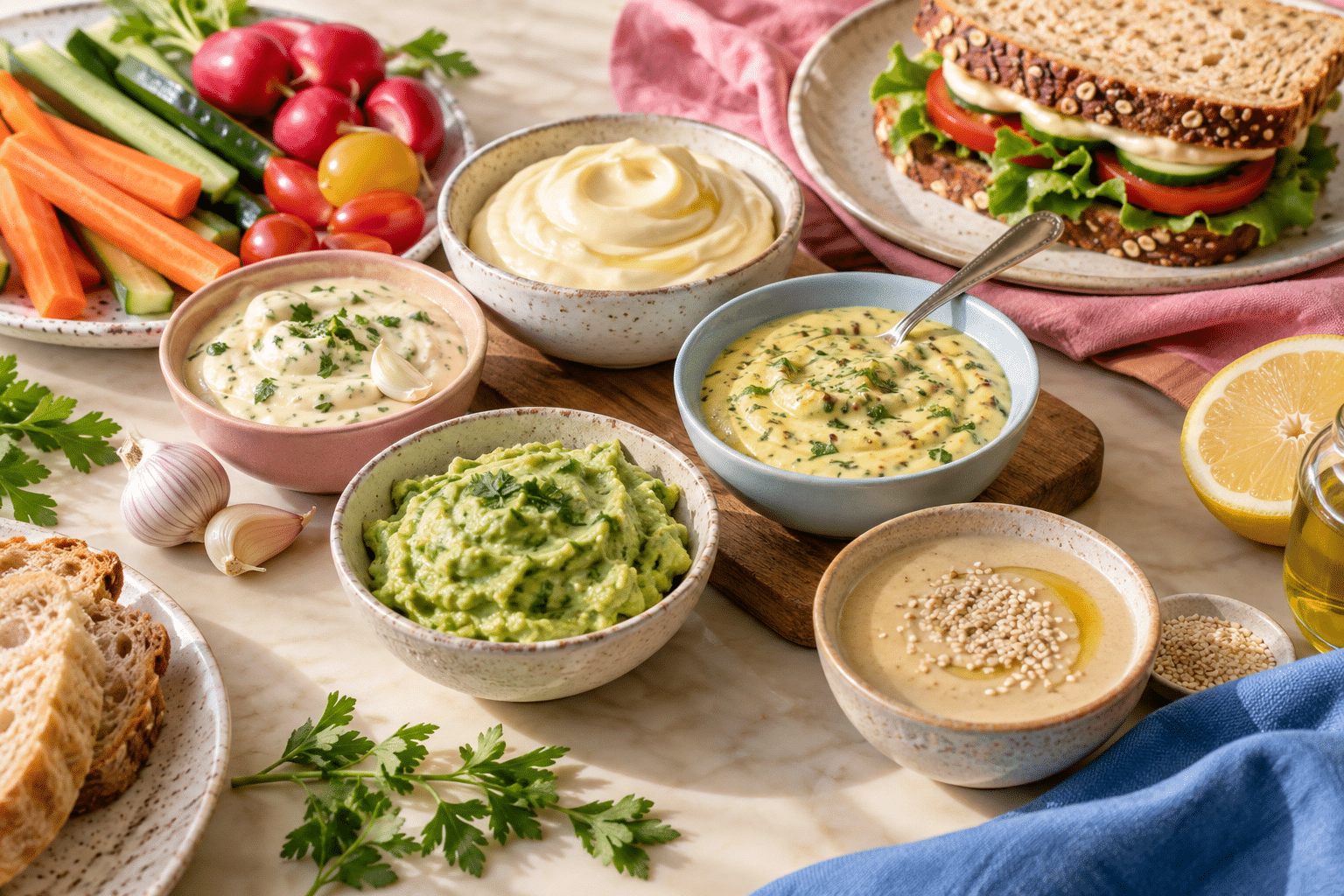
Homemade mayonnaise also gives a cook room to customize. Garlic turns it toward aioli; herbs add freshness; mustard contributes sharpness; and spices can transform it into a sandwich spread or dipping sauce. This control fits Ray’s broader public cooking style, which often encourages home cooks to adjust ingredients and build flavor themselves.
Convenience, however, is the advantage of commercial mayonnaise. It requires no blending, is consistent from jar to jar and lasts considerably longer when handled according to its label. For many households, those qualities make it the practical option.
Does Rachael Ray ever use mayonnaise?
Her published recipe history shows why the wording needs care. Ray’s official website includes recipes that mention mayonnaise, including a tartar sauce recipe that offers homemade mayo or a store-bought alternative. This does not necessarily contradict her current personal preference. Recipes can be adapted for readers, republished from earlier projects or written to provide a convenient substitution.
The most accurate conclusion is therefore not that mayonnaise is “banned” from every recipe carrying her name. It is that Ray says she personally dislikes and avoids shelf-stable store-bought mayonnaise while welcoming freshly made versions.
A useful food-safety distinction
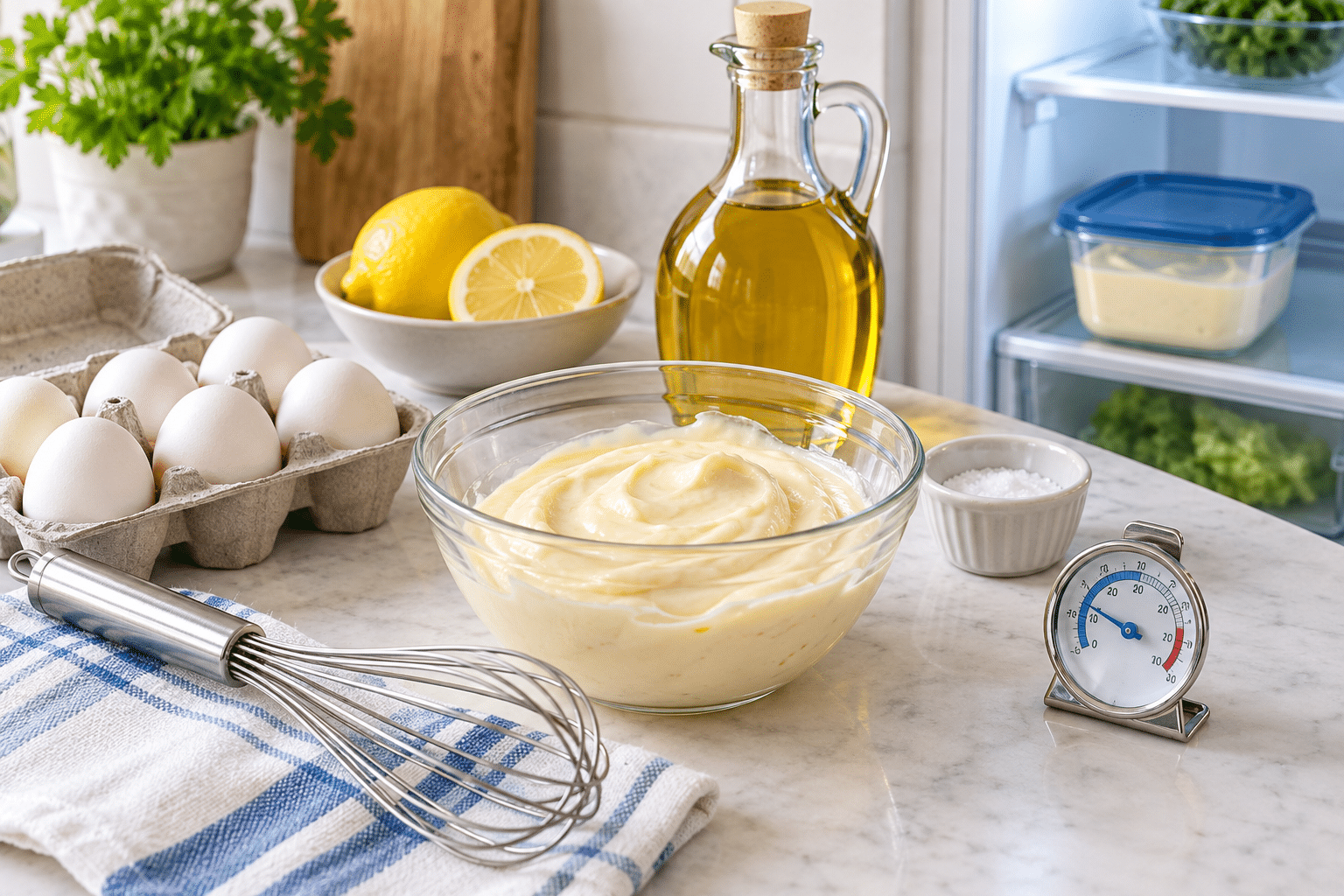
Fresh does not automatically mean safer. The U.S. Food and Drug Administration notes that commercially prepared mayonnaise commonly uses pasteurized eggs. Homemade mayonnaise may contain raw or undercooked egg, which can introduce a Salmonella risk if ordinary unpasteurized eggs are used.
For preparations served without cooking, the FDA recommends pasteurized shell eggs or pasteurized egg products. This is especially important for pregnant people, young children, older adults and anyone with a weakened immune system.
- Use eggs clearly labeled pasteurized for uncooked mayonnaise.
- Work with clean hands, utensils and surfaces.
- Refrigerate homemade mayonnaise promptly.
- Make small quantities and follow a tested recipe.
- Discard it when storage time or handling is uncertain.
Commercial mayonnaise remains a valid choice for cooks who value convenience and pasteurized ingredients. Ray’s preference should be read as culinary taste, not universal health guidance.
What home cooks can take from her preference
The useful lesson is not that everyone must reject a jar of mayonnaise. It is that even an everyday condiment can change when it is prepared fresh. Curious cooks can compare a small homemade batch with their favorite commercial product and decide which flavor, texture, cost and effort work best for them.
Those who dislike mayonnaise altogether can build creamy or tangy dressings with alternatives such as plain yogurt, mashed avocado, tahini, mustard, olive oil and citrus. The best substitute depends on the dish, and each option brings its own flavor and nutritional profile.
Why commercial mayonnaise lasts longer
Packaged mayonnaise is designed for consistency. Manufacturers control acidity, ingredient proportions and processing so every jar has a predictable texture and flavor. Commercial products generally use pasteurized egg ingredients, and their acidic environment helps limit the growth of many harmful bacteria. An unopened jar can therefore remain shelf-stable until the date and conditions specified by its manufacturer. After opening, it should be refrigerated and handled with clean utensils according to the label.
That durability does not make the product inferior; it serves a different purpose. A commercial jar is convenient for sandwiches, salads and quick sauces, while homemade mayonnaise offers flexibility and a fresher flavor. Ray’s objection is best understood as a cook’s preference for the second experience, not evidence that the first choice is wrong.
How to compare homemade and store-bought mayonnaise
A side-by-side tasting is the fairest way to understand the difference. Put a spoonful of each version on separate plates and try them first without other ingredients. Notice the aroma, acidity, salt level, richness and texture. Then use both in the same simple preparation—such as a tomato sandwich, potato salad or vegetable dip—because a condiment that tastes intense alone may become balanced once it joins a complete dish.
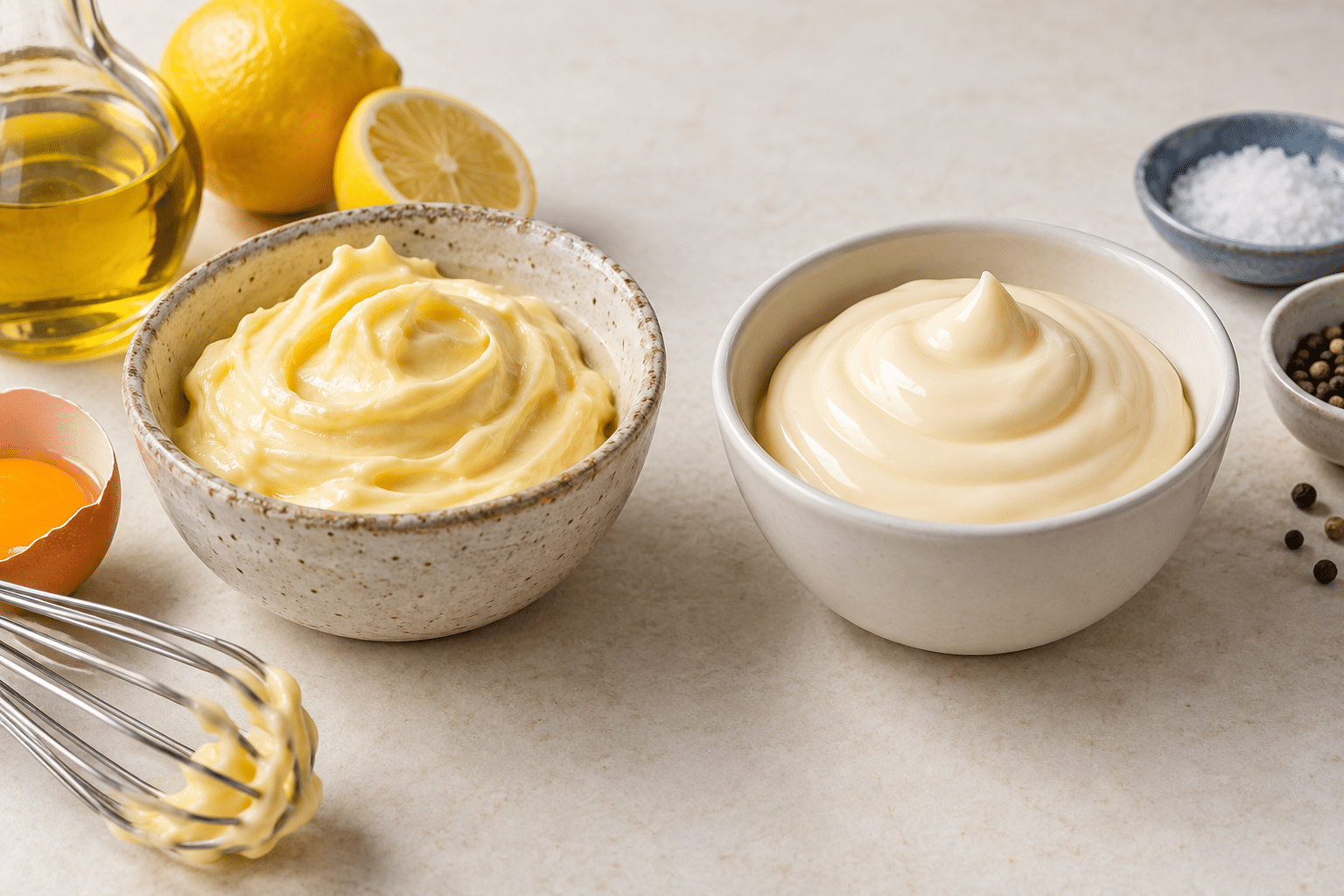
Homemade mayonnaise can be adjusted immediately. More lemon makes it brighter, mustard gives it bite, and a neutral oil keeps the flavor mild. Store-bought mayonnaise offers dependable thickness and requires no preparation. Cost also depends on the oil and eggs selected, so homemade is not automatically cheaper. The best result is the one that fits the recipe, the available time and the people eating it.
Practical substitutes when mayonnaise is not the right fit
No single ingredient replaces mayonnaise in every recipe because mayonnaise contributes moisture, richness, acidity and binding power at the same time. Plain Greek yogurt works well in creamy salads and dips but tastes tangier and can release water. Mashed avocado adds richness to sandwiches, although its green color and distinct flavor change the dish. Tahini becomes pourable when whisked with lemon and water, making it useful for bowls and roasted vegetables.
For vinaigrettes, mustard can help oil and vinegar stay blended while adding sharpness. Hummus gives wraps and sandwiches body, and blended white beans create a mild, fiber-rich spread. In baked recipes, replacing mayonnaise requires more care because the original ingredient may be supplying both fat and egg. Follow a tested substitution rather than exchanging equal quantities without considering the function of the ingredient.
Making homemade mayonnaise with greater confidence
Successful mayonnaise depends on forming a stable emulsion. Start with a tested recipe and ingredients at the temperature it recommends. Combine the egg component with acid and seasoning, then introduce the oil slowly while whisking or blending continuously. Adding oil too quickly can overwhelm the mixture and cause it to separate. If that happens, many recipes can be rescued by beginning with a fresh emulsifying base and gradually whisking the broken mixture into it.
Food safety deserves equal attention. Choose pasteurized eggs or pasteurized egg products for mayonnaise that will not be cooked, keep equipment clean, refrigerate the finished sauce promptly and avoid leaving it at room temperature for extended periods. Anyone serving people at higher risk of foodborne illness should be especially careful. When pasteurized eggs are unavailable or storage is uncertain, a commercially prepared product is the more practical choice.
What Ray’s preference says about personal cooking rules
Strong ingredient opinions are common among cooks because familiarity shapes taste. One person avoids bottled dressing, another insists on freshly grated cheese, and someone else values the convenience of every prepared ingredient. These choices can reveal a cooking philosophy, but they are not universal standards. Ray’s mayonnaise preference is interesting precisely because it turns an ordinary pantry staple into a discussion about freshness, control and convenience.
For readers, the constructive response is curiosity rather than imitation. Try the homemade version, compare it with a jar you already enjoy and decide which works for your household. The goal is not to adopt a celebrity’s rule automatically; it is to understand what changes when an ingredient is made differently and to cook with more intention.
The Epsilon takeaway
Rachael Ray’s refusal to use store-bought mayonnaise is memorable because it is both specific and relatable. Many experienced cooks have one convenience ingredient they would rather make themselves. Her choice also opens a more useful conversation about freshness, practicality and safe preparation.
For readers, the balanced answer is simple: Ray prefers homemade mayonnaise, but a properly stored commercial jar is still a practical option. If you make mayonnaise at home, use pasteurized eggs and careful refrigeration.
Explore more: Visit Celebrity Food & Diet, browse the Food & Nutrition hub, or use the Recipe Nutrition Analyzer.
Sources
- EatingWell interview with Rachael Ray, accessed September 12, 2026.
- MSN syndicated interview report, accessed September 12, 2026.
- U.S. Food and Drug Administration: What You Need to Know About Egg Safety, accessed September 12, 2026.
- Rachael Ray official tartar sauce recipe, accessed September 12, 2026.