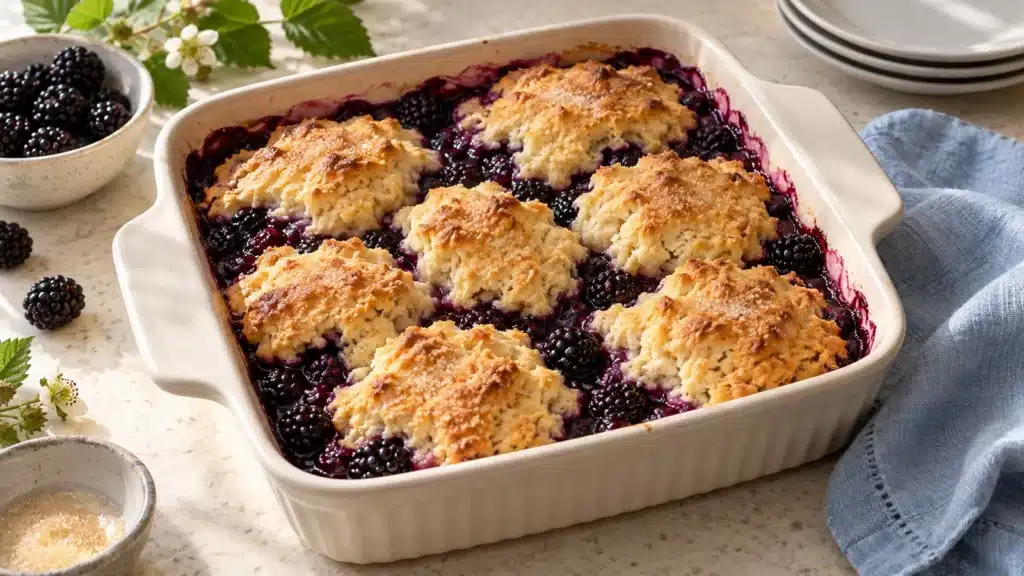
Homemade Kentucky blackberry cobbler brings juicy berries and a golden, buttery topping together in a dessert made for sharing. This Kentucky-inspired version uses a lightly sweetened blackberry filling and tender drop biscuits, so there is no pastry to roll and no complicated shaping. Serve it warm enough for the fruit to feel comforting, but give the filling time to settle before adding a scoop of vanilla ice cream.
The main challenge is not making the dessert look fancy. It is balancing the sweetness of your berries, thickening their juices without turning the filling gummy, and baking the topping through before its surface gets too dark. This guide walks through those decisions, including fresh and frozen fruit, pan selection, substitutions, storage and common problems.
Recipe-development note: This is an editorial recipe draft prepared for Epsilon Community Hub. The ingredient formula, yield and baking-time estimates require a kitchen test before publication. It is not presented as a tested family recipe or as the only traditional Kentucky method.
Jump to the blackberry cobbler recipe · Jump to troubleshooting · Jump to frequently asked questions
What is Kentucky blackberry cobbler?
Blackberry cobbler is a baked fruit dessert with a topping that may be biscuit dough, pastry or cake-like batter. Kentucky families, like families elsewhere in the South and Appalachia, have different versions. Some recipes place pastry around or above the filling; others use a simpler batter or spooned dough. A regional name does not identify one universal crust, ingredient ratio or assembly method.
For an example of that variety, Kentucky Monthly shares Crystal Wilkinson’s grandmother’s blackberry cobbler, which highlights the importance of its crust. That family recipe provides regional context; the ingredient formula below is not a reproduction of it. Here, “Kentucky-inspired” describes the direction of the dessert without borrowing someone else’s family story.
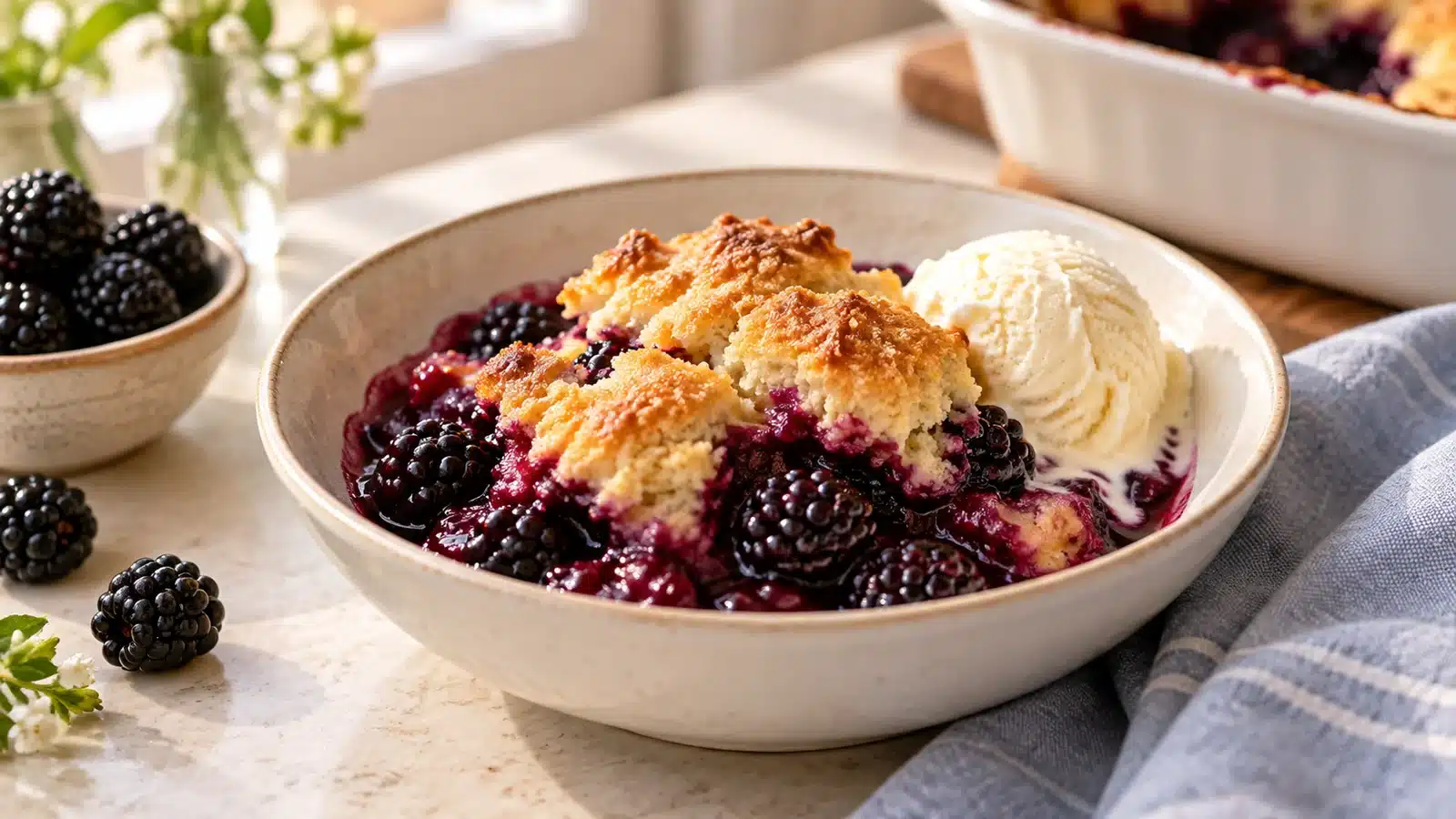
This Kentucky blackberry cobbler recipe has a fruit-forward filling beneath separate mounds of biscuit dough. The gaps between the biscuits let steam escape and allow you to see whether the fruit is bubbling. The result should be spoonable rather than sliceable like a neatly set pie, with distinct berries and enough sauce to accompany each portion.
EPSILON RECIPE CARD · DESSERT
Homemade Kentucky blackberry cobbler recipe
Proposed yield: 8 portions. Preparation: approximately 20 minutes. Baking: approximately 40–50 minutes. Resting: at least 20 minutes. Total: approximately 80–90 minutes. These are development estimates, not measured results from a completed test.
Oven: 375°F (190°C), conventional setting. Pan: a 9-inch square baking dish, approximately 2 inches deep. Put the dish on a rimmed baking sheet to catch any escaping juices. Check that a glass or ceramic dish is suitable for the oven temperature and follow its manufacturer’s instructions.
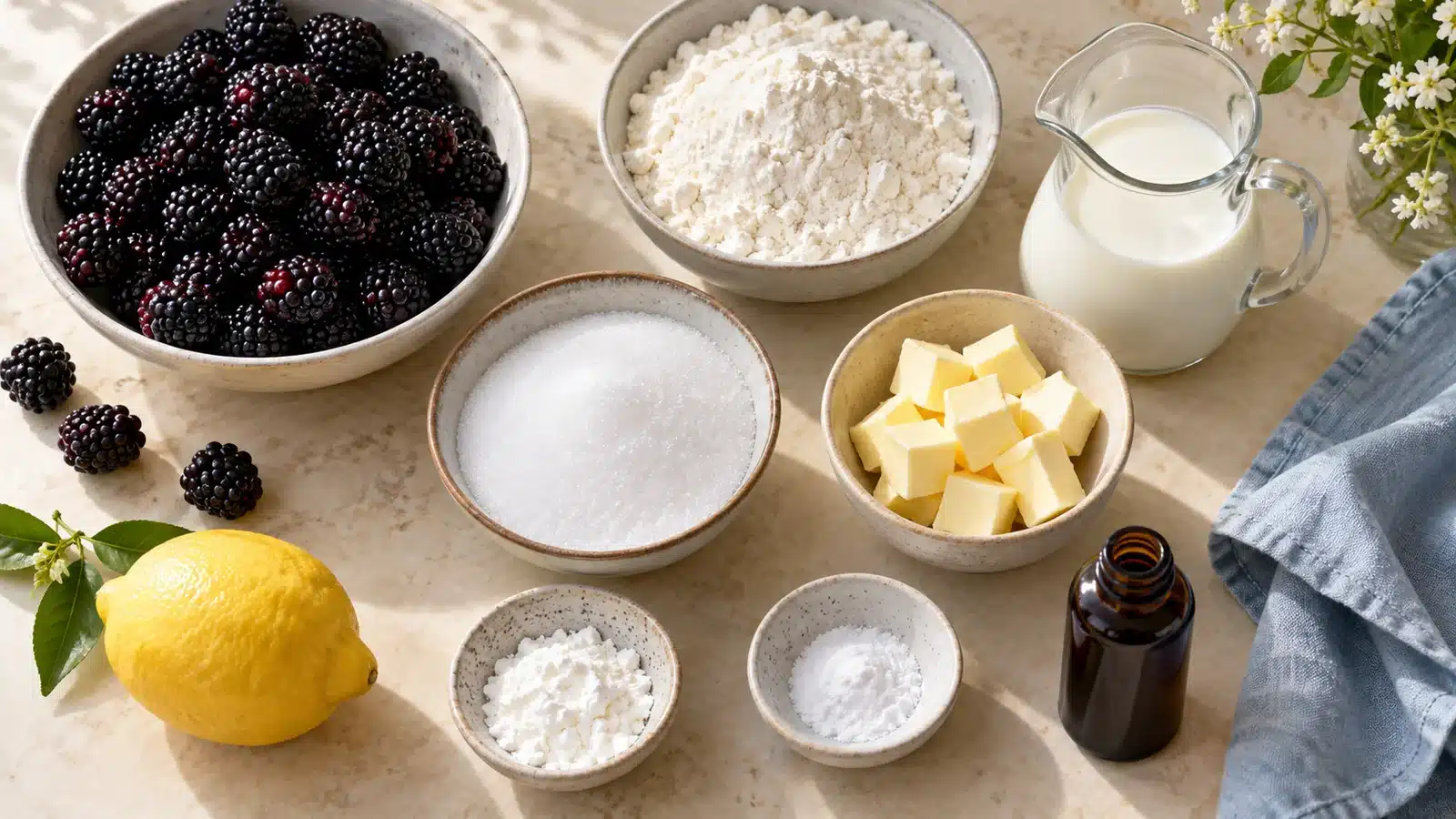
Blackberry filling ingredients
- 4 cups blackberries, approximately 600 g, fresh or frozen without added sugar
- ¾ cup granulated sugar, approximately 150 g
- 2 tablespoons cornstarch, approximately 16 g
- 1 tablespoon lemon juice, approximately 15 ml
- 1 teaspoon finely grated lemon zest, optional
- 1 teaspoon vanilla extract, approximately 5 ml
- ⅛ teaspoon fine salt
Biscuit topping ingredients
- 1½ cups all-purpose flour, approximately 180 g
- 2 tablespoons granulated sugar, approximately 25 g
- 2 teaspoons baking powder
- ¼ teaspoon fine salt
- 6 tablespoons cold unsalted butter, approximately 85 g, cut into small cubes
- ¾ cup cold whole milk, approximately 180 ml, with the last tablespoon reserved initially
- 1 tablespoon milk for brushing, optional
- 1 tablespoon coarse or granulated sugar for sprinkling, optional
Use gram weights for flour, sugar and butter when possible. Cup measurements are approximate and can vary with the way ingredients are packed. Blackberries vary in size and moisture, so do not compress them into the measuring cup. The fruit weight is a useful starting point for consistent testing.
Method
- Prepare the oven and pan. Heat the oven to 375°F (190°C) with a rack near the middle. Lightly grease the baking dish. Place it on a rimmed baking sheet. Keep the topping butter and milk refrigerated until needed.
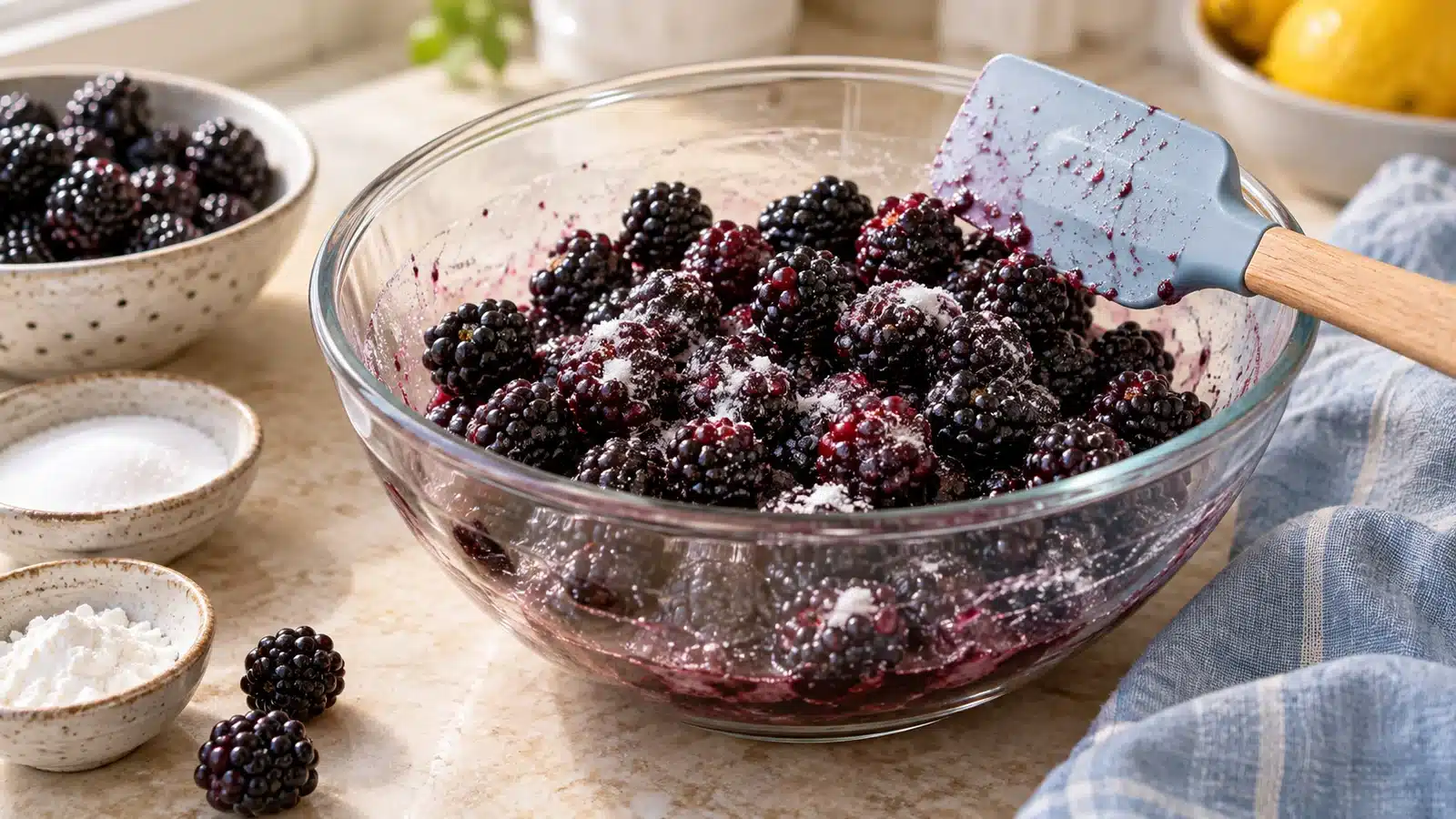
- Mix the filling. Whisk the sugar, cornstarch and salt in a large bowl so the starch is dispersed. Add the blackberries, lemon juice, optional zest and vanilla. Fold gently with a flexible spatula until coated. Transfer to the dish, including the liquid from the bowl.
- Mix the dry topping ingredients. In a second bowl, whisk the flour, sugar, baking powder and salt. Add the cold butter. Cut it into the flour with a pastry blender or rub it in quickly with your fingertips, leaving a mixture of small flakes and pea-sized pieces.
- Add the milk. Pour in most of the cold milk and stir gently until a soft, shaggy dough forms. Add the reserved tablespoon only if dry flour remains. The dough should be scoopable, not pourable. Stop mixing when the dry patches disappear.
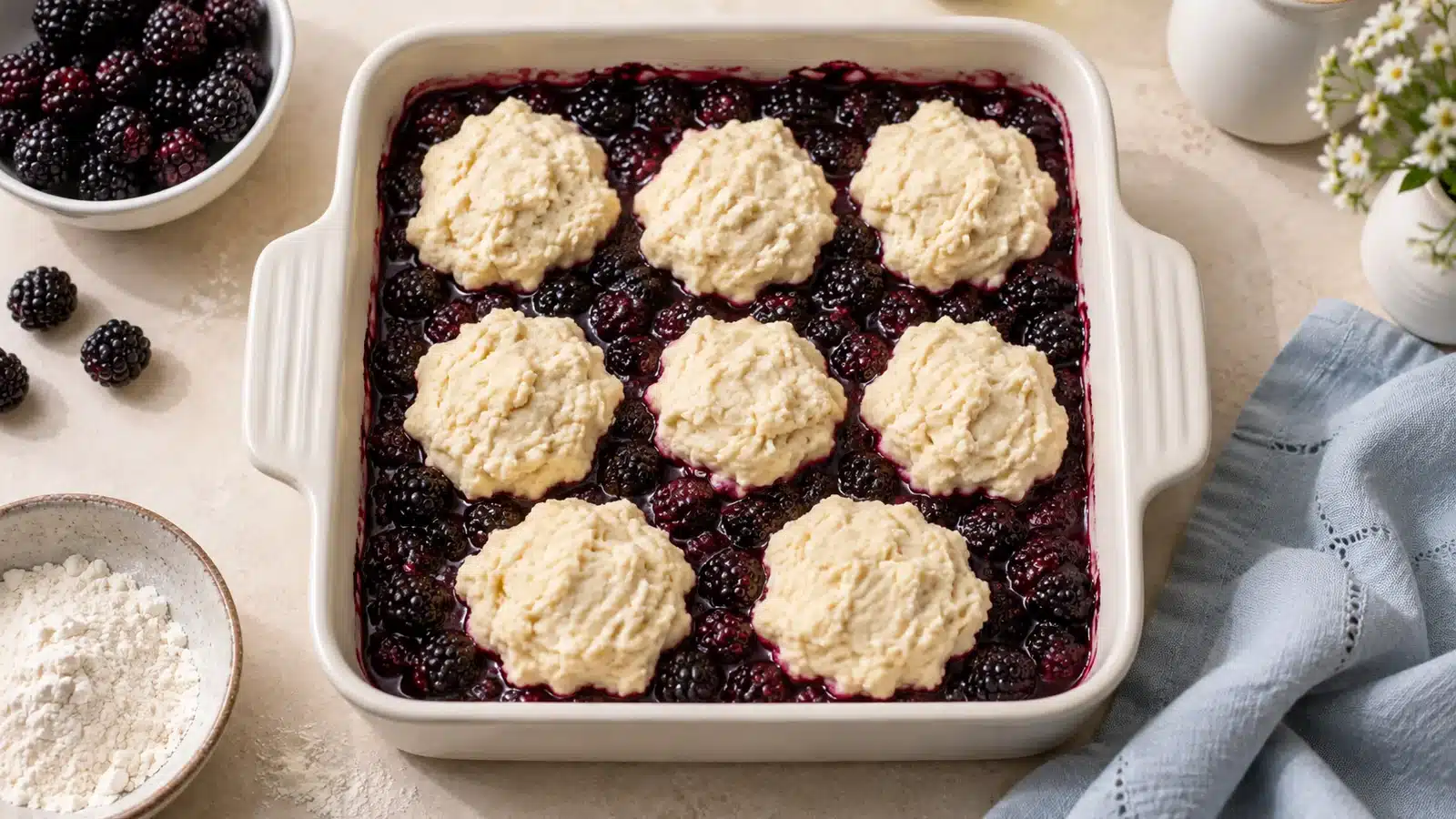
- Top the berries. Spoon the dough into approximately eight mounds over the fruit. Leave small gaps between them rather than sealing the entire surface. If desired, brush lightly with milk and sprinkle with sugar.
- Bake and inspect. Bake for approximately 40–50 minutes. Look for a golden topping, fruit bubbling in several central gaps and no raw dough beneath the center biscuit. The time may be longer with frozen berries. If the surface browns early, cover loosely with foil and continue baking.
- Rest before serving. Let the dish stand for at least 20 minutes on a heat-safe surface. Serve with a large spoon, taking both fruit and topping. The filling will be softer while hot and thicken further as it cools.
Important testing checkpoint: Confirm the center biscuit is cooked, the berry filling reaches a full bubbling stage, the pan does not overflow and the proposed eight servings are realistic. Record the actual timing with fresh berries before testing the frozen-fruit variation. Do not publish nutrition numbers or a recipe rating without a defensible calculation or real reader reviews.
Estimated nutrition
Approximately 300 calories per serving, based on one-eighth of the recipe. This ingredient-based estimate uses the listed quantities, fresh blackberries and the full 180 ml of whole milk. It excludes optional lemon zest, brushing milk, sprinkled sugar, ice cream and extra pan grease. Values vary with brands, substitutions and portion size; this is not laboratory analysis. Reference values are drawn from USDA FoodData Central data, with approximate values for small ingredients.
Why each ingredient matters
Blackberries provide flavor, texture and liquid
Choose fresh berries that are dark, plump and free of visible mold. A berry can be fully colored and still taste quite tart, so taste a sound, washed berry before deciding whether to adjust the sugar. Remove stems, leaves and damaged fruit. Rinse gently under cool running water and drain well instead of soaking the berries for a long time.
Large cultivated berries often hold their shape differently from smaller wild berries. Neither is automatically better, but the fruit can change the balance of juice, seeds and sweetness. Foraging also requires reliable plant identification and knowledge of the collection site. A recipe is not a plant-identification guide; use commercially supplied fruit if you are uncertain.
Sugar does more than sweeten
Sugar rounds out blackberry tartness and helps draw juice into the filling. The proposed three-quarter cup is a starting point, not a claim that every batch of fruit needs identical sweetness. If the berries are notably sweet, a modest reduction may be appropriate. If they are sharp, resist adding large amounts before baking; the flavor changes as the fruit cooks.
Reducing sugar substantially changes the recipe, including the amount of liquid released and the balance of flavor. Do not describe a lower-sugar variation as equivalent without testing it. You can also serve a less-sweet cobbler with ice cream, but remember that the accompaniment adds sweetness rather than fixing an under-seasoned filling inside the dish.
Cornstarch manages the berry juices
The cornstarch thickens liquid released during baking. Mixing it with sugar first helps prevent isolated clumps. The filling needs enough heat to activate the starch, which is one reason central bubbling matters. A browned topping over barely warm berries is not a finished cobbler, even when the edges look attractive.
More starch is not always the answer to a loose filling. Hot cobbler naturally looks thinner than cooled cobbler, and watery fruit or insufficient baking can create a different problem. Adding too much starch may produce a pasty or gelatinous sauce. Begin with the stated formula, let the dish rest, then evaluate its texture before changing the next batch.
Lemon, vanilla and salt keep the flavor balanced
Lemon juice brings brightness, while a little zest adds aroma without a large increase in liquid. Vanilla gives a gentle background flavor that should not overwhelm the fruit. Salt belongs in both the filling and topping because it prevents the dessert from tasting flat. These small additions are supporting ingredients; blackberry should remain the main flavor.
If you prefer a simpler berry taste, omit the optional zest. Avoid adding several spices at once just because they appear in other cobbler recipes. Cinnamon, nutmeg and ginger can each be pleasant, but they change the character of this dessert. Test a small addition separately and write it as an optional variation rather than silently changing the base recipe.
Cold butter and gentle mixing support tender biscuits
Small pieces of cold butter stay distributed through the dough and contribute to its texture as it bakes. Warm, fully blended butter behaves differently. Work efficiently, especially in a warm kitchen, and refrigerate the dry butter mixture briefly if it becomes greasy. The goal is a coarse mixture with visible butter pieces, not a perfectly smooth paste.
Once milk is added, stir only enough to bring the dough together. Vigorous mixing can make the topping tougher. A shaggy dough is normal for drop biscuits, and the surface does not need to be polished. If you are tempted to keep stirring because every mound looks different, stop; rustic shapes are part of this style.
Fresh versus frozen blackberries
Fresh berries are straightforward when they are in good condition. Drain them after rinsing and use the listed filling formula. They should not be dripping wet when mixed with the sugar and starch. Extra wash water is not blackberry juice and only adds unnecessary liquid to the pan.
For the proposed frozen variation, use plain, unsweetened berries directly from the freezer and break apart large clumps. Keep the topping ready so the fruit does not sit around thawing while you work. A colder filling will need longer to heat through, so the suggested baking window must be confirmed separately. Rely on bubbling and cooked dough, not the fresh-fruit timer alone.
Do not pour a frozen filling into a hot glass dish. Follow the dish manufacturer’s advice on temperature changes and use a room-temperature pan. If your berries have already thawed, retain their juices rather than draining them automatically; discarding juice also discards flavor. However, a thawed mixture is a separate testing condition, and its thickening needs may differ.
Frozen berries packed in syrup or added sugar are not interchangeable with unsweetened fruit. Read the label before starting. Their sweetness and liquid quantity need adjustments that this base formula does not establish. For a predictable first attempt, use the ingredient specified instead of trying to correct a heavily sweetened product by guesswork.
Choosing a baking dish and checking doneness
A pan affects the thickness of both filling and topping. A much wider dish spreads the fruit thinly and may dry it sooner. A narrow, deep dish can leave the center cooler while the edges cook. The proposed 9-inch square dish keeps the ingredient quantities in a defined format, making future testing and troubleshooting more meaningful.
Dark metal pans may brown differently from ceramic or glass. Oven accuracy also varies, so an inexpensive oven thermometer can help when baking results seem inconsistent. Keep the baking dish on the middle rack initially and avoid placing it extremely close to the upper heating element. A baking sheet underneath catches drips but does not make an undersized dish suitable.
Check the center, not just the outer edge. Look for bubbles emerging between the central biscuit mounds and inspect the underside of one central mound with a spoon. It should look cooked rather than wet and floury. The berries can stain the dough purple; color from juice is not the same thing as raw dough.
If the topping is golden but the center remains underdone, tent the dish loosely with foil and continue baking. Do not press the foil onto the biscuits. If the filling threatens to spill, keep the pan on its baking sheet and handle everything carefully with oven mitts. Hot fruit syrup can cause serious burns, so avoid moving an overflowing dish unnecessarily.
Kentucky blackberry cobbler troubleshooting
Why is my blackberry cobbler watery?
First ask whether you served it immediately from the oven. A hot filling needs time to settle, and the proposed 20-minute rest is the minimum rather than a guarantee of a firm set. This dessert is meant to have sauce. It should not be judged by the clean-slice standard of a chilled pie.
If it stays unusually watery after cooling, review the fruit quantity, added water and baking stage. Berries can release more juice than expected, and the filling may not have bubbled centrally. For the next test, change one variable at a time. Increasing starch, reducing fruit and extending baking simultaneously makes it difficult to identify what actually helped.
Why is the topping dense or tough?
Common possibilities include too much flour, excessive mixing, warm butter or old baking powder. Flour scooped firmly into a measuring cup can weigh considerably more than intended. Use the stated gram weight, check the leavening date and stop stirring as soon as the dough comes together. Do not knead drop-biscuit dough as though it were bread.
Also consider the mound size. One thick blanket of dough may cook differently from eight separate portions with steam gaps. Follow the assembly method before changing ingredients. If the center is dense because it is underbaked, gentler mixing alone will not solve the problem; the pan and baking time need attention too.
Why is the surface dark while the dough underneath is wet?
The top may be receiving stronger heat than the filling and lower dough. Move future bakes away from the upper element, verify the oven setting and tent the current cobbler with foil if needed. Frozen berries can widen this timing difference because the filling begins much colder. Keep baking until the center is cooked rather than stopping for appearance.
Why does the filling taste too tart or too sweet?
The fruit is the first variable to examine. A recipe cannot make unripe berries taste exactly like ripe ones. Taste a representative berry before baking and record any sugar adjustment. If the finished cobbler is too sweet, lemon can brighten the next batch, but adding large amounts of juice can also affect liquid balance. Make small changes deliberately.
Why are the biscuits dry?
Check the flour weight and whether the reserved milk was needed. The dough should be soft enough to scoop. A dry, crumbly mixture with visible loose flour needs a little more liquid, while a pourable batter has gone too far. Prolonged baking in a very wide dish can also dry the topping, so keep pan size consistent.
Substitutions and variations worth testing
Buttermilk: Buttermilk changes acidity, flavor and dough behavior. It is a reasonable development variation, but do not automatically add baking soda or replace the existing leavening without a test. Start by testing the liquid substitution in a separate batch and record the topping texture.
Salted butter: Salt levels vary by brand. If salted butter is your only option, reduce the added topping salt cautiously and taste the finished result before treating the substitution as finalized. The filling salt can remain separate. Unsalted butter offers better control when establishing the base formula.
Mixed berries: A portion of raspberries or blueberries can change the flavor pleasantly, but strawberries and very juicy fruit may alter thickening more substantially. Keep the total fruit weight consistent during development. Label a mixed-berry version honestly rather than using photographs or ingredients that contradict a blackberry-only recipe.
Gluten-free topping: A gluten-free flour blend does not guarantee the same liquid requirement or biscuit texture. Use a blend intended for baking and conduct a separate test. Cornstarch is naturally gluten-free, but people avoiding gluten still need to check packaging and cross-contact risks for all ingredients.
Dairy-free topping: Plant-based butter and unsweetened milk alternatives vary in water, fat and flavor. Choose products suitable for baking and test them together. This original formula contains milk and butter, so it should not be labeled dairy-free, vegan or allergy-safe before a genuinely suitable variation is developed.
How to serve blackberry cobbler
Serve the cobbler after its rest, when the filling is warm rather than fiercely bubbling. Use a wide spoon to collect fruit sauce and biscuit together. Vanilla ice cream is a familiar accompaniment, while lightly sweetened whipped cream offers a softer contrast. A plain portion also lets the blackberry flavor and buttery topping stand on their own.
For a gathering, put the dish on a stable, heat-safe surface and let guests know that the pan may still be hot. Offer the ice cream separately so it does not melt across the whole cobbler. Smaller initial portions let people choose seconds without leaving a large, partially eaten serving behind.
For more meal ideas around dessert, explore the Epsilon recipe collection. If you are reviewing the ingredients and proposed portion size, our Recipe Nutrition Analyzer can help with an estimate. Include toppings separately in any calculation; ice cream is not nutritionally invisible.
Make-ahead preparation, storage and reheating
For advance preparation, measure the dry topping ingredients and keep the butter cold separately. Wash and dry fresh berries shortly before assembly when practical. Mixing fruit with sugar far ahead releases liquid, so do not assume an overnight bowl of filling behaves exactly like a freshly mixed one. Assemble the dough close to baking for the most predictable development test.
Once baked, refrigerate leftovers promptly rather than leaving the dish on the counter overnight. Apply conservative cooked-leftover handling: refrigerate within two hours, or within one hour when the surrounding temperature is above 90°F (32°C). Use shallow covered containers when appropriate so portions cool efficiently. Do not leave a large pan out until it feels completely cold.
The USDA’s leftover guidance recommends a refrigerated window of three to four days. Keep the refrigerator at 40°F (4°C) or below. Quality may decline sooner, particularly as the biscuits absorb moisture. Discard leftovers when their storage history is uncertain instead of tasting them as a safety test.
Reheat only the portion you plan to serve. A microwave is convenient but softens the topping; a covered oven-safe dish can warm the fruit more gradually, with a brief uncovered finish if desired. Follow USDA guidance to heat leftovers to 165°F (74°C). Check the center and use an appropriate food thermometer rather than judging only the surface temperature.
Freezing can preserve leftovers, although the topping may lose some texture. Cool and refrigerate safely, then package individual portions in freezer-safe containers and label them with the date. Thaw in the refrigerator. For more context on labels and handling, see our guide to expiration dates and safe food storage.
Frequently asked questions
Is Kentucky blackberry cobbler made with pie crust or biscuits?
Both approaches exist, alongside batter-based versions. There is no single crust that represents every Kentucky household. This proposed recipe uses drop biscuits and identifies itself as Kentucky-inspired. If you are looking for a particular family’s pastry version, follow that recipe rather than assuming the methods can be interchanged without changing quantities and timing.
Can I use frozen blackberries without thawing?
The proposed variation uses unsweetened berries directly from frozen, but it requires a separate kitchen test. Expect a longer heating period and inspect the central filling and biscuit dough carefully. Avoid thermal shock with glass cookware. Frozen fruit in syrup is a different ingredient and is not covered by the unsweetened-fruit instructions.
Do I need to cook the filling on the stove first?
Not for the proposed method. The filling is mixed and baked beneath the biscuits. Precooking creates a warmer starting point and can change the fruit texture, starch behavior and baking time. It may be useful in another recipe, but adding that step here means you are testing a different process.
Can I replace cornstarch with flour?
Flour and cornstarch do not thicken identically, so a spoon-for-spoon swap is not a reliable instruction. Flour can give a cloudier filling and requires its own quantity and cooking evaluation. Use the specified starch for the first test. Develop an alternative separately if readers need one, rather than promising an unverified substitution.
Can I make this in a cast-iron skillet?
A skillet version needs a pan with suitable capacity and oven-safe construction, plus a separate timing test. Diameter alone does not establish depth or volume. A hot skillet can also change how quickly the filling and dough cook. Do not transfer the recipe to a shallow skillet and assume it will contain the juices safely.
Can I double the recipe?
Doubling is a development project, not simply an instruction to use a taller dish. Keeping approximately the same filling depth in a wider pan is more sensible than stacking twice the amount in the original dish, but the bake must still be verified. Two separate original-size pans are easier to compare, although oven crowding can affect timing.
Is the cobbler supposed to be runny?
It should be juicy and spoonable, with sauce around the berries, but not a dish of thin liquid beneath raw dough. Let it rest before evaluating the filling. If it remains excessively loose after cooling, review moisture, starch distribution and whether the central filling reached a full bubbling stage.
Can I remove the blackberry seeds?
A seedless purée changes the filling from whole fruit to a different preparation. Straining also changes yield and texture, so the listed berry weight and starch quantity would need reworking. If seeds are a concern, choose a recipe designed for strained fruit rather than presenting this whole-blackberry cobbler as seedless.
More fruit-forward desserts to explore
If you enjoy warm fruit bakes, explore our pineapple bake recipe for a different fruit-and-custard approach. Its ingredients and method are different from cobbler, so follow that recipe rather than swapping pineapple into this blackberry formula.
For a berry dessert that does not need the oven, see our Oreo truffle stuffed strawberries. For smaller baked treats with a fruit preserve center, try the raspberry thumbprint cookies. These offer different textures and serving formats for a dessert table.
A thoughtful finish for a fruit-first dessert
A good homemade Kentucky blackberry cobbler does not need an invented family history or a string of “best ever” promises. It needs sound berries, a clearly described topping, careful heat management and enough resting time for the filling to settle. Those details help readers understand what they are making and how to judge the result.
For the first kitchen test, follow the proposed formula exactly, record the fruit condition and pan material, and note the actual bake and cooling times. Evaluate sweetness, sauce thickness and the center biscuit before making revisions. That documented work is what turns an appealing editorial draft into a dependable recipe worth sharing with the Epsilon community.