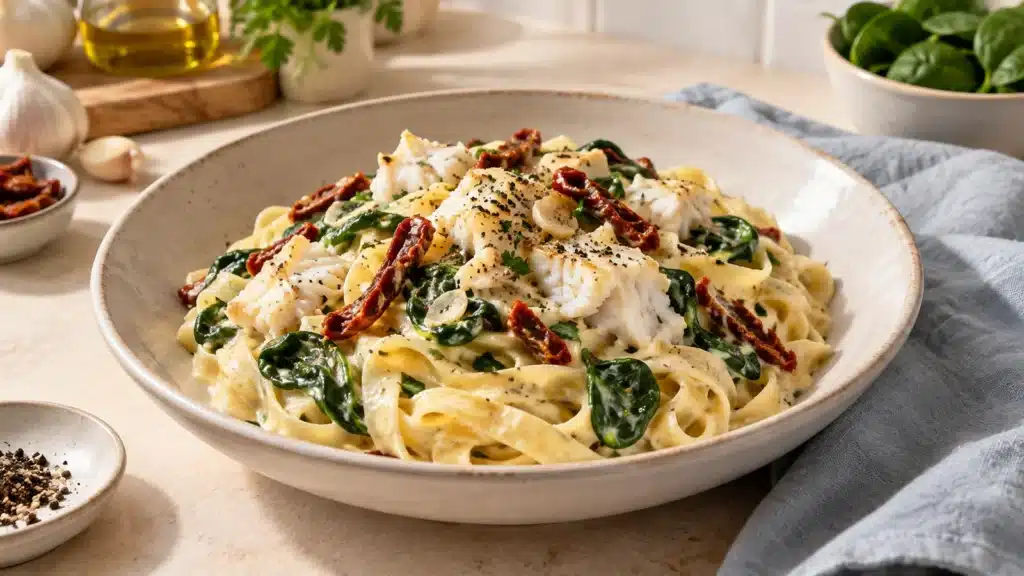
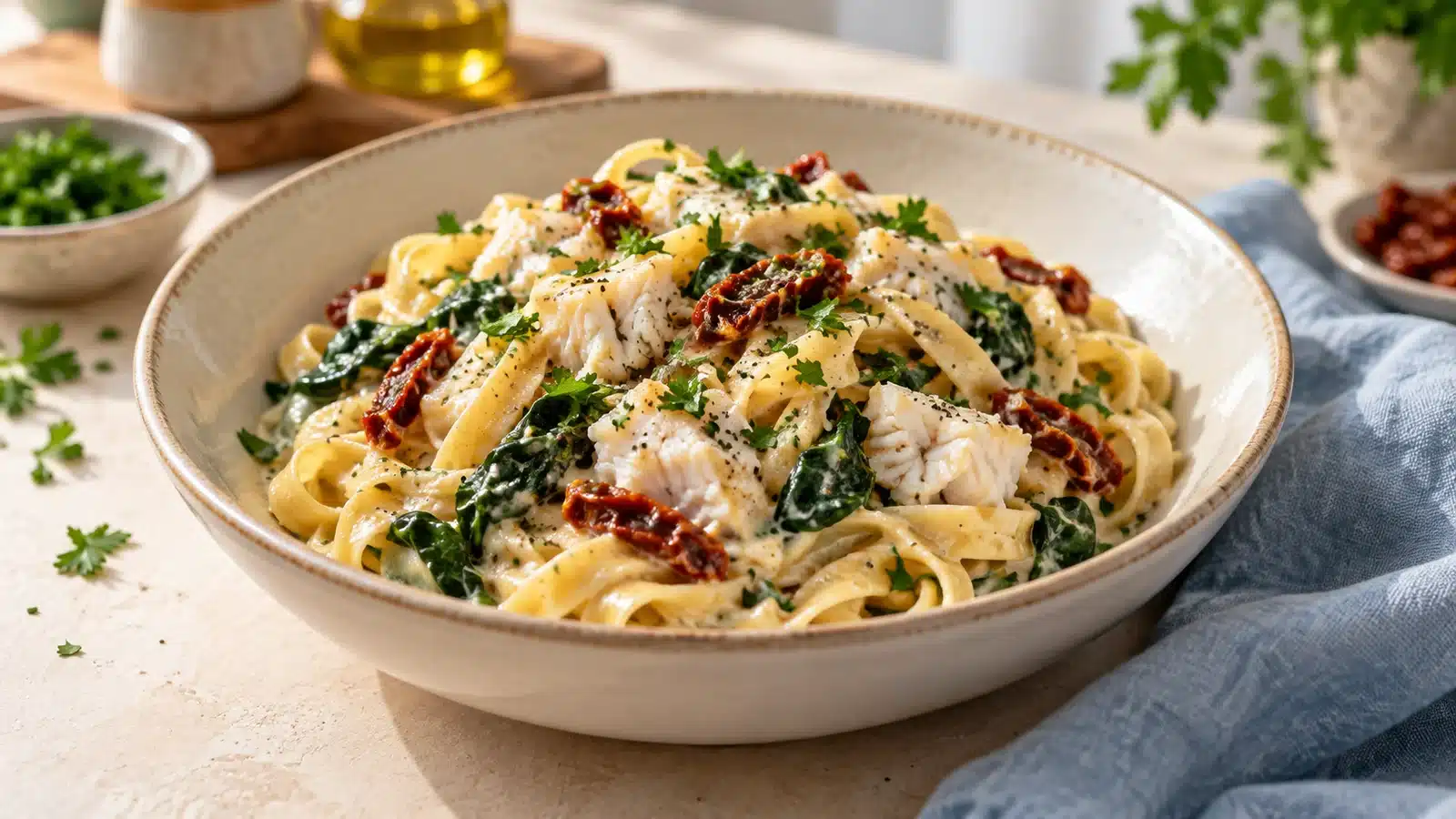
Garlic Tuscan Fish Tagliatelle combines wide pasta ribbons, tender white fish and a creamy garlic sauce with spinach and sun-dried tomatoes. This Tuscan-inspired dinner is designed around contrast: sweet garlic, concentrated tomato flavor, a little lemon brightness and fish that stays in generous pieces instead of disappearing into the pasta. It is a comforting bowl, but the sauce should coat the ribbons rather than drown them.
Jump to the recipe card · Troubleshooting · Frequently asked questions
The useful part of this guide is the cooking sequence. Fish, pasta and cream do not all need the same treatment. Preparing the ingredients first, cooking the fish separately and finishing the pasta in the sauce gives you more control over texture. You will also find advice for frozen fillets, different pasta shapes, sauce adjustments, safe storage and the problems that can appear when a busy dinner comes together too quickly.
Recipe-development note: This is a proposed formula prepared for Epsilon Community Hub. It has not been kitchen-tested. Ingredient balance, cooking-time estimates and the suggested four servings require validation before publication. “Tuscan-inspired” describes the flavor combination, not a claim that this is a traditional regional recipe.
What makes this fish tagliatelle Tuscan-inspired?
Here, the name refers to a modern creamy combination of garlic, spinach, tomatoes and herbs. It is not a declaration that every Tuscan kitchen prepares fish with cream or sun-dried tomatoes. Regional cooking is much broader than an internet recipe label. Calling the dish Tuscan-inspired gives readers a useful flavor cue without turning a convenient description into an unsupported history lesson.
Tagliatelle brings broad, flexible ribbons that pick up a coating of sauce. Cod supplies a mild flavor and large flakes, while the drained tomatoes add a concentrated savory-sweet contrast. Spinach softens quickly, parsley gives the finished bowl a fresh note and lemon helps the cream feel less heavy. None of those ingredients should hide the fish or turn the sauce into a thick cheese paste.
If you are planning other meals, the Epsilon recipe collection is the place to browse beyond this bowl. Keep the purpose of each recipe distinct: this is a stovetop fish-and-pasta dinner, not a baked casserole or a one-pot recipe in which uncooked pasta absorbs all the liquid. Those differences affect the ingredients, cookware and timing.
EPSILON RECIPE CARD · DINNER
Garlic Tuscan Fish Tagliatelle recipe card
Proposed yield: 4 portions. Preparation: approximately 20 minutes. Cooking: approximately 25 minutes, with overlapping tasks. Total: approximately 45 minutes. These are planning estimates, not measured results from a completed test. Category: Dinner. Style: Tuscan-inspired. Equipment: large pasta pot, wide skillet, tongs, fish spatula and food thermometer.
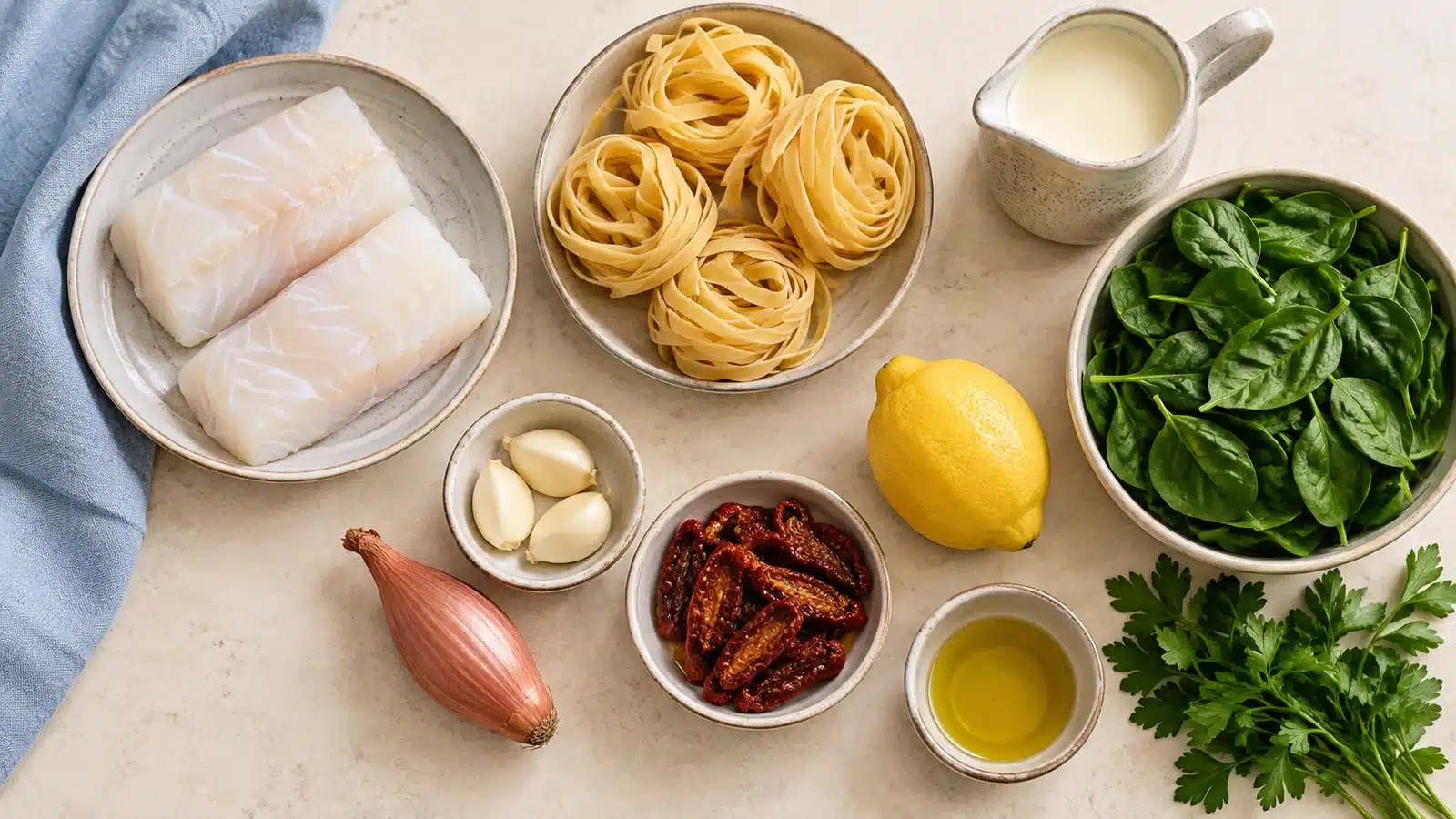
Ingredients
- 300 g dried tagliatelle
- 600 g skinless, boneless cod fillets, cut into 4 similar portions
- 2 tablespoons olive oil, divided
- 1 small shallot, finely chopped (about 40 g)
- 6 garlic cloves, finely chopped (about 18 g)
- 75 g oil-packed sun-dried tomatoes, drained and sliced
- 180 ml low-sodium vegetable stock
- 240 ml heavy cream
- 120 g baby spinach
- 1/2 teaspoon dried oregano
- 1/2 teaspoon fine salt, divided, plus salt for pasta water as needed
- 1/4 teaspoon freshly ground black pepper
- 1 teaspoon finely grated lemon zest
- 1–2 teaspoons lemon juice, added to taste
- 2 tablespoons chopped fresh parsley
- Up to 240 ml reserved pasta cooking water, added only as needed
Instructions
- Prepare before cooking. Thaw frozen fish safely, check for bones and pat the cod dry. Chop the shallot, garlic and tomatoes. Measure the stock and cream. Bring a large pot of water to a boil and keep the fish refrigerated until the pan is ready.
- Cook the tagliatelle. Salt the boiling water to your preference, remembering that the tomatoes and stock contribute salt. Cook according to the package directions until just short of your preferred finished texture. Reserve 240 ml of pasta water before draining. Do not rinse.
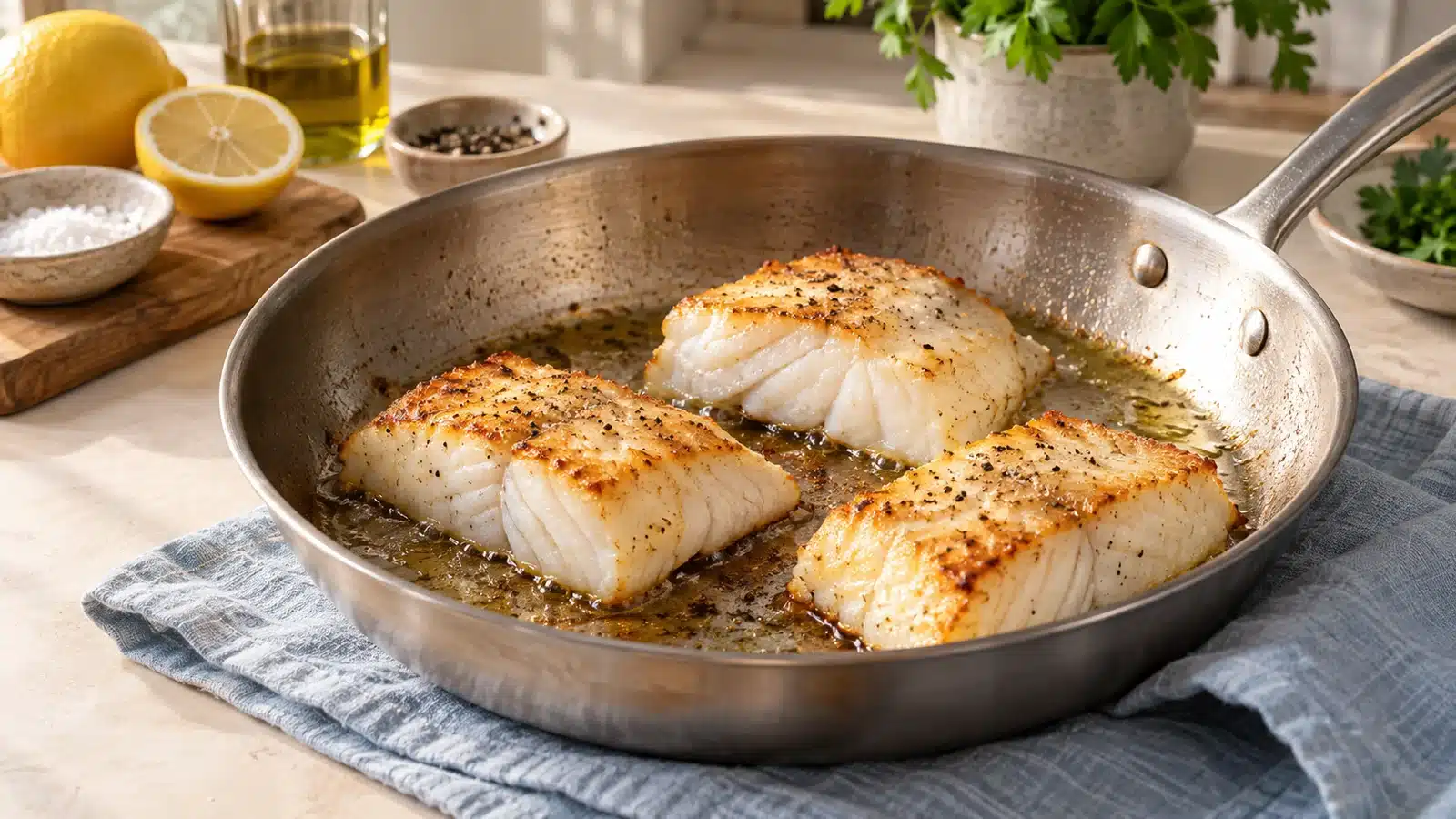
- Cook the cod. Heat 1 tablespoon olive oil in a wide skillet over medium heat. Season the fish with half the measured salt and the pepper. Cook without crowding, turning gently once, until the thickest part reaches 145°F (63°C). Start checking after approximately 3–4 minutes per side; thickness and heat change the actual time. Transfer to a clean plate.
- Build the garlic base. Reduce the skillet heat and add the remaining olive oil. Cook the shallot for approximately 2–3 minutes until softened. Add garlic and oregano, stirring for about 30–60 seconds without allowing the garlic to darken. Add the drained tomatoes.
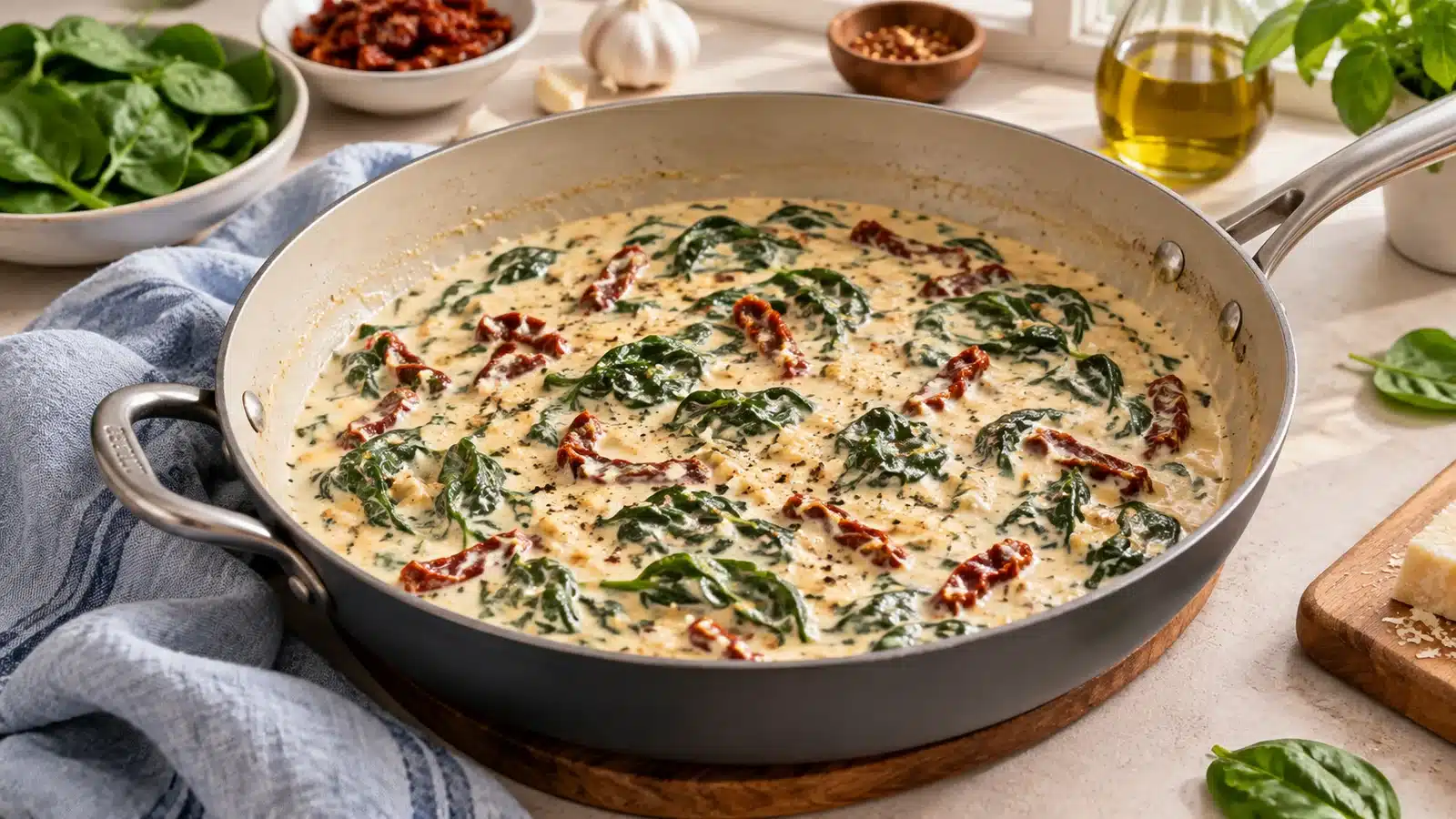
- Make the sauce. Add vegetable stock and gently scrape up golden residue, leaving any burnt residue behind. Add cream and maintain a gentle simmer for approximately 3–5 minutes. Stir in spinach until wilted. Add lemon zest, then taste before using the remaining measured salt.
- Coat the pasta. Add drained tagliatelle and toss gently with tongs. Add reserved pasta water a tablespoon or two at a time until the sauce coats the ribbons without pooling excessively. Remove from the heat, then add a little lemon juice to taste.
- Finish and serve. Place the cooked cod over the pasta, leaving it in portions or separating it into large flakes. Fold only enough to combine without shredding the fish. Sprinkle with parsley and serve promptly. These timings and the proposed four portions need kitchen validation.
Recipe notes: Use thawed, similarly thick fillets for the first test. Heavy cream is the base liquid, not a guaranteed interchangeable substitute for milk. The measured pasta water is a reserve, not an instruction to pour in the whole cup. This formula contains fish, dairy and wheat; egg tagliatelle also contains egg. No star ratings are claimed; the calorie value below is an ingredient-based estimate.
Estimated nutrition
Approximately 730 calories per serving, based on one-quarter of the recipe. This ingredient-based estimate uses the listed quantities, Atlantic cod, representative dried pasta and heavy cream, and assumes all the sauce and olive oil are consumed. It excludes optional cheese and side dishes. Values vary with pasta and cream brands, fish species, substitutions and portion size; this is not laboratory analysis. Reference values are drawn from USDA FoodData Central data, with approximate values for small ingredients.
Choosing the right fish
Why cod is the starting point
Skinless cod is the proposed first-test fish because it has a mild flavor and separates into substantial flakes. Choose portions with similar thickness so one piece does not require a much longer cook than another. Thin tail sections and thick center portions behave differently in the same skillet. If a package mixes both, cook and remove individual pieces according to their actual temperature rather than a single timer.
Check fillets for pin bones with clean fingers before cooking, then wash your hands and sanitize the preparation area. Pat the fish dry with disposable paper towels; a wet surface is less likely to develop an even golden exterior. Do not rinse raw fish around the sink. Keep it cold until needed and use a clean plate for cooked portions instead of returning them to a dish that held raw fish.
Can another white fish work?
Haddock, pollock or another suitable white fish could become a variation, but each needs its own timing check. A thinner fillet may finish much sooner, while a firmer fish can change the texture of the bowl. Choose fish by availability, portion thickness and your preferences rather than promising that every species is an identical substitute. The original ingredient list and illustration set use cod.
Salmon would make a different version with a richer flavor and a different visual identity. It should not be slipped into the instructions while the article continues to show and describe white fish. Likewise, shrimp is shellfish, not an automatic swap for cod. If you develop another protein version, revise the ingredient list, allergen note, cooking instructions and images together so the recipe remains internally consistent.
Fresh and frozen fillets
Frozen fish can be convenient, but thaw it safely before using this proposed skillet method. Follow the package directions, especially instructions for vacuum-packed fish; some packaging must be opened or removed before thawing. Refrigerator thawing keeps the fish cold. If you use a quicker method permitted by the package and official guidance, cook promptly and do not leave the fillets sitting on a warm countertop.
The FDA seafood handling guide provides guidance on buying, thawing and serving seafood safely. Freezing does not make poor handling harmless. Reject fish with an uncertain storage history, and do not try to fix questionable seafood by adding more garlic, lemon or seasoning. A pleasant sauce is not a food-safety intervention.
Understanding the ingredients before you cook
Garlic and shallot
Six garlic cloves give this formula a clear garlic character, but clove size varies considerably. The approximate gram weight helps make a future kitchen test more repeatable. Finely chop the garlic so it disperses through the sauce, while avoiding a paste that may catch quickly in a hot pan. Shallot adds a softer aromatic base and should have time to soften before the garlic goes in.
Burnt garlic is difficult to disguise. Lower the heat after removing the fish, watch the small pieces closely and add liquid once the garlic is fragrant. If the pan contains genuinely blackened residue, clean it before building the sauce. Golden cooking residue can contribute flavor; burnt particles contribute bitterness. Those are different things even when both appear as dark spots on the bottom of a skillet.
Sun-dried tomatoes and spinach
Use oil-packed sun-dried tomatoes that have been drained, then cut them into thin strips. Their saltiness, acidity and oil content differ between brands, so taste before adding the remaining salt. Dry-packed tomatoes are another ingredient: they may need rehydration and a separate test. Do not add hard, chewy strips to the pan and assume a short cream simmer will make them behave like tender oil-packed tomatoes.
Baby spinach wilts quickly and fits the short finishing stage. Wash it according to the product directions and drain well so excess water does not dilute the sauce unexpectedly. Add it in manageable handfuls if the skillet is full. Frozen spinach requires thorough thawing and moisture management, making it a variation to test rather than a direct gram-for-gram promise. Large mature leaves may also need chopping.
Cream, stock and lemon
Heavy cream supplies body, while stock makes the sauce easier to spread through the pasta without relying on a large volume of cream alone. Low-sodium vegetable stock lets the fish remain the main flavor and gives you more room to adjust seasoning. Read the label if allergies or dietary restrictions matter; stock can contain ingredients that are easy to overlook in a short recipe title.
Lemon zest adds aroma without a large amount of extra liquid. A little juice at the end provides brightness, but a generous pour can dominate the flavor and change the sauce. Start with one teaspoon off the heat, taste and add more only if needed. Keep the recipe flexible at that small finishing point without turning the measured base into an instruction to improvise every liquid.
Tagliatelle, pasta water and the cooking sequence
The card specifies dried tagliatelle. Fresh pasta often cooks much faster and may require a different quantity for the same proposed number of portions. Follow the package instructions rather than transferring the dried-pasta clock to fresh nests. Fettuccine can offer a similar ribbon format, but thickness and cooking time still vary. Short pasta creates a different eating experience and can change how much sauce is needed.
Avoid cooking the pasta far ahead and leaving it in a hot colander while the sauce catches up. Prepare the vegetables, fish and sauce ingredients first, then coordinate the pot and skillet. If your stove or confidence makes simultaneous tasks awkward, prioritize controlled cooking over speed. The estimated forty-five-minute total is a development target, not a reason to rush fish or skip thermometer checks.
Reserve cooking water before draining. Its starch helps connect the sauce and pasta, but its salt concentration depends on how you seasoned the pot and how much water evaporated. Add it gradually. A sauce that looks slightly loose in the skillet may tighten as the pasta absorbs moisture, so give each addition time to mix before deciding the entire reserve is necessary.
Do not rinse the cooked ribbons for this warm dish. Transfer them to the sauce and toss carefully with tongs, keeping the fish out until the pasta is coated. This separation prevents the delicate pieces from being broken by repeated vigorous mixing. Once the fish is returned, fold gently or simply arrange the portions on top. The goal is recognizable fish, not tiny shreds throughout the cream.
Fish doneness and safe handling
The FoodSafety.gov temperature chart gives 145°F (63°C) as the safe minimum for fish. Measure the thickest part with an appropriate food thermometer. A golden exterior does not establish the temperature in the center, and a fixed number of minutes cannot account for every thickness, pan or stove. Use the timer as a prompt to check, not as proof.
Take special care when probing a thin fillet: insert the thermometer so the sensing area reaches the middle rather than touching the hot skillet. Remove individual portions when they are ready. Fully cooked fish does not need to simmer through the entire sauce-making stage. Keeping it on a clean plate while the sauce comes together helps limit extra cooking without compromising the original doneness check.
Raw-fish tools and surfaces should not touch ready-to-eat parsley, lemons or serving dishes without washing. Keep the fish preparation area separate from the final garnish area where practical. Check all fillets for bones even when sold as boneless, particularly if serving children. For broader label and handling context, our food-storage and expiration-date guide is a useful companion, not a replacement for seafood-specific instructions.
Garlic Tuscan Fish Tagliatelle troubleshooting
Why is the fish dry or breaking apart?
Dry fish often points to excess cooking, but the starting fillet and portion thickness matter too. Check temperature earlier during the next test and remove cooked pieces individually. Do not leave them boiling in cream while you wait for the pasta. Breaking can also result from an unsuitable spatula, moving the fish before it releases from the pan or aggressively tossing it with the noodles.
Why is the sauce watery?
Look first at drained spinach, tomato oil, the amount of pasta water and whether the cream had time to simmer gently. Do not immediately add flour to the finished skillet; that creates a different sauce and may leave lumps or a raw taste. Keep the fish aside, allow the sauce a brief gentle reduction if needed, then reassess after the pasta is coated.
Why is the sauce too thick?
Pasta continues absorbing liquid, particularly while the bowl waits to be served. Add a small amount of reserved water and gently mix before adding more. If the cooking water is very salty, a little plain hot water may be more suitable. Avoid solving every texture problem with extra cream, which changes richness and portion balance. Record the amount actually needed during the first test.
Why does the sauce look split or grainy?
A hard boil, prolonged reduction or a large acidic addition can cause problems in a cream sauce. Reduce the heat, stop adding lemon and assess whether gentle stirring with a little warm liquid improves the texture. Do not promise that every split sauce can be restored perfectly. Preventing aggressive heat is more reliable than repeatedly reheating and whisking the pan after the damage has occurred.
Why does the dish taste too salty or bitter?
Tomatoes, stock and pasta water all contribute seasoning. Taste before adding the remaining measured salt, and choose lower-sodium stock for the initial test. Bitterness can come from burnt garlic or residue rather than insufficient cream. If the aromatic base is burned, remake that stage instead of covering it with extra dairy. Lemon zest should come from the outer colored peel, not a thick layer of white pith.
Substitutions and dietary considerations
Milk, half-and-half and heavy cream are not guaranteed to produce the same texture. A lower-fat version may need another thickening approach, which changes the formula and should be developed separately. Coconut cream adds a noticeable flavor, and plant-based cooking creams vary in stability. Do not label a proposed substitution dairy-free without checking the stock, tomato packing ingredients and every other product used.
For gluten-free readers, choose appropriately labeled pasta and review all packaged ingredients for suitability and cross-contact warnings. Gluten-free ribbons can release different amounts of starch and may break more easily, so sauce-water needs and tossing technique should be retested. The original recipe contains wheat and fish, plus milk; egg pasta adds egg. Removing one ingredient does not make the whole meal universally allergy-safe.
Cheese is deliberately absent from the base formula. If you enjoy Parmesan, test a small amount as a separate finishing variation rather than adding it automatically to the sauce. It changes salt, dairy content and consistency. Chili flakes can provide heat, but they are optional flavor development, not necessary to achieve the garlic-tomato profile. Make one change per test so its effect remains understandable.
Serving ideas and related dinners
Serve the pasta promptly in shallow bowls, distributing the fish and tomatoes evenly rather than leaving one portion mostly noodles. A simple green salad or lightly cooked vegetables can add freshness without competing with the sauce. Warm bowls can help the meal stay pleasant during serving, but they do not justify holding cooked fish at room temperature for a long period while guests arrive.
If you enjoy a different creamy seafood pasta, browse our lobster mac and cheese guide. For a meat-free baked pasta built around greens, explore the spinach mushroom lasagna recipe. These are related dinner ideas, not interchangeable methods for this cod tagliatelle.
For an especially hearty accompaniment, our garlic bread grilled cheese offers another garlic-forward option, although a lighter vegetable side may suit the creamy pasta better. If estimating the meal’s nutrition, use the Recipe Nutrition Analyzer with your actual products and portions. Include sides and any extra cheese in the calculation.
Make-ahead preparation, leftovers and reheating
The most useful advance work is chopping the shallot and tomatoes, measuring the liquids and organizing the equipment. Keep raw fish refrigerated separately and follow its packaging and official seafood-storage guidance. Do not partially cook the fillets and set them aside for hours to finish later. This meal is designed for final stovetop assembly close to serving, when both the pasta and fish are at their best.
Refrigerate cooked leftovers promptly in shallow covered containers. The USDA leftover guide recommends refrigeration within two hours, or within one hour above 90°F (32°C), a refrigerator at 40°F (4°C) or below, and using refrigerated leftovers within three to four days. Those are safety limits, not a guarantee of unchanged pasta texture.
Reheat only the amount you plan to eat and bring leftovers to 165°F (74°C), following the same USDA guidance. A little water can help loosen the sauce, but the fish may become firmer after reheating. Check the center rather than only the hot surface. Avoid repeatedly warming and cooling the entire container. Discard food with an uncertain handling history instead of tasting it to decide whether it is safe.
Freezing the assembled dish may reduce quality because cream sauces and pasta do not always thaw with their original texture. Treat it as a separate quality test rather than promising a perfect freezer meal. Label portions and dates, thaw safely and apply proper reheating guidance. For practical weeknight planning, fresh assembly with measured ingredients prepared ahead is a more predictable starting point than relying on an untested frozen version.
Frequently asked questions
Is Garlic Tuscan Fish Tagliatelle an authentic Tuscan recipe?
This article presents a Tuscan-inspired cream, spinach and tomato combination, not a documented traditional regional recipe. The wording matters because a recognizable modern flavor style is not the same as culinary provenance. There is no invented family history or claim of restaurant origin behind this formula.
Can I cook the fish directly in the cream sauce?
Poaching would be a different method. It changes browning, liquid release and the timing relationship with the pasta. It could be developed, but the current card cooks the fish separately, verifies its temperature and adds it back at the end. Follow that sequence for the first test.
Can I use fresh tagliatelle?
Potentially, with a separate portion and timing check. Fresh and dried pasta weights are not automatically equivalent, and fresh ribbons usually need a shorter cook. Use package directions, coordinate the sauce before the pasta finishes and add cooking water gradually rather than copying a dried-pasta timing estimate.
Can I make this without tomatoes?
You can develop a garlic-spinach version, but removing the tomatoes changes sweetness, acidity and seasoning. Do not compensate with a large amount of lemon before tasting. Keep the first formula intact if the purpose is to test this particular recipe, then record changes for a separate tomato-free variation.
Do I have to add all the reserved pasta water?
No. The listed cup is a reserve. Add a small amount at a time until the sauce coats the noodles comfortably. The necessary amount depends on evaporation, pasta starch and cream thickness. Pouring it all in at once can turn a balanced coating into an unnecessarily thin sauce.
Can I double the recipe for guests?
A larger batch requires enough pan space to cook fish without crowding and a pot that handles the pasta comfortably. Two skillets may be easier to control than one overloaded pan. Validate timing and portion distribution before serving a group; doubling quantities does not establish that the original cooking schedule still works.
A clear plan for a satisfying fish-and-pasta dinner
The strongest version of this recipe will come from careful testing, not exaggerated promises. Record fish thickness, actual internal temperature, pasta brand, sauce simmer time and the amount of cooking water used. Assess whether four portions are realistic and whether the garlic, tomato and cream remain balanced. Those observations turn an appealing draft into a dependable recipe.
For now, the method gives that test a clear starting point: prepare first, cook the cod safely, keep the garlic gentle, finish the ribbons in the sauce and return the fish only at the end. Once the formula has been validated, Epsilon Community Hub can share it with accurate timings, honest images and useful links that help readers plan their next dinner.