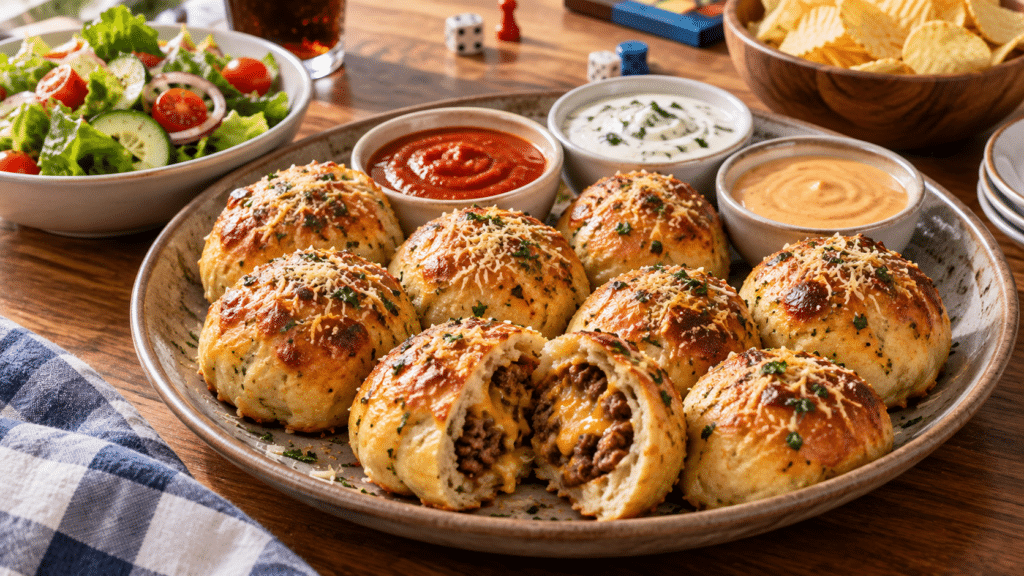
Wondering what to serve with garlic Parmesan cheeseburger bombs? Start with one cool, crisp side and one contrasting dip. Cucumber tomato salad with marinara works for an easy family dinner. Vinegar slaw with burger sauce fits a game-day platter. Roasted potato wedges and green beans turn the same cheesy bites into a more substantial meal.
Cheeseburger bombs already combine seasoned beef, melted cheese, garlic, Parmesan and a rich exterior. The best accompaniments do not repeat all of that weight. They add acidity, crunch, freshness or a clean tomato flavor. This guide gives you seventeen useful sides and dips, three complete menus, serving estimates and a practical plan for keeping a party table organized.
Make the main dish with our garlic Parmesan cheeseburger bombs recipe. This companion guide intentionally does not repeat its ingredient list or cooking instructions. Use the recipe for preparation and use this page to decide what belongs around the finished tray.
On this page
What to serve with garlic Parmesan cheeseburger bombs: quick picks
For a simple dinner: cucumber tomato salad and marinara. For a party platter: a crisp vegetable tray, burger sauce and herbed yogurt dip. For a filling family meal: roasted potato wedges and green beans. For a lighter-feeling plate: vinegar slaw, mixed greens and a modest portion of the bombs. For cold weather: tomato soup and a green salad.
You do not need all seventeen ideas at once. Choose one dip, one vegetable-focused side and, if the meal needs it, one starch. A crowded table can make every component feel less distinct. A focused combination makes the garlic, Parmesan and cheeseburger filling easier to appreciate while giving diners a break between rich bites.
Build contrast instead of adding more richness
The main dish already supplies beef, cheese and a substantial exterior. Adding a heavy cheese dip, creamy pasta salad, loaded potatoes and buttery bread to the same plate can make the meal feel repetitive. Rich additions are not forbidden, but they work better when they have a clear job and appear in modest portions. Balance one creamy item with something acidic or crisp.
Acid is particularly useful. Tomato, vinegar, mustard, pickles and lemon can sharpen the flavors without asking you to increase salt or garlic. Crunch matters too. Cabbage, cucumber, carrots and lettuce change the texture of each bite. Temperature creates another form of contrast: a cool salad or chilled dip beside a warm cheeseburger bomb makes the plate more interesting.
Think about how the bombs were made. A biscuit-wrapped version is already bread-forward, so it may not need rolls or another large starch. A meatball-style version without dough can accommodate potatoes, corn or soup more easily. Cream-cheese-filled bombs are especially rich and benefit from a sharper salad or tomato-based dip.
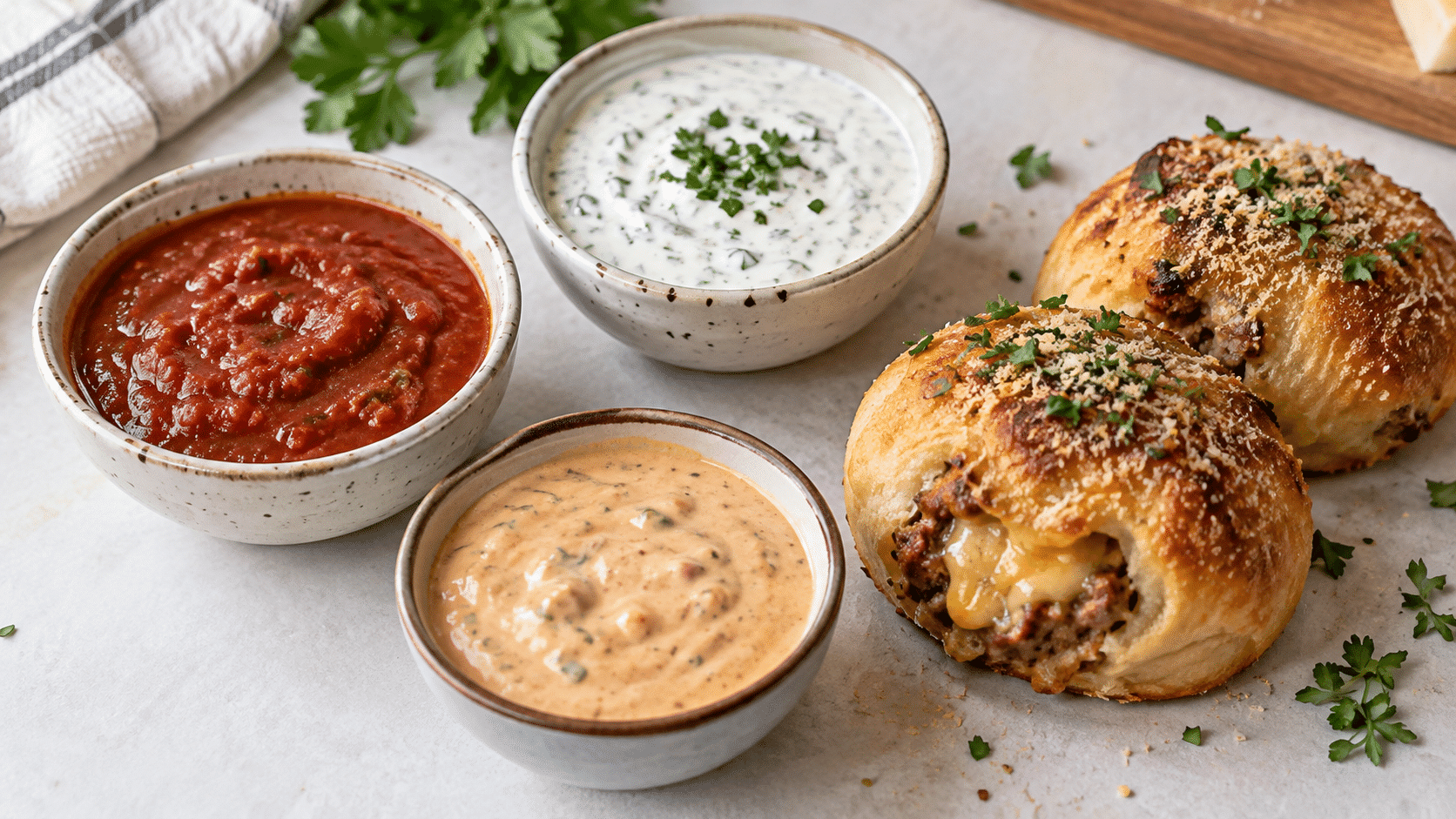
Five dipping sauces that complement the filling
1. Warm marinara
Marinara is the cleanest match when you want tomato acidity against garlic and Parmesan. It also connects naturally with the Italian-seasoned notes without turning the bombs into a second cheeseburger sauce experience. Choose a smooth or lightly textured marinara that is easy to dip into, and serve only the amount you expect to use so the bowl stays neat.
Keep the sauce warm according to its recipe or package directions, but do not let it splatter across the entire platter. A separate bowl preserves the browned exterior. For children or guests who prefer mild flavors, marinara is often the most familiar starting point. If the bomb recipe is already strongly tomato-seasoned, choose a cooler dip instead.
2. Tangy burger sauce
Burger sauce reinforces the cheeseburger idea with a creamy, tangy profile. Recipes vary, but many combine mayonnaise with ketchup, mustard and finely chopped pickles or relish. Use a complete recipe with measured ingredients rather than improvising a large batch directly in the serving bowl. Taste before adding salt because the bombs, Parmesan and pickles may already contribute plenty.
This is a richer dip, so pair it with vinegar slaw, cucumber salad or raw vegetables. Avoid making every other component creamy. A small bowl is enough because the filled bombs already contain cheese. If guests have egg or mustard restrictions, label the sauce and provide a clearly separate alternative.
3. Cool herb dip
A ranch-style or yogurt-based herb dip adds a cool contrast. Parsley, chives or dill can echo the green garnish on the bombs without repeating the garlic-Parmesan coating. Keep the texture spoonable rather than watery. Thin dip runs into the tray and softens the bottom of the bombs before people have a chance to eat them.
Serve this dip chilled and return unused portions to refrigeration promptly. Use a dedicated spoon if guests may also dip raw vegetables. If you offer both dairy and dairy-free versions, place them in visibly different containers and use separate utensils. A vague label such as “white sauce” is not enough for someone checking ingredients.
4. Honey mustard or sharp mustard dip
Mustard provides brightness with less tomato flavor. Honey mustard works for diners who enjoy sweet and tangy combinations, while a sharper mustard-based sauce cuts more directly through the beef and cheese. Pick one version rather than putting several nearly identical yellow sauces on a small table. The goal is useful choice, not a collection that creates waste.
If the bombs contain a sweet glaze or sweet biscuit dough, a less sweet mustard sauce may offer better contrast. With a very savory meatball-style bomb, honey mustard can be pleasant. Keep allergen information available, and remember that a sauce described as “honey mustard” may still contain mayonnaise, dairy or other ingredients depending on the recipe.
5. Spicy creamy sauce
A spicy creamy sauce suits game-day food and gives the platter a different direction from marinara. Chili sauce, hot sauce or a measured spice blend can provide heat. Keep the heat moderate in the main bowl and offer extra hot sauce separately. That approach lets more guests participate without making a second complete menu.
Because this option is both rich and assertive, pair it with celery, cucumber, cabbage slaw or a plain green salad. Do not pour it over the full batch before serving. Coating the bombs hides their browned exterior and removes the ability to choose. A dip should expand the platter, not permanently change every portion.
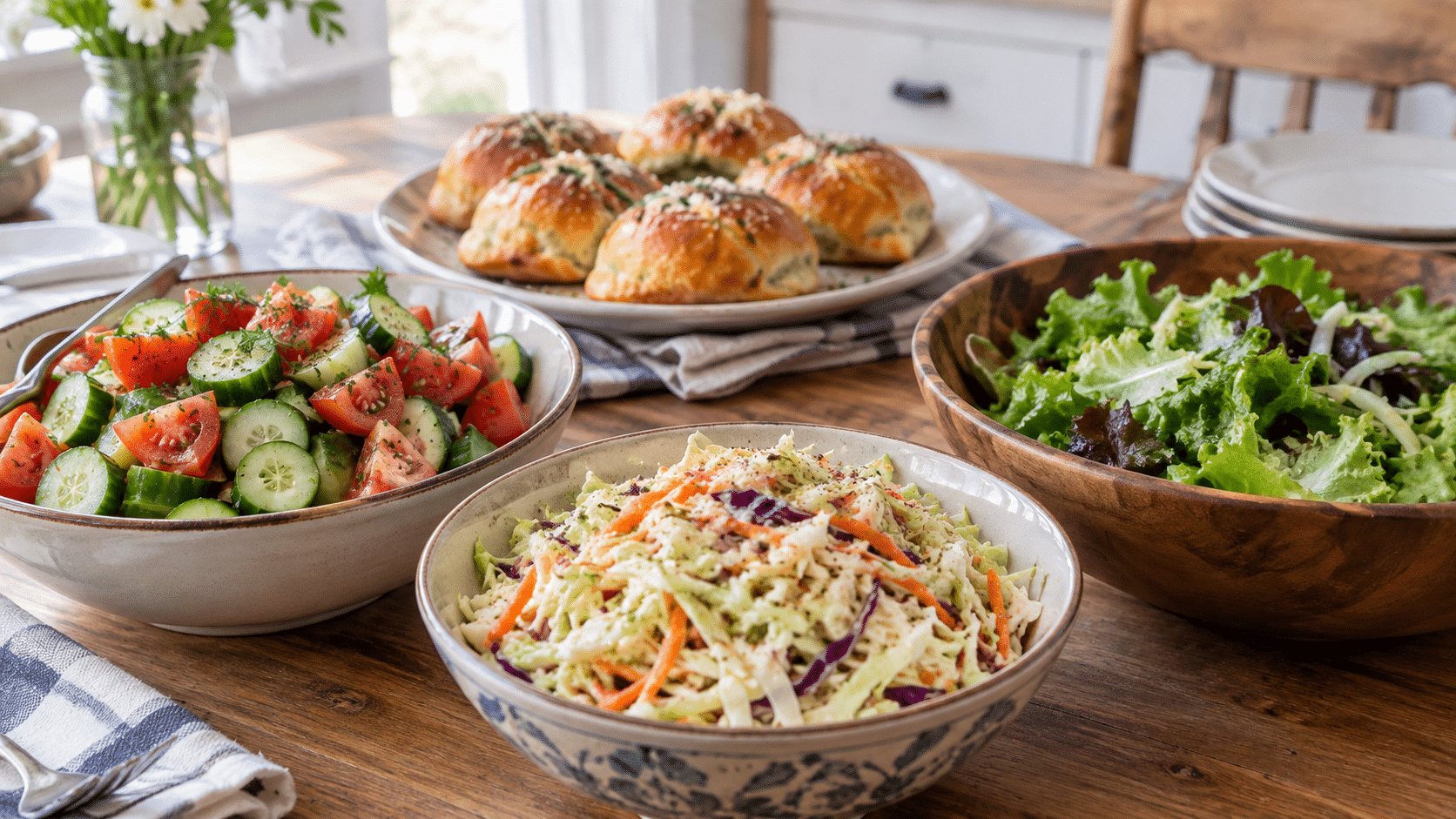
Six fresh and crunchy sides
6. Cucumber tomato salad
Cucumber and tomato provide juicy freshness without adding another cooked task. Their clean flavor is useful beside garlic, beef and melted cheese. Our cucumber tomato salad recipe gives you a complete starting point. Dress it close enough to serving that the vegetables retain some structure.
Keep onion moderate or serve it separately when cooking for a mixed group. Very strong raw onion can compete with the garlic in the main dish. A vinegar-forward dressing usually creates more contrast than a creamy one. Place the salad in its own bowl rather than piling it under hot bombs, which can warm the vegetables and soften the exterior.
7. Vinegar cabbage slaw
Vinegar slaw brings lasting crunch and a sharper finish than a mayonnaise-heavy slaw. Shredded cabbage and carrot also hold their shape well on a buffet when handled safely. Toss gradually with dressing so the vegetables are coated rather than submerged. A small amount of sweetness may round out the vinegar, but the slaw should still taste fresh.
This is one of the best sides for cream-cheese-filled or biscuit-wrapped bombs because it pushes the meal in the opposite direction. It also fits inside a split bomb if someone wants a slider-style bite. Keep a portion undressed until near serving when you want maximum crunch over a longer gathering.
8. Simple mixed green salad
A mixed green salad turns the bombs into a straightforward dinner. Use dry leaves, a few crisp vegetables and a restrained vinaigrette. You do not need cheese, bacon, croutons and creamy dressing in the salad when the main dish already supplies those rich signals. Let the greens do a different job.
Keep the dressing separate for a party so guests control the amount and the leaves stay crisp. Add cucumber, radish or carrot for texture. If nuts, cheese or packaged toppings are available, place them in separate labeled bowls. A simpler base makes it easier to accommodate preferences without building several complete salads.
9. Dill pickles and quick-pickled onions
Pickles make sense with the cheeseburger flavor and require little plating. Offer slices or spears that are easy to pick up without dripping brine across the bread or pastry. Quick-pickled onions add color and acidity, but use them as a condiment. A small forkful is enough to change a bite.
Use commercially prepared pickles or a refrigerator-pickle recipe with clear storage guidance. A quick vinegar soak is not a shelf-stable canning method. Keep opened jars and homemade refrigerator pickles chilled as directed. Do not return pickles from the serving plate to the original jar after guests have handled the platter.
10. Crisp vegetable tray
Carrot sticks, celery, cucumber, bell pepper and radishes create an easy party side. They share the herb dip well and add color without another recipe competing for attention. Cut pieces to a consistent, practical size and keep them cold until needed. Refill a smaller platter instead of exposing the entire supply for the full event.
A vegetable tray is particularly useful when the bombs are one item among several appetizers. It gives guests a neutral option and helps separate richer bites. Keep raw vegetables away from preparation areas and utensils used for raw beef. Use clean boards, knives and serving dishes.
11. Apple cabbage salad
Thin apple slices can add sweetness and crunch to cabbage without turning the side into dessert. Choose a dressing with enough acidity to balance the fruit and help limit browning. This pairing works well when the bombs have a peppery or smoky seasoning. With a sweeter dough or sauce, use plain vinegar slaw instead.
Cut the apples near assembly or hold them according to the salad recipe. Do not prepare an enormous bowl simply because the ingredients look light; estimate the number of guests and serve reasonable portions. Leftover dressed fruit salads may lose texture even when they remain within safe storage limits.
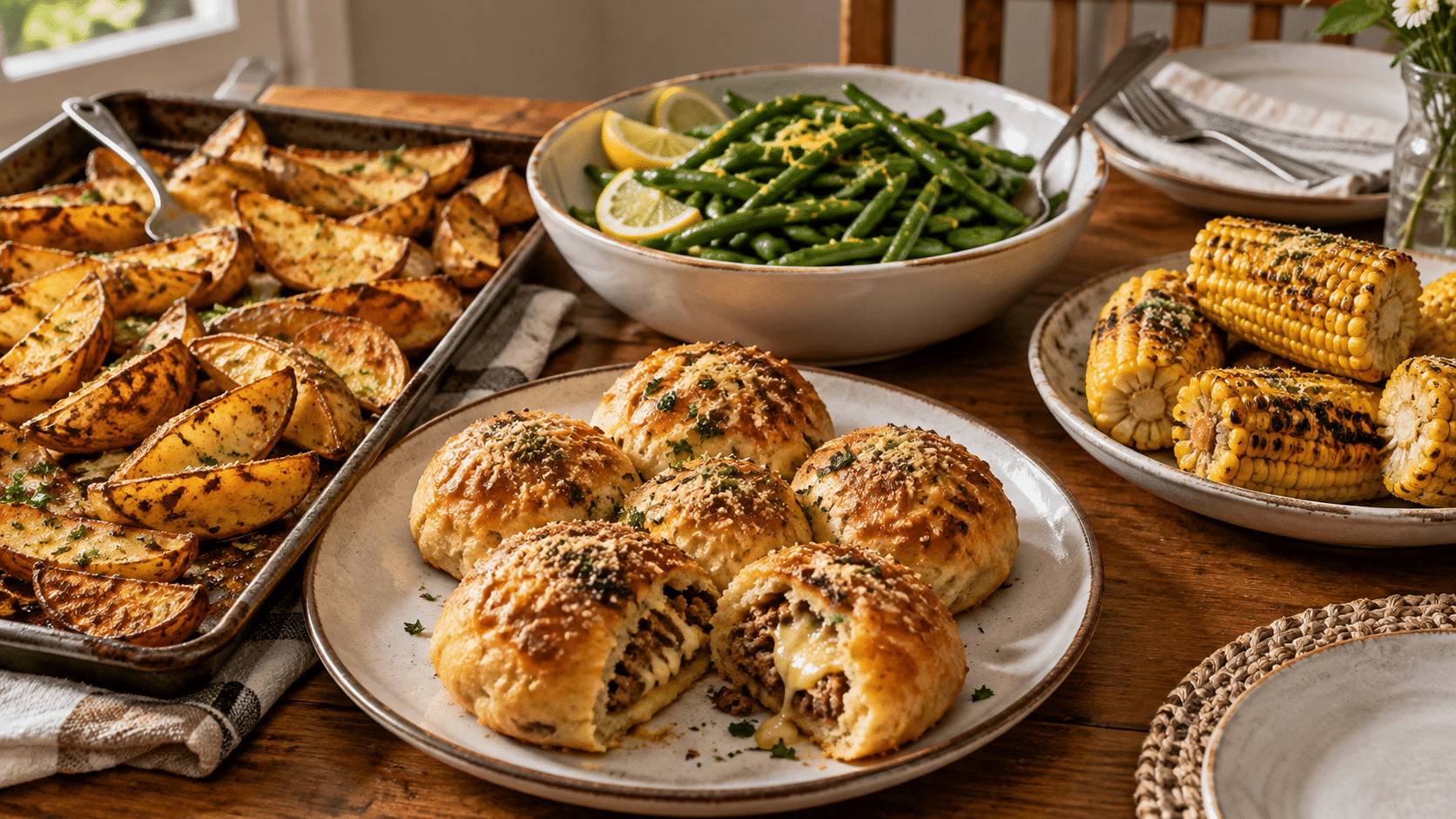
Six warm sides for a complete dinner
12. Roasted potato wedges
Potato wedges turn the bombs into a familiar burger-style dinner. Keep the seasoning simpler than the main dish: oil, pepper, an herb and a measured amount of salt are enough. If both items need the oven, plan rack space and temperatures before cooking. Do not crowd a tray simply to finish everything at the same minute.
Serve wedges with ketchup, mustard or the existing dip selection instead of making several potato-specific sauces. If the bombs are wrapped in biscuit dough, reduce the potato portion or choose green beans instead. Two large starches can quickly dominate the plate.
13. Lemon green beans
Green beans provide a warm vegetable with a cleaner flavor. Lemon helps them stand apart from the Parmesan and garlic, while a modest amount of seasoning keeps the side accessible. Steam, sauté or roast them using a complete recipe that matches your equipment. Trim them earlier in the day to reduce last-minute work.
Do not automatically add Parmesan to the beans just because it appears on the bombs. Repetition can flatten the meal. A lemon finish or toasted breadcrumb topping gives the beans their own identity. For a weeknight plate, green beans and cucumber salad can be enough without potatoes.
14. Corn on the cob or corn salad
Corn works for summer gatherings and brings a naturally sweet note. Corn on the cob feels casual, while a cooked corn salad is easier on a buffet. Offer butter and seasonings separately so guests can adjust their portions. Label dairy-containing toppings and provide clean serving utensils.
Because corn and biscuit dough both add sweetness and starch, pair this side with a vinegar slaw rather than another sweet salad. If the meal already includes potato wedges, use a smaller corn portion or choose one of the two. A complete menu does not require every familiar cookout side.
15. Tomato soup
Tomato soup is a cold-weather alternative to marinara. It supplies the same tomato acidity in a larger, spoonable format and makes a small number of bombs feel like dinner. Choose a smooth soup when you want the bombs to act almost like a savory bread accompaniment, or a chunkier version for a more substantial bowl.
Serve the soup in bowls and the bombs on a dry side plate so their exterior stays intact. A green salad completes the menu. Avoid pairing a very creamy tomato soup with several creamy dips; one rich tomato element is enough. Follow the soup recipe’s holding and reheating instructions.
16. Roasted broccoli or cauliflower
Roasted broccoli or cauliflower adds browned edges and a vegetable side without another sauce. Use pieces of similar size and leave space on the pan. Crowded vegetables steam rather than roast. Lemon, black pepper or a mild spice blend can create contrast while keeping the main dish at the center.
Coordinate oven temperatures carefully. If the bomb recipe and vegetable recipe call for different settings, cook the vegetable first and rewarm briefly, use another appliance or select a stovetop side. Do not change the meat’s cooking requirements merely to make the side fit an inconvenient schedule.
17. Potato salad
Potato salad is useful for a cookout or potluck where most food is served at once. Its cool temperature contrasts with the warm bombs, but it also adds richness. Keep the initial serving modest and add vinegar slaw or raw vegetables. Use our potato salad recipe when that combination suits the occasion.
Keep potato salad properly chilled and refill the table from refrigerated portions. Mayonnaise is not the only food-safety consideration; cooked potatoes and other ingredients are perishable too. Follow the recipe’s storage guidance and discard food that has remained outside safe temperature control too long.
Three complete cheeseburger-bomb menus
Menu one: easy family dinner
Serve garlic Parmesan cheeseburger bombs with cucumber tomato salad and warm marinara. This menu has a clear rhythm: rich hot main, cool crisp salad and bright tomato dip. It requires only one substantial cooked recipe beyond warming the sauce. Water or an unsweetened drink keeps the meal from accumulating unnecessary sweetness.
Prepare the salad vegetables first and refrigerate them, then assemble and cook the bombs according to their recipe. Warm the marinara near the end and dress the salad shortly before serving. Put the three components in separate dishes. Diners can decide whether to dip each bite or eat the bombs plain.
Menu two: game-day platter
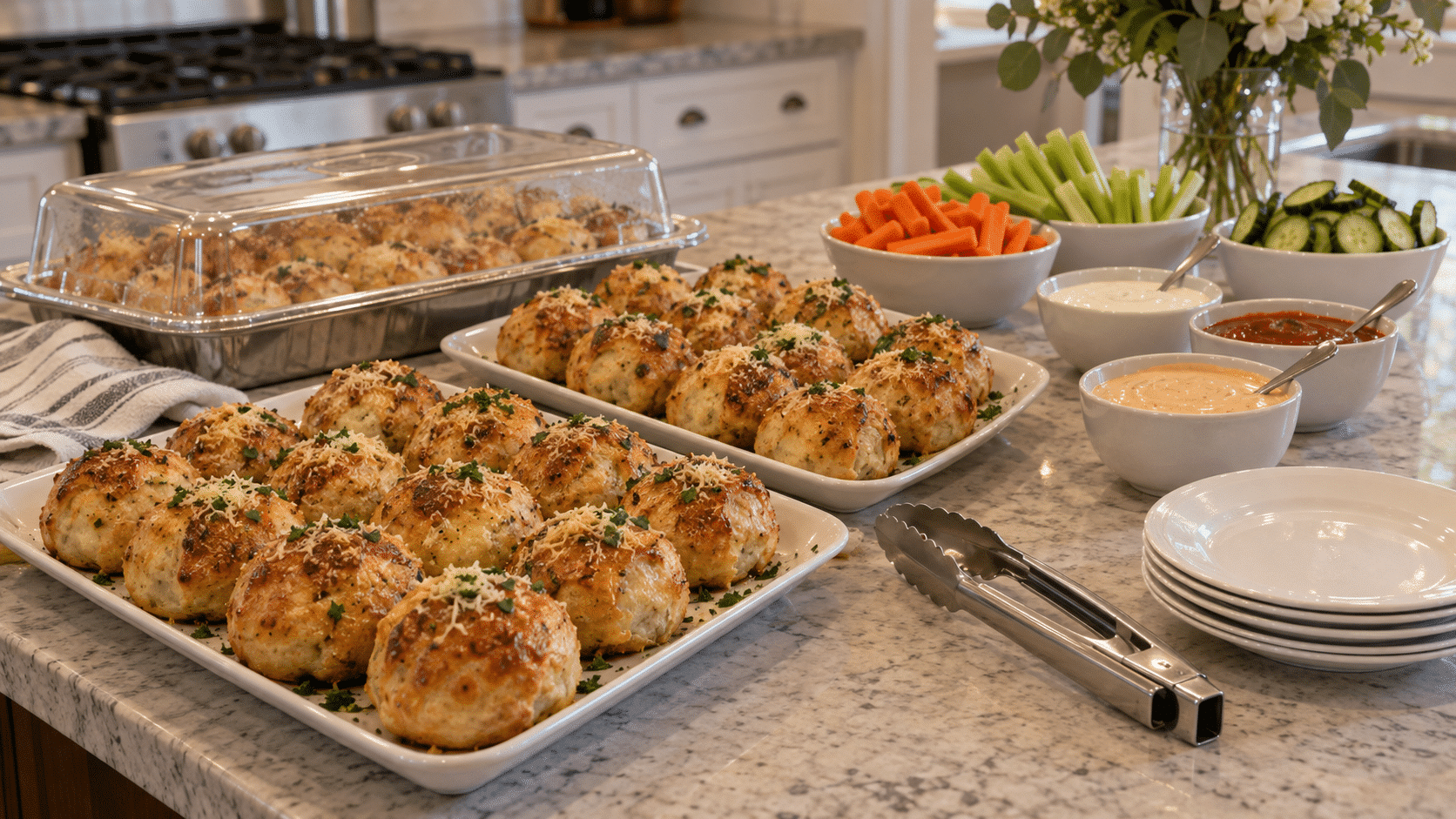
Build the platter with cheeseburger bombs, celery, carrots, cucumber, pickles, burger sauce and a cool herb dip. Add vinegar slaw in a separate bowl if the event extends into a full meal. This arrangement gives guests choices without surrounding the main dish with several other heavy appetizers.
Use smaller platters and replenish them. Keep backup food under appropriate temperature control rather than placing the full supply on the table at kickoff. Give every dip its own spoon, provide tongs for the bombs and place a waste bowl or napkins nearby. Good serving logistics matter as much as adding one more recipe.
Menu three: comfort-food supper
Pair the bombs with tomato soup and a restrained mixed green salad. The soup makes the plate feel complete on a cold evening, while the salad prevents the entire meal from being soft and rich. Skip additional marinara because the soup already fills the tomato role. Mustard can remain an optional small condiment.
Start the soup first if it needs a longer simmer, wash and dry the greens, then focus on the bombs. Dress the salad at the table. If the bombs are large or wrapped in thick dough, serve fewer at first and let people request another. Portion estimates are a planning aid, not a reason to pressure anyone to finish a fixed amount.
Portions, shopping and make-ahead planning
Estimate by the role of the dish
The original recipe describes about two bombs as a serving, but actual size and appetite vary. If the bombs are a party appetizer among several foods, plan a smaller number per person and keep a backup tray available. If they are the main dinner item, guests may want more, particularly when the sides are light. Children, teenagers and adults will not necessarily eat the same amount.
Count the finished yield from one test batch before committing to a party estimate. A scoop described as “golf-ball size” can produce different results in different kitchens. A cookie scoop or kitchen scale improves consistency, which makes both cooking time and portion planning more reliable. Do not promise an exact number until you know the yield from your chosen version.
Shop for one coherent menu
Choose the menu before writing the shopping list. For the family dinner, you need salad ingredients and marinara, not every dip in this guide. For game day, vegetables, pickles and two sauces are sufficient. Check the pantry for mustard, vinegar and seasonings before buying duplicate bottles that will sit unopened.
Review ingredient labels for the bombs and accompaniments together. Biscuit dough may contain wheat and milk, cheese contains milk, mayonnaise-based sauces may contain egg, and prepared dressings can include several allergens. A vegetable side does not make the full plate suitable for a particular restriction. Use clearly labeled alternatives and prevent cross-contact where needed.
Prepare cold components first
Wash and cut suitable vegetables, mix dressings separately and arrange clean serving dishes before handling raw beef. Refrigerate prepared ingredients promptly. Assemble the salad without dressing when possible. Measure dip ingredients and keep finished dips chilled until the table is ready.
Follow the main recipe’s tested make-ahead instructions for the bombs. Do not partially cook ground beef with the intention of finishing it much later. If assembling ahead, keep the tray refrigerated and respect the recipe’s timing. Use clean hands and utensils, and wash surfaces after raw meat preparation before returning to vegetables or serving dishes.
Coordinate the hot items
Choose one hot side at most unless you have enough equipment and help. Potatoes, vegetables and bombs may compete for oven space. A cold salad is not a compromise; it is often the ingredient that makes the plate work. If using soup, prepare it first and hold it safely while the bombs bake.
For a party, bake in manageable batches if the recipe supports that workflow. Avoid stacking hot bombs deeply in a covered dish where trapped steam can soften the exterior. Use clean platters, replace nearly empty trays and keep serving utensils with their assigned foods.
Nutrition and dietary context
The nutritional profile depends on the exact beef, cheese, dough, coating, sauces and portions you use. Adding salad does not erase the other components, and a homemade label does not automatically mean low sodium or low saturated fat. Treat menu descriptions as flavor and planning guidance rather than medical or weight-loss advice.
For a more useful estimate, enter the actual main recipe and chosen sides into the Recipe Nutrition Analyzer. Include cooking oil, dressing and dipping sauces rather than calculating only the beef. Divide by the number of portions actually served, and label the result as an estimate when ingredient brands and serving sizes vary.
To give diners flexibility, keep sauces and rich toppings separate, offer vegetables without mandatory dressing and provide water alongside sweet drinks. These choices support preference and ingredient awareness. They do not establish that the meal is appropriate for a medical condition. Someone managing an allergy or therapeutic diet should use reliable labels and individualized professional guidance.
Food safety, buffet holding and leftovers
Check the center of ground-beef bombs with a food thermometer. FoodSafety.gov lists 160°F (71°C) for ground meat. Browning, melted cheese and clear juices are not substitutes for a measured temperature. Test more than one piece when size or tray position varies.
Keep raw beef separate from salads, dips and vegetables. Do not return cooked bombs to a platter that held raw meat unless it has been washed and sanitized appropriately. Use a clean thermometer probe and clean serving tools. If a guest modifies a bomb at the table, that utensil should not return to a communal sauce bowl after touching a plate.
The USDA ground-beef guidance advises refrigerating cooked ground beef within two hours, or within one hour when the temperature is above 90°F (32°C). Refrigerated cooked ground beef is generally used within three to four days. Reheat leftovers to 165°F (74°C).
Those limits apply to the handling conditions, not just the calendar date. Food with an uncertain time at room temperature should not be tasted to determine safety. Store bombs, salads and sauces in separate shallow containers when practical. Our food-storage and date-label guide explains why a printed date alone cannot replace safe handling.
For best texture, reheat only the number of bombs you intend to serve. An oven or air fryer may restore more exterior crispness than a microwave, but follow an appliance-appropriate method and confirm the center reaches the safe reheating temperature. Reheated dough can dry out before a very large cold filling warms, so avoid relying only on a timer.
Frequently asked questions
What is the best dip for garlic Parmesan cheeseburger bombs?
Marinara is the most direct all-purpose choice because tomato acidity balances garlic, Parmesan, beef and cheese. Burger sauce emphasizes the cheeseburger flavor, while a cool herb dip provides temperature contrast. For a group, offer two clearly different sauces rather than several versions of the same creamy dip.
What salad goes with cheeseburger bombs?
Cucumber tomato salad, vinegar cabbage slaw and a simple mixed green salad all work. Choose a vinegar-forward dressing when the bombs or dips are especially creamy. Keep the salad in a separate bowl and dress it near serving so hot food and excess liquid do not soften the bombs.
Can cheeseburger bombs be a main meal?
Yes. Pair them with one vegetable-focused side and an optional starch or soup. Green beans with cucumber salad make a lighter-feeling plate; roasted potatoes with slaw create a more substantial dinner. Portion size depends on the recipe’s yield, the size of each bomb and the needs of your guests.
What should I serve at a cheeseburger-bomb party?
Use a vegetable tray, pickles, vinegar slaw and two dips, then add one other appetizer only if needed. Small replenished platters are easier to manage than one overloaded tray. Provide tongs, separate sauce spoons, small plates and clear allergen information.
Do I need potatoes or bread with them?
Not necessarily. Biscuit-wrapped bombs already contain a significant bread component. Add potatoes when the bombs are meatball-style or when the meal needs a larger starch. Otherwise, salads, green beans, soup or vegetables may create a more balanced and varied plate.
How do I keep cheeseburger bombs from getting soggy on a buffet?
Keep sauces separate, avoid stacking the bombs deeply, and replenish smaller dry platters. Do not cover a very hot tray so tightly that steam collects on the exterior. Follow safe hot-holding or time-control guidance rather than leaving them out indefinitely for texture.
Choose one dip and one contrasting side
When deciding what to serve with garlic Parmesan cheeseburger bombs, begin with contrast. Marinara and cucumber tomato salad make an uncomplicated dinner. Burger sauce, raw vegetables and slaw create a practical party spread. Potatoes and green beans work when the bombs need to carry a full supper.
Keep the menu focused, use clean serving tools and let guests control sauces and portions. Return to the complete cheeseburger bombs recipe for the actual preparation method, or browse the Food & Nutrition hub for more meal ideas and practical kitchen tools.