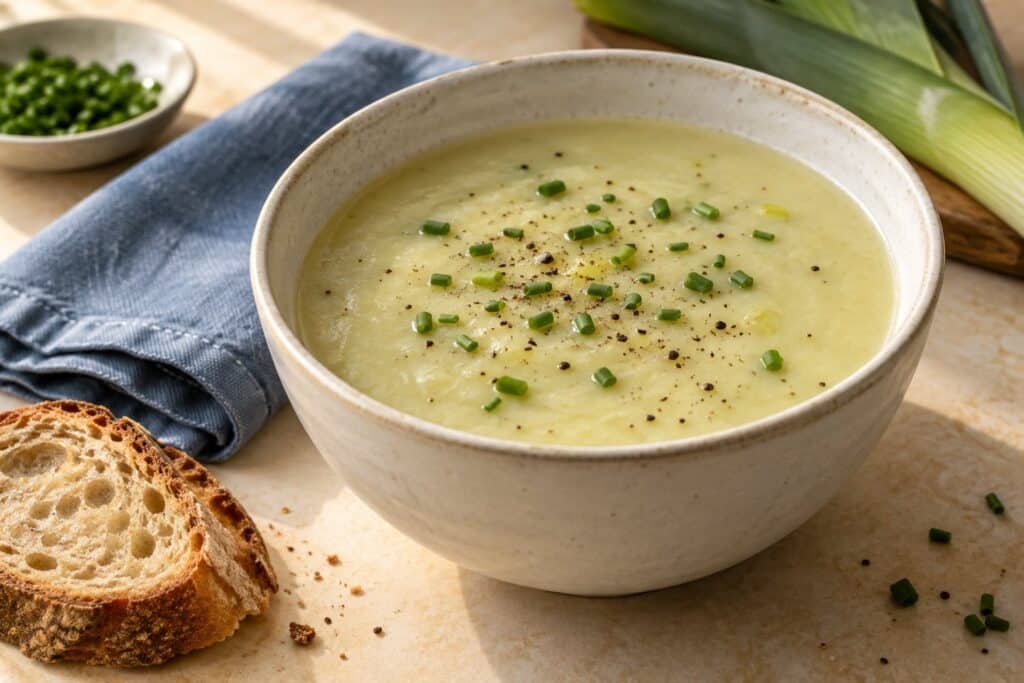
This potato and leek soup recipe starts with a simple idea: give the leeks time to soften, cook the potatoes until they fall apart easily, and blend only as much as you need. The result is a thick, savory soup with a gentle onion flavor and a finish you can adjust with cream, milk, or a little extra broth.
You don’t need flour, a long shopping list, or complicated equipment. A large saucepan and a potato masher can take you most of the way there. Below you’ll find measured ingredients, clear texture cues, practical substitutions, and answers to the problems that can turn a comforting bowl into something watery or gluey. For other midday meals to add to your rotation, explore our lunch recipes.
In this guide
What makes a good potato and leek soup?
Let the leeks provide the flavor
Leeks should be a main ingredient here, rather than a small addition to a pot of potato puree. This version uses about 1 pound of trimmed leeks to 1½ pounds of peeled potatoes. Because leek sizes vary so much, the prepared weight is more useful than the number of stalks in your shopping bag.
Cook sliced leeks gently in butter before adding liquid. They should soften, lose their raw sharpness, and smell sweet and savory. They don’t need to develop a dark crust. If the pot begins to look dry or the edges catch, lower the heat and add a tablespoon of water.
A little garlic rounds out the base without taking over. Bay leaf and thyme provide background flavor, while a small squeeze of lemon at the end can lift a bowl that tastes heavy. Add that lemon gradually; the finished soup should still taste of potatoes and leeks.
Aim for a spoonable texture
The finished soup should coat a spoon and flow from the ladle. It shouldn’t hold its shape like mashed potatoes. Potatoes thicken the liquid as they soften and break down, so judge the consistency after cooking and blending, not while the raw vegetables are still floating in broth.
Start with the measured broth and keep extra nearby. Different potatoes, pot sizes, and simmering temperatures change how much liquid the soup needs. Adjusting with a few tablespoons of hot broth is easier than trying to remove a large excess after blending.
Texture tip: Before you reach for a blender, press a piece of potato against the side of the pot with a spoon. If it resists or feels chalky, cook it longer. Tender potatoes need less mechanical work to become smooth.
Ingredients for this potato and leek soup recipe
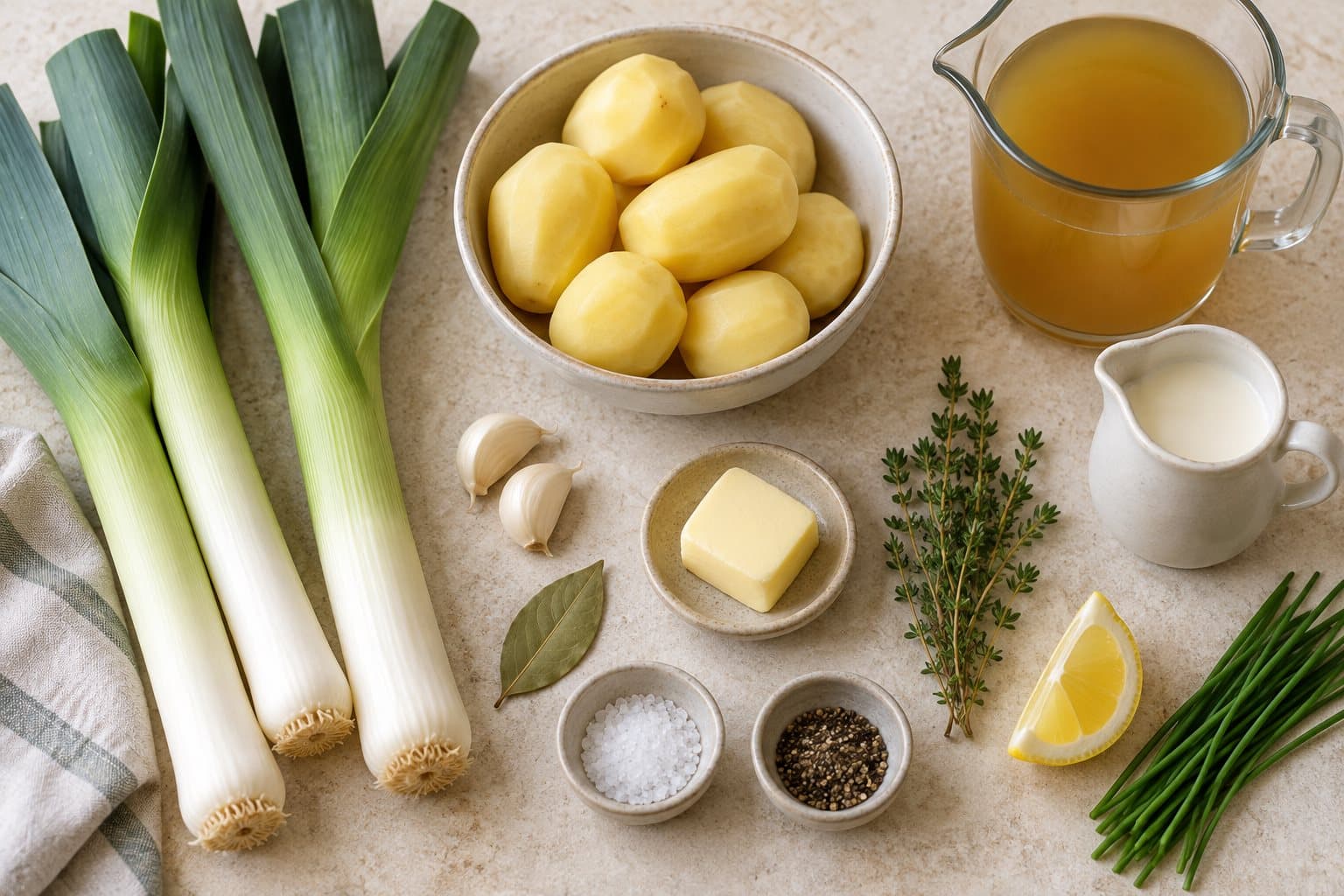
The base ingredients
For four main-course servings, gather:
- 3 tablespoons unsalted butter (42 g): For gently cooking the leeks.
- About 3 large leeks: Use 1 pound (450 g) of cleaned, sliced white and light-green parts; buy extra if the stalks have large dark-green tops.
- 2 garlic cloves, minced: Enough for a savory background.
- 1½ pounds potatoes (680 g), weighed after peeling: Cut into roughly ½-inch pieces.
- 4 cups low-sodium vegetable broth (950 ml): Keep another ½ to 1 cup available for adjustments.
- 1 bay leaf and ½ teaspoon dried thyme: Remove the bay leaf before blending.
- ½ teaspoon fine salt, plus more to taste: Reduce the starting amount if your broth is already salty.
- ¼ teaspoon ground black pepper: Add more at the table if you like.
- ½ cup heavy cream (120 ml), optional: For a richer finish.
- 1 to 2 teaspoons lemon juice, optional: Add at the end, tasting as you go.
- 2 tablespoons chopped chives: For serving.
Measure the leeks after trimming and cleaning. Measuring whole stalks would include the tough leaves and roots that don’t go into the soup. Similarly, weighing peeled potatoes keeps the vegetable-to-broth ratio more predictable.
Which potatoes should you choose?
Yukon Gold potatoes are a useful first choice for their flavor and soft texture after cooking. Russets are another option, especially if you want potatoes that break down readily. In the UK, a floury variety such as Maris Piper is suitable. Avoid treating a variety name as a substitute for checking doneness: the pieces still need to be completely tender.
| Potato choice | What to expect | How to use it here |
|---|---|---|
| Yukon Gold | A soft, creamy result after cooking | Peel, dice evenly, and blend briefly |
| Russet | A fluffy potato that breaks down readily | Peel and check tenderness before blending |
| Maris Piper | A floury option for a smooth soup | Start with the listed broth and adjust after cooking |
| Firm waxy potatoes | More distinct pieces and a less readily broken-down texture | Better if you prefer a chunky, lightly mashed finish |
Keep the potato weight the same when switching varieties. Leaving the skins on is an option for a rustic soup, but it changes both appearance and texture. For the pale, smooth version described here, peel them.
Broth, butter, and seasoning choices
A mild vegetable broth keeps the recipe vegetarian and allows the leeks to remain noticeable. Chicken broth also works if vegetarian suitability isn’t important for your meal. Taste whichever broth you use before adding the full amount of salt; low-sodium labels don’t mean every brand tastes the same.
Butter complements the mild vegetables, but olive oil works for a dairy-free base. Use 3 tablespoons in place of the butter. A strongly flavored oil can become more noticeable in a simple soup like this, so choose one you enjoy tasting on its own.
There is no added flour in the recipe. If you need the meal to be gluten-free, check the broth, toppings, and any bread you serve with it. Ingredient substitutions can change the suitability of the finished dish even when the basic vegetable mixture stays the same.
How to clean and prepare the vegetables
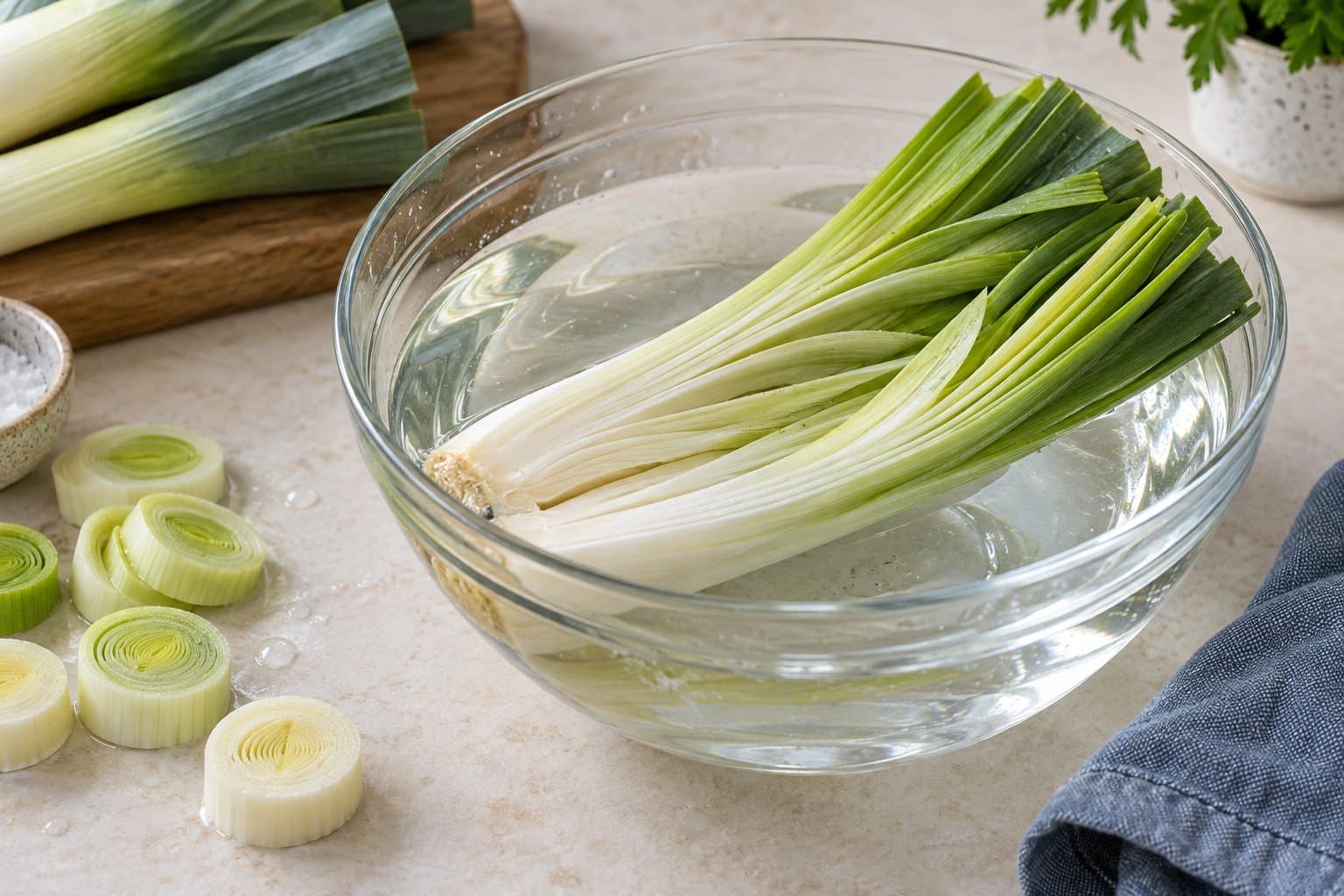
Wash between the leek layers
Leeks can hold soil between their overlapping leaves. A quick rinse of the outside won’t necessarily reach it. Cut off the roots and tough dark-green tops, then split each remaining stalk lengthwise. Hold the layers open under cool running water so you can wash away visible grit.
Slice the cleaned halves into thin half-moons. If you still see dirt, put the slices in a large bowl of cold water and swish them gently. Lift the leeks out with your hands or a slotted spoon, leaving any sediment behind. Repeat in fresh water if needed.
Drain well before cooking. A little moisture is fine, but carrying a bowlful of water into the pot will dilute the butter and make the early cooking stage harder to judge. Don’t pour the dirty soaking water back through the clean slices.
Preparation tip: The boundary between tender light-green leaves and tough dark-green leaves varies from stalk to stalk. Use the tender portion, rather than trying to cut every leek at exactly the same color line.
Cut the potatoes evenly
Peel the potatoes and cut them into pieces about ½ inch across. Similar-sized pieces finish cooking at roughly the same time, which helps avoid a mixture of crumbling potato and stubborn hard centers. Very large chunks take longer than the timing below allows.
If preparing the potatoes shortly before cooking, keep the cut pieces in cold water to limit browning. Drain them before adding them to the pot. Don’t count that soaking water as part of the broth measurement, and don’t leave prepared vegetables sitting out for hours.
Have the garlic, herbs, and measured broth ready before heating the butter. Once the leeks soften, the remaining ingredients go into the pot quickly. This small amount of organization also makes it easier to notice when the garlic is fragrant instead of distractedly letting it scorch.
How to make potato and leek soup
Soften the leeks before adding potatoes
Melt the butter in a large heavy saucepan or Dutch oven over medium-low heat. Add the drained leeks and the starting ½ teaspoon of salt. Cook for about 8 to 10 minutes, stirring regularly, until the slices are soft and have noticeably reduced in volume.
The timing is a guide. Thick slices, a crowded pan, or a low-powered burner can take longer. Look for tender, flexible pieces rather than relying only on the clock. Turn down the heat if the bottom of the pan browns before the leeks soften.
Add the minced garlic and cook for about 30 seconds, stirring. Add the diced potatoes, 4 cups of broth, bay leaf, thyme, and black pepper. Stir and scrape up any pale buttery residue from the base of the pot.
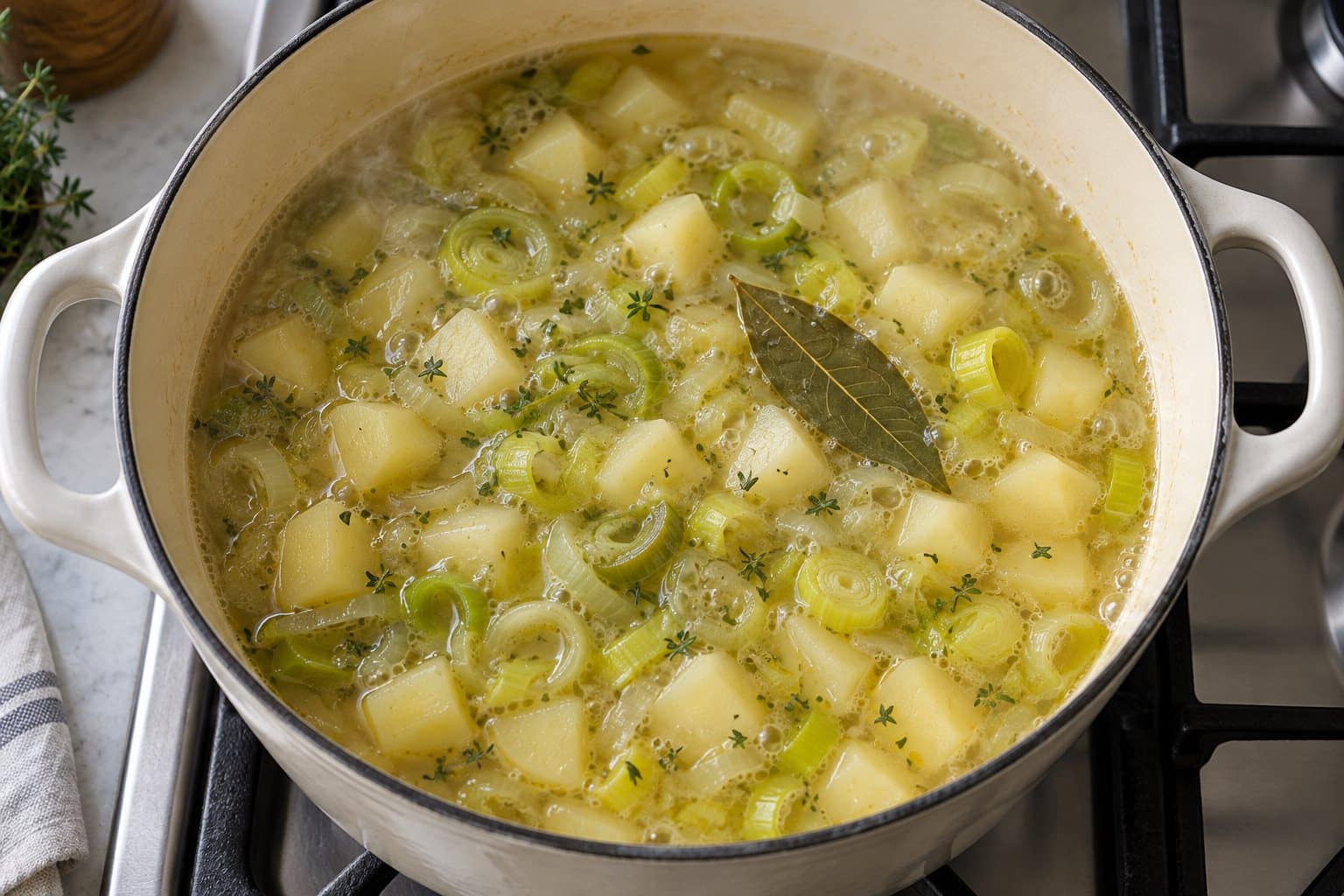
Simmer until the potatoes break easily
Bring the liquid to a gentle boil, then lower the heat to maintain a steady simmer. Partially cover the pot and cook for approximately 15 to 20 minutes. Stir occasionally so the vegetables don’t settle and catch on the bottom.
Test more than one potato piece, especially the largest ones. A fork should slide through without resistance, and a piece should crush easily against the pot. If the potatoes remain firm, continue simmering and check again after a few minutes.
Avoid a hard, splashing boil that reduces the liquid faster than the vegetables cook. If the pot looks dry before the potatoes soften, add a little extra broth and lower the heat. The ingredients should be able to move when you stir them.
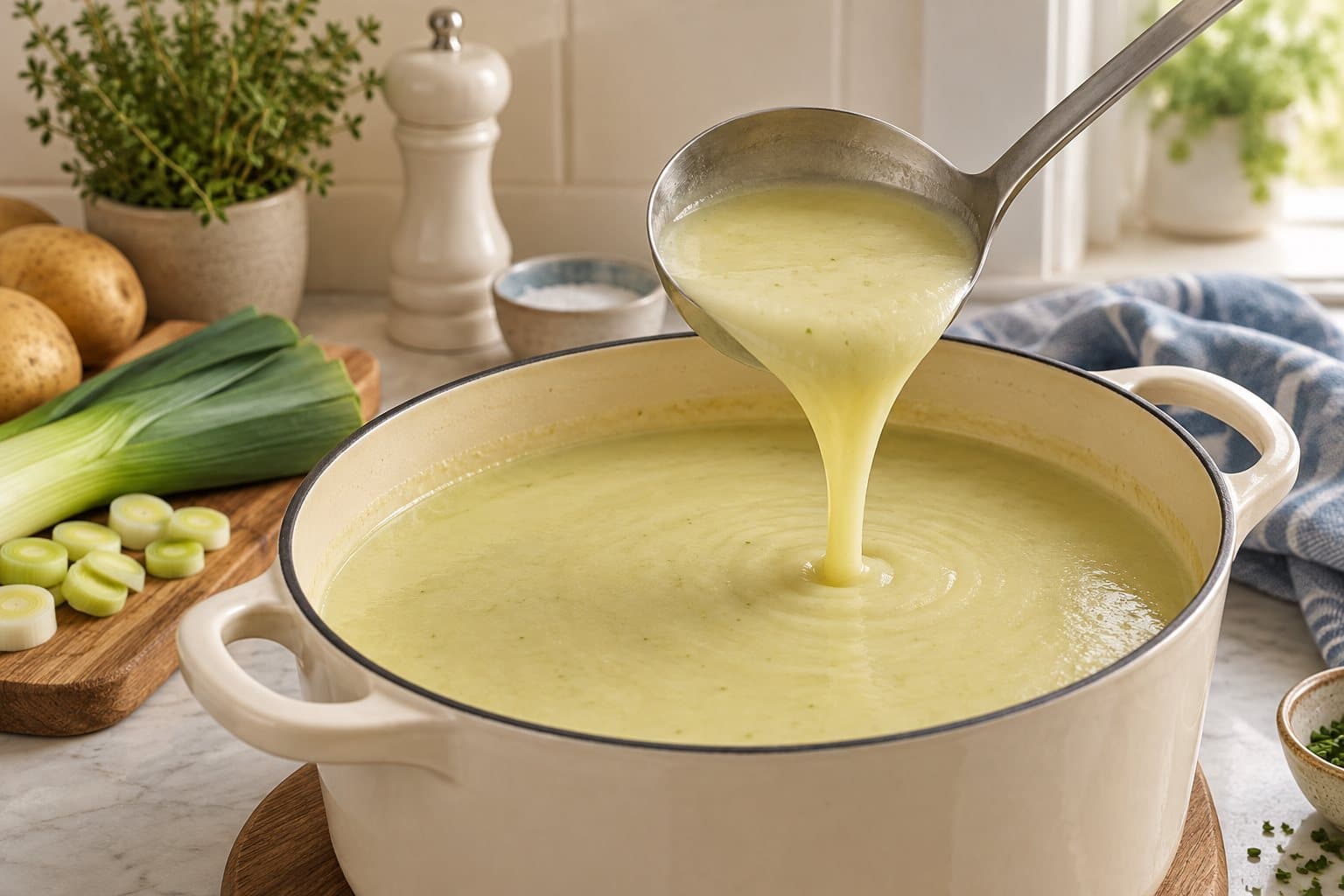
Blend gently and finish to taste
Remove the bay leaf. Take the pan off the heat and use a potato masher first if you want a chunky result. For a smoother bowl, use an immersion blender in short bursts, keeping its head submerged to limit splashes. Stop as soon as you reach the texture you want.
If using a countertop blender, follow its hot-liquid instructions and work in small batches. Never blend hot soup in a sealed personal blender that isn’t designed for hot liquids. Steam needs a safe way to escape, and the container must not be overfilled.
Return the soup to low heat. Stir in the optional cream and warm through. Add extra broth a little at a time if the soup is thicker than you want. Taste for salt and pepper, then add the optional lemon juice gradually. Finish with chopped chives when serving.
Blending tip: Stop and assess between bursts. Continuing to blend because the soup looks almost smooth can push potatoes toward a sticky texture. A little texture is preferable to a gluey finish.
Choose your finish: cream, milk, or no dairy
Make leek and potato soup without cream
For a no-cream version, simply omit the optional ½ cup of heavy cream. Blend or mash the cooked potatoes into the broth, then loosen the soup as needed with a little more broth. You don’t need to replace the cream with an equal amount of another ingredient automatically.
Taste after adjusting the texture. Removing cream changes the richness and can make the savory flavors seem more direct. A few extra chives, a small drizzle of olive oil, or a little lemon juice can finish the bowl without masking the vegetables.
For a vegan variation, replace the butter with olive oil as well as omitting the cream, and use vegetable broth. A cream-free soup made with butter is still a dairy-containing recipe. Check garnishes too: cheese, buttered croutons, and some prepared breads can add dairy back into the meal.
Use milk for a lighter finish
To make easy potato and leek soup with milk, use ½ cup of whole milk in place of the optional cream. Add it after the vegetables have cooked and the soup has been blended. Warm gently, stirring, then judge the consistency before adding any extra broth.
Milk provides less richness than heavy cream and can make the soup thinner. If you know you want this version, hold back about ½ cup of the initial broth, provided the potatoes still have enough liquid to cook evenly. Add the reserved broth later only if needed.
Unsweetened plant milk can also change the texture, but choose carefully. Sweetened or vanilla-flavored products are unsuitable for this savory soup. Coconut milk gives a noticeable coconut flavor, so it creates a different dish rather than a neutral substitute.
Keep a chunky version simple
You don’t have to puree the whole pot. Mash some of the potatoes against the bottom of the pan and leave the rest as small pieces. Stir thoroughly to distribute the mashed potato through the broth before deciding whether the soup needs thinning.
This is also useful when you don’t have a blender. Cut the leeks finely at the start so long strands don’t dominate the finished spoonful. Add the cream, milk, or extra broth only after mashing, because the final texture will be clearer at that point.
Common potato soup mistakes and how to fix them
Diagnose the problem before adding ingredients
A bland soup and a thin soup need different adjustments. Taste a spoonful once it has cooled enough to judge comfortably. Check the texture, the salt level, and whether the leeks taste sweet or harsh before adding more cream, cheese, or seasoning.
| Problem | Likely cause | Useful adjustment |
|---|---|---|
| Watery soup | Too much broth or too little potato broken into the liquid | Mash more cooked potato into it, or simmer uncovered briefly while stirring |
| Soup is too thick | Too much reduction, or thickening as it stands | Stir in hot broth a few tablespoons at a time |
| Gluey texture | Excessive blending | Stop blending; gentle thinning may help serving consistency but won’t fully restore the texture |
| Gritty mouthfeel | Soil trapped in leek layers | Prevent with thorough washing; blending does not remove grit |
| Harsh or bitter flavor | Burned garlic or scorched leeks | Avoid scraping burned material into the soup; severe scorching may require starting over |
| Flat flavor | Insufficient seasoning or a weak broth | Adjust salt first, then pepper and a little optional lemon |
| Hard potato pieces | Pieces too large or insufficient cooking | Simmer longer before blending |
Fix thickness without overworking the potatoes
If the soup is thin, check that the potatoes are fully cooked and incorporated. A few unbroken pieces won’t thicken the surrounding liquid as much as mashed potato will. Mash or blend briefly, then reassess before reducing the pot further.
If it is already smooth and still thin, simmer uncovered for a few minutes, stirring frequently. Reduction concentrates salt as well as flavor, so hold off on final seasoning until the consistency is right. Avoid sprinkling raw flour directly into the finished soup, where it can form lumps.
For thick soup, add warm broth gradually. Cold liquid can cool the pot abruptly and delay serving. Stir from the bottom so you don’t mistake a thin surface layer for an evenly adjusted soup.
Understand what blending cannot fix
Blending won’t remove dirt, reverse a burned flavor, or reliably rescue overworked potato starch. Those problems begin earlier in the process. Washing, gentle cooking, and stopping the blender promptly have more effect than adding expensive finishing ingredients afterward.
The same principle applies to using more cream. Cream can enrich a well-made soup, but it doesn’t automatically correct weak seasoning or undercooked vegetables. Taste the vegetable base first so your final adjustment addresses the actual problem.
What to serve with it and how to store leftovers
Build a meal around contrasting textures
Crusty bread, toasted sourdough, or crisp croutons work well with a smooth soup. Add toppings just before eating so they keep their crunch. A green salad with a sharp dressing provides a fresh contrast if you want something beyond bread.
For a more substantial meal, serve a smaller bowl alongside a portion of our easy Cornish pasty recipe. The pastry adds a different texture, and adjusting the soup portion keeps the plate from feeling too heavy.
Chives are enough for the basic recipe. You can also offer grated cheese, a little cream, or freshly ground pepper at the table so each person can finish their own bowl. Keep optional toppings separate if people need different dietary variations.
Refrigerate and freeze promptly
Divide leftover soup into shallow containers and refrigerate within two hours of cooking, or within one hour if the surroundings are hotter than 90°F (32°C). Keep the refrigerator at 40°F (4°C) or below and use the soup within three to four days. These storage practices follow FoodSafety.gov’s leftovers guidance.
For freezing, leave space for expansion and label each container with its cooking date. The FoodSafety.gov cold-storage chart gives soups and stews a two-to-three-month freezer window for best quality. If planning ahead, freeze the soup before adding dairy, which can separate after thawing.
Thaw in the refrigerator. Reheat while stirring so the center and edges warm evenly; leftovers should reach 165°F (74°C), and official guidance recommends bringing soups to a boil. Add broth if needed to prevent sticking. See FoodSafety.gov’s reheating advice.
Don’t use smell alone to decide whether an old container is safe. Our guide to food dates and safe storage explains why handling and temperature history matter alongside the label.
Frequently asked questions
How do you make the best potato and leek soup?
Start with thoroughly washed leeks, soften them gently, and cook evenly diced potatoes until they crush easily. Blend only long enough to achieve the texture you want. Finally, adjust the broth, salt, and optional cream after blending. Those checkpoints give you control over sweetness, seasoning, and consistency instead of relying on extra cream to solve every problem.
Can you make leek and potato soup without cream?
Yes. Potatoes give the soup body when they soften and are mashed or blended into the broth. Omit the optional cream and add a little extra broth only if the result needs loosening. For a completely dairy-free version, use olive oil instead of butter as well. Check the broth and toppings if you also need the finished meal to be vegan.
Can you use milk instead of cream?
Yes, use ½ cup of whole milk in place of the optional ½ cup of cream. Milk gives a less rich finish and can make the soup thinner, so add it after blending and adjust the broth afterward. Warm it gently while stirring. Avoid adding lots of extra liquid before you have checked how thick the cooked potato base already is.
What makes potato and leek soup so good?
The ingredients balance each other: softened leeks bring mild sweetness, potatoes provide body, and broth adds savory flavor. Butter or an optional dairy finish adds richness, while chives and a little lemon can brighten the bowl. Because the seasoning is simple, washing the leeks and cooking them properly makes a noticeable difference to the finished flavor.
What are common mistakes when making potato soup?
Common problems include adding too much liquid early, leaving potato pieces undercooked, scorching the aromatics, and blending for too long. With leek soup, trapped grit is another avoidable issue. Clean the leek layers carefully, cut the potatoes evenly, and check tenderness before blending. Adjust thickness at the end, and stop processing as soon as the soup reaches the texture you want.
Can you make this potato and leek soup recipe in a slow cooker?
A slow-cooker adaptation is possible, but its liquid level and timing need checking separately from this stovetop version. Slow cookers lose less moisture, and potato cooking time varies with the appliance and piece size. Soften the leeks first, cook until the potatoes crush easily, and add dairy after blending. The recipe card below specifies the stovetop method; it does not claim a tested slow-cooker schedule.
Make the soup your own
Keep the first batch straightforward so you can learn the texture you prefer. Try the base before adding cream, then finish one bowl more richly if you want to compare. Make a note of the potato variety, broth brand, and how much extra liquid you added; those details are more useful for repeating your result than simply remembering that the soup was good.
Serve it smooth or lightly mashed, with chives and something crisp alongside. Next time, change one element at a time so you know what affected the result. For more meals built around everyday ingredients, browse the Epsilon recipe collection.
Potato and Leek Soup Recipe Card
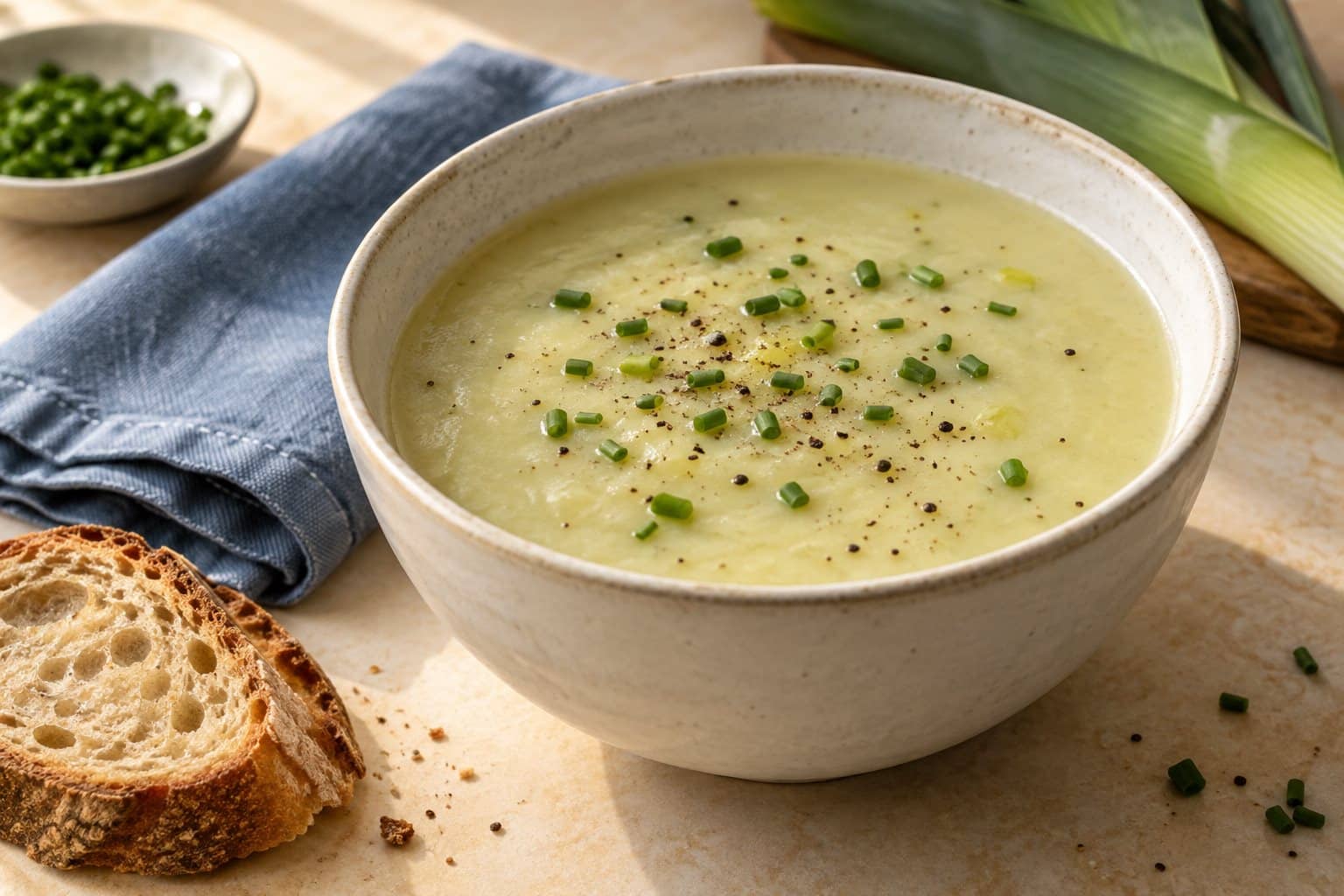
A savory potato and leek soup with a naturally thick base, gentle garlic and thyme, and optional cream. Finish smooth or lightly mashed and adjust with broth to suit your bowl.
Prep: 15 minutes • Cook: approximately 35 minutes • Total: approximately 50 minutes
Yield: 4 main-course servings
Course: Soup / lunch • Method: Stovetop
Diet: Vegetarian with vegetable broth; dairy-free variation below.
Ingredients
- 3 tablespoons unsalted butter (42 g)
- 1 pound cleaned, trimmed, sliced leeks (450 g; about 3 large leeks, white and light-green parts)
- 2 garlic cloves, minced
- 1½ pounds potatoes (680 g), peeled weight, cut into ½-inch pieces
- 4 cups low-sodium vegetable broth (950 ml), plus extra as needed
- 1 bay leaf
- ½ teaspoon dried thyme
- ½ teaspoon fine salt, plus more to taste
- ¼ teaspoon black pepper
- ½ cup heavy cream (120 ml), optional
- 1–2 teaspoons lemon juice, optional, to taste
- 2 tablespoons chopped chives, to serve
Instructions
- Prepare the vegetables. Split and wash the leeks between their layers, slice, and drain well. Peel and dice the potatoes into ½-inch pieces.
- Soften the leeks. Melt the butter over medium-low heat in a large pot; add the leeks and salt. Cook, stirring, for 8–10 minutes or until tender without dark browning.
- Add the aromatics and broth. Stir in the garlic for about 30 seconds. Add the potatoes, 4 cups broth, bay leaf, thyme, and pepper.
- Simmer until tender. Bring to a gentle boil, lower to a simmer, and partially cover. Cook for 15–20 minutes, or until the largest potato pieces crush easily, adding a little broth if necessary.
- Mash or blend. Remove the bay leaf and take the pot off the heat. Mash for a chunky soup or use an immersion blender in short bursts until the desired texture is reached.
- Finish and adjust. Stir in the optional cream, warm gently, and add extra broth as needed. Taste for salt and pepper, then add optional lemon juice gradually.
- Serve. Divide among four bowls and finish with chopped chives. Add bread or other toppings separately.
Notes
- Without cream: omit it and adjust thickness with broth after blending.
- With milk: substitute ½ cup whole milk for the cream and assess consistency before adding extra broth.
- Vegan: replace butter with 3 tablespoons olive oil, omit cream, and use vegetable broth.
- Texture: fully soften the potatoes, remove the bay leaf, and avoid prolonged blending.
- Storage: refrigerate promptly in shallow containers and use within 3–4 days; freeze for 2–3 months for best quality.
- Timing varies with the pot, burner, potato variety, and dice size. Doneness cues take priority.
Images are AI-generated illustrations. Appearance may vary with ingredients and preparation.