
Pineapple Mango Habanero Jam brings bright fruit, glossy texture, and real heat into one jar. It tastes sweet at first, then the habanero comes through with a slow, warm finish that keeps every bite interesting.
This jam works far beyond breakfast toast. Pineapple Mango Habanero Jam fits cheese boards, grilled meats, shrimp, appetizers, and cream cheese spreads, so one batch can do a lot of work in your kitchen.
I love recipes like this because they feel bold without being hard. A good Pineapple Mango Habanero Jam gives you tropical sweetness, a clean set, and enough heat to wake up simple food in seconds.
Hi, I’m Chef Adriana, and I always enjoy condiments that turn a plain plate into something memorable. Pineapple Mango Habanero Jam does exactly that, especially when the fruit stays bright and the pepper heat arrives slowly instead of hitting all at once.
The first time I made Pineapple Mango Habanero Jam, I spooned it over cream cheese and set it out with crackers. People kept asking what was in it because the flavor moved from sweet pineapple to rich mango to that floral habanero kick at the end.
If you love complex, spicy-sweet condiments, you should also try our orange chipotle citrus fire jam. It has that same bold contrast, but with a darker smoky note instead of a tropical finish.
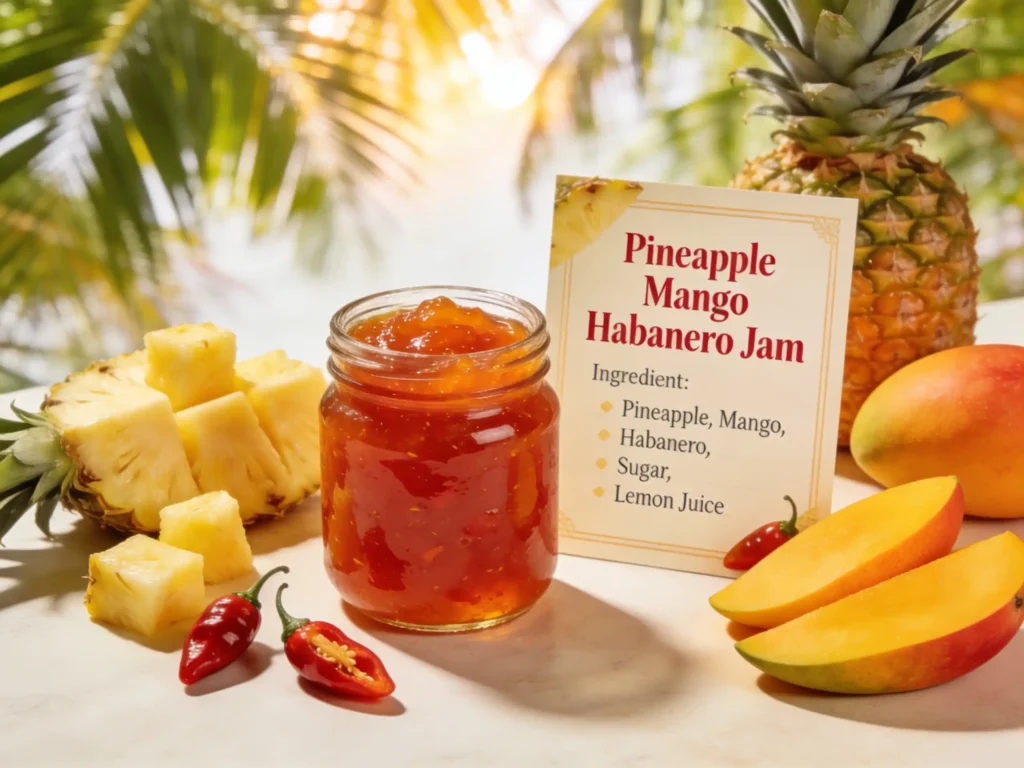
Table of Contents
Table of Contents
Why This Tropical Pepper Jam Is the Ultimate Glaze
The Magic of the Slow Burn Flavor Profile
Pineapple Mango Habanero Jam works because the flavor does not hit all at once. The pineapple tastes bright and juicy, the mango adds body and sweetness, and the habanero arrives a second later with a fuller, warmer burn.
That slow burn matters. A jam that tastes hot right away can bury the fruit, but Pineapple Mango Habanero Jam lets the tropical flavor land first and the pepper follow behind it.
That order makes the jam far more useful. It tastes good on cream cheese, but it also works as a glaze because the fruit still comes through after the heat starts to build.
Habaneros bring more than heat. They also have a lightly floral, fruity note that fits pineapple and mango much better than a flatter pepper would.
That is why the balance matters so much. A strong Pineapple Mango Habanero Jam should taste like fruit and pepper together, not fruit hiding under fire.
I like that this jam feels lively instead of heavy. Even though it is sweet, the acidity from the fruit keeps the spoonful bright and clean on the tongue.
Why It Makes Such a Good Glaze
Pineapple Mango Habanero Jam shines as a glaze because it has sugar, acid, and heat in the same jar. That combination helps it cling to meat, caramelize lightly, and still cut through richer dishes.
Chicken and shrimp especially love this kind of jam. The fruit adds shine and sweetness, while the habanero keeps the glaze from tasting flat or sticky in a one-note way.
A spoonful of Pineapple Mango Habanero Jam can also rescue a plain dinner. Brush it over grilled chicken, stir it into pan sauce, or loosen it with a little lime juice and use it as a glossy finishing layer.
The texture helps too. A well-set jam clings better than a thin sauce, so it gives you a more polished finish on the plate.
That is one reason I always keep jars like this around. Pineapple Mango Habanero Jam feels special, but it still works on busy weeknights when you need quick flavor.
Essential Ingredients for the Perfect Sweet Heat
Fresh vs. Canned Pineapple
Fresh pineapple usually gives Pineapple Mango Habanero Jam the brightest flavor. It tastes fresher, smells more vivid, and gives the finished jam a cleaner tropical finish.
Canned pineapple can still work, but you need to manage the liquid. Many canned versions carry extra juice, and that extra moisture can stretch the boil and affect how quickly the jam sets.
If you use canned fruit, drain it very well before measuring. Pineapple Mango Habanero Jam needs consistent fruit and sugar ratios, so too much liquid can throw off the final texture.
Fresh pineapple also gives you better control over sweetness. Some canned fruit tastes sweeter than fresh, which can shift the flavor balance and make the jam feel heavier.
That said, canned pineapple is still useful when fresh fruit is expensive or not ripe. The key is draining it well and measuring carefully so the pectin can do its job.
Mango matters just as much. A ripe mango should feel soft enough to puree smoothly, but not so overripe that it tastes dull or fermented.
How to Safely Handle and Seed Habanero Peppers
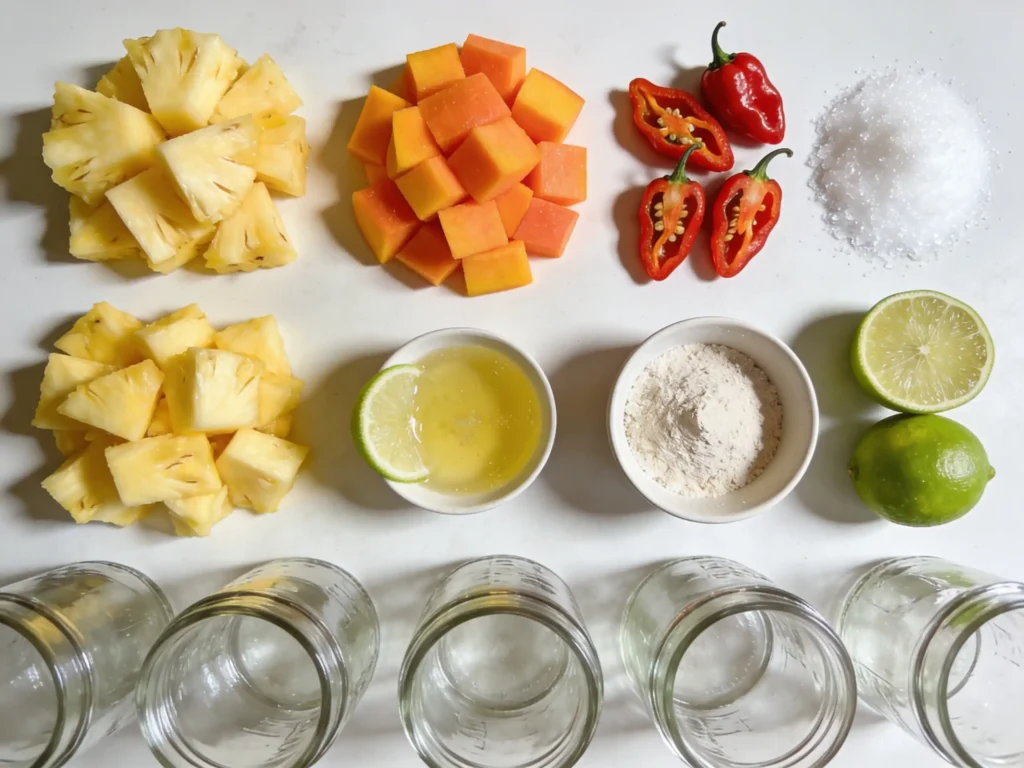
Habaneros are not a casual pepper. They usually sit between 100,000 and 350,000 Scoville heat units, which makes gloves a must, not a suggestion, when you prep Pineapple Mango Habanero Jam.
The heat lives mostly in the seeds and the pale inner membranes. If you want a milder Pineapple Mango Habanero Jam, remove more of those inner parts before chopping.
If you want more heat, leave some membranes in. Even one extra pepper or one extra batch of seeds can change the final jar much more than many people expect.
Always wear gloves while cutting habaneros. Then wash your knife, board, and hands well before touching anything else in the kitchen.
Do not taste the raw peppers carelessly. Habanero heat builds fast, and it lingers longer than jalapeño heat.
I also like to mince the peppers very finely. Small, even pieces distribute the heat more evenly through Pineapple Mango Habanero Jam and keep one spoonful from feeling much hotter than the next.
Here is a quick pepper guide for jam making:
| Pepper | Approximate Scoville Range | Best Use in Jam |
|---|---|---|
| Jalapeño | 2,500–8,000 | Gentle warmth and mild pepper flavor |
| Serrano | 10,000–23,000 | Stronger green heat with more bite |
| Habanero | 100,000–350,000 | Bold floral heat and true sweet-spicy contrast |
For a milder pepper profile, explore the flavors in our cherry chipotle firecracker jam. It still brings sweet heat, but the finish tastes smokier and less fiery than Pineapple Mango Habanero Jam.
To bring out more of the pineapple flavor, I also like ideas from our grilled pineapple sides. A little extra attention to pineapple flavor always pays off in tropical recipes.
The Step-by-Step Boiling and Pectin Process
Why Tropical Fruits Need Extra Pectin to Gel
Pineapple and mango taste wonderful in jam, but they do not set as easily as some other fruits. Pineapple Mango Habanero Jam needs added pectin because tropical fruits naturally contain less pectin than apples or citrus peel-heavy preserves.
That means you cannot treat this like a strawberry jam and hope it behaves the same way. The added pectin gives Pineapple Mango Habanero Jam the structure it needs to thicken into a proper spread instead of staying syrupy.
Acid matters too. Lime juice helps brighten the flavor, but it also supports the setting process by giving the pectin the right environment to work.
The sugar plays a role as well. Pectin, sugar, and acid work together, so if one part shifts too much, the final set can weaken.
That is why I do not cut sugar casually in this kind of recipe. Pineapple Mango Habanero Jam depends on that balance for both flavor and texture.
The Science of the Rolling Boil
A true rolling boil means the mixture keeps boiling hard even while you stir it. That level of heat matters because Pineapple Mango Habanero Jam needs a strong boil to activate the pectin properly and lock in the final set.
A weak simmer will not do the same job. If the boil is too gentle, the jam may stay loose, no matter how long it looks like it has been cooking.
Once the sugar goes in, the clock matters. Most pectin jams, including Pineapple Mango Habanero Jam, need a hard rolling boil for exactly 1 minute after the sugar dissolves and the boil fully returns.
That 1-minute stage feels small, but it is critical. It affects the final gel, the shine, and the way the jam behaves in the jar.
Chef’s Note: Add 1 teaspoon of grated fresh ginger if you want a more layered tropical aroma. Ginger does not take over, but it gives Pineapple Mango Habanero Jam a brighter, more lifted finish.
Here is the full process:
- Wash, peel, and finely dice the pineapple and mango.
- Put on gloves, then mince the habaneros, removing seeds and membranes based on your heat preference.
- Prepare clean jars, lids, and a water bath canner if you plan to can the jam.
- Add the pineapple, mango, habanero, lime juice, and powdered pectin to a heavy pot.
- Stir well and bring the mixture to a full boil over medium-high heat.
- Add all the measured sugar at once and stir until dissolved.
- Return the jam to a hard rolling boil that does not stop when stirred.
- Boil hard for exactly 1 minute.
- Remove the pot from the heat and skim off extra foam if needed.
- Let the jam rest briefly, then ladle it into prepared jars.
- Leave 1/4 inch headspace in each jar.
- Wipe the rims, apply lids, and process in a boiling water bath if making shelf-stable jam.
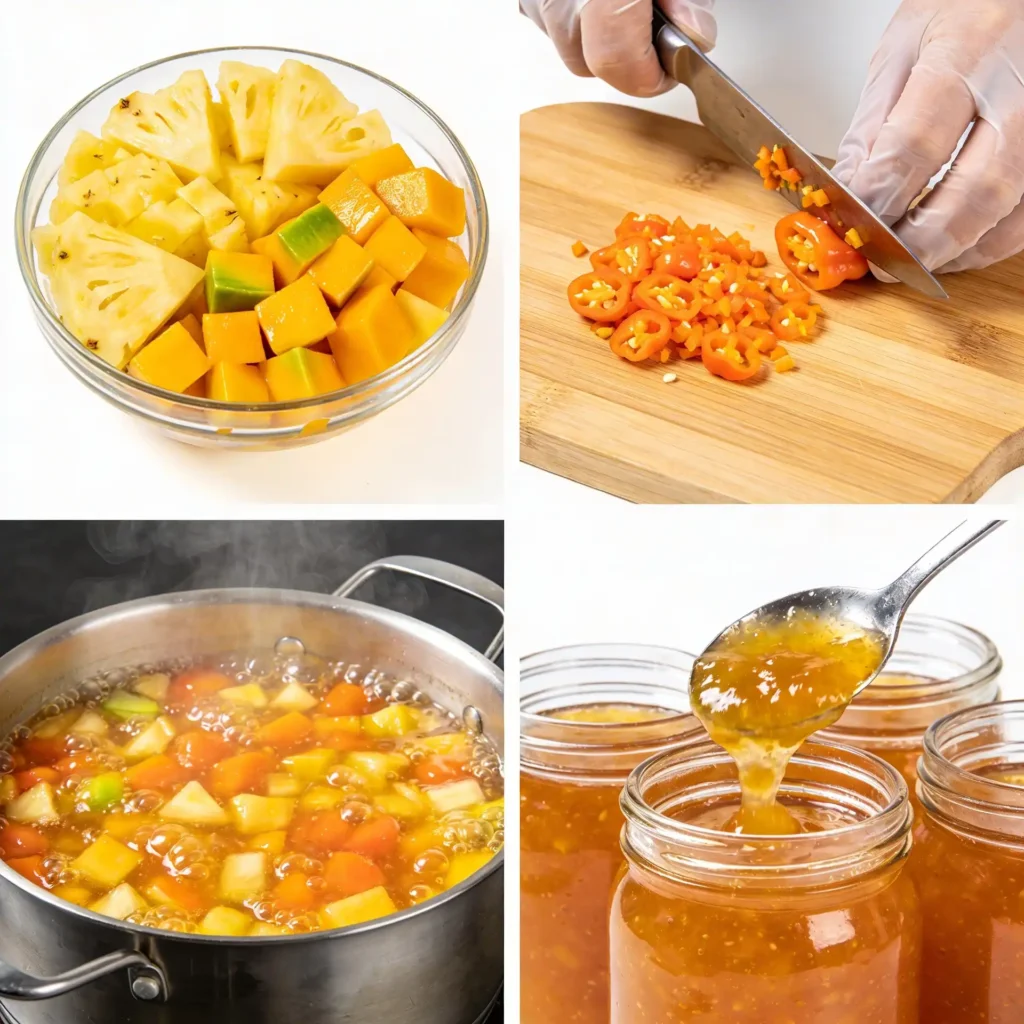
Pineapple Mango Habanero Jam moves quickly once the sugar goes in. I always measure everything first so I can focus on timing when the pot reaches that hard boil.
If you enjoy slow-simmered fruit preserves, check out our slow cooker peach butter. It gives you a softer, richer fruit spread with a gentler cooking pace.
Practice your food-handling and acid-balancing skills with our quick pickled red onions. That recipe also rewards careful prep and clean flavor balance.
Safe Canning and Refrigerator Storage
Water Bath Canning for Long-Term Pantry Storage
If you want a pantry-stable Pineapple Mango Habanero Jam, water bath canning is the standard method. Once the hot jam goes into prepared jars, leave 1/4 inch headspace, wipe the rims clean, apply the lids, and process the jars according to safe boiling-water instructions for your jar size.
After processing, let the jars cool undisturbed on a towel-lined surface. The lids should seal as they rest, and the centers should not flex when pressed after cooling.
Always check the seals before storing the jars. If one does not seal, refrigerate it and use it first.
This step gives Pineapple Mango Habanero Jam a much longer life, which makes it especially useful if you want to make several jars while fruit is in season. A shelf-ready jar also makes a great gift if you like homemade pantry staples.
The 24-Hour Rule for Proper Jam Setting
Do not judge the set too early. Pineapple Mango Habanero Jam often needs close to 24 hours to settle fully, and some batches continue to firm up beyond that.
That is normal. Hot jam in the pot does not look like cold jam in the jar, so patience matters before you decide the texture failed.
I like to let the jars rest at room temperature until fully cooled, then check them the next day. Pineapple Mango Habanero Jam almost always looks more finished after that waiting period.
If you skip the waiting and start worrying too soon, you may end up fixing a jar that was already heading toward the right set. Time is part of the recipe here.
For another tropical sauce with big flavor, whip up a batch of our huli huli sauce recipe. It brings sweet island-style flavor in a savory direction.
Best Ways to Serve Your Tropical Spicy Jam
Elevating Cream Cheese and Appetizer Boards
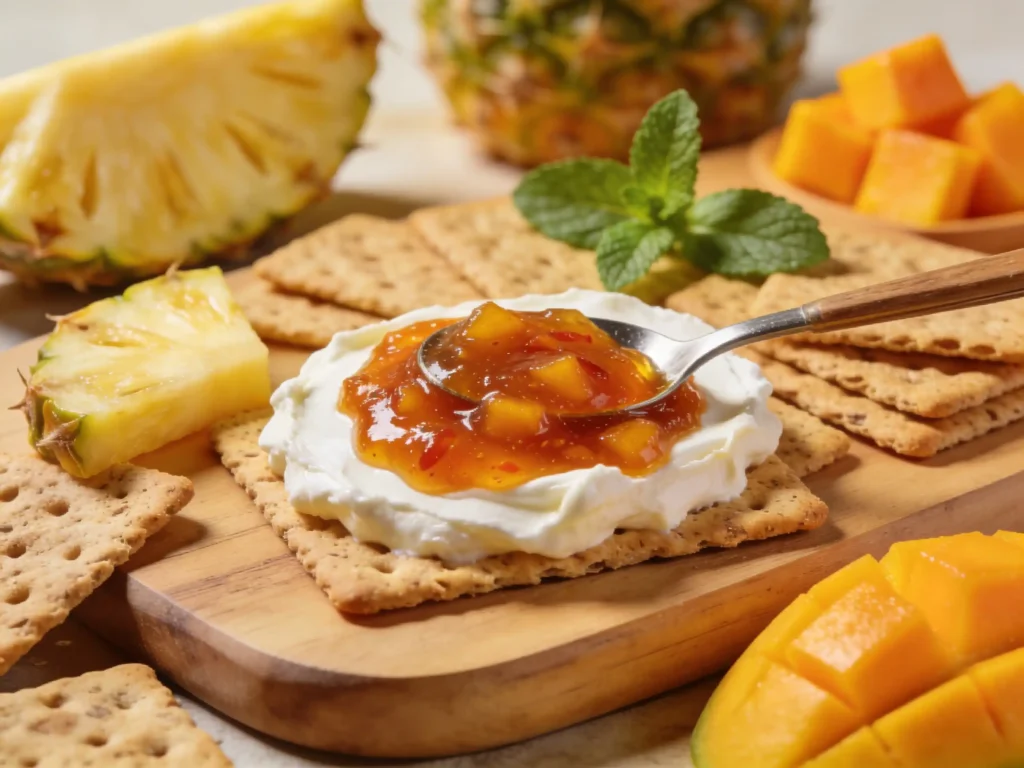
One of the easiest ways to serve Pineapple Mango Habanero Jam is over a block of cream cheese. The cool dairy softens the pepper heat, while the tropical fruit stays bright and glossy on top.
That combination works because it feels rich, sweet, spicy, and easy all at once. You only need crackers or toasted bread on the side to make it feel party-ready.
Pineapple Mango Habanero Jam also looks beautiful on a board. The golden color stands out next to pale cheese, dark crackers, and salty cured meats.
I like using it as the bright, glossy piece on a charcuterie board. It adds movement and color without needing a separate sauce bowl full of something thin or messy.
Using Jam as a Glaze for Shrimp and Chicken
Pineapple Mango Habanero Jam makes a great glaze for proteins because it already has sweetness, acidity, and heat built in. Warm it slightly and brush it over grilled chicken, roasted shrimp, or skewers near the end of cooking.
The sugar helps it shine, and the habanero gives the glaze a longer finish than plain fruit jam. That makes it especially good on savory foods that need a little color and punch.
It also works as a dipping sauce when loosened with a little lime juice or warm water. That small adjustment gives Pineapple Mango Habanero Jam a more sauce-like texture without losing the flavor.
Use this jam as a sticky, sweet-heat glaze for our crispy smoked chicken wings. Pair it as a vibrant dipping sauce for our honey garlic shrimp recipe.
Brush it over our hawaiian mochiko chicken for an unforgettable finish. Pineapple Mango Habanero Jam fits that sweet-savory island flavor beautifully.
Troubleshooting Soft Jam or Extreme Heat
What to Do if Your Jam Fails to Set
Pineapple Mango Habanero Jam may look loose at first, especially while still warm. Many jams need 24 to 48 hours to finish their gel, so the first fix is often patience.
If it still looks runny after the waiting period, you can reboil it with more pectin using the correct method. That extra step usually solves the texture problem if the measurements stayed close to the recipe in the first place.
Doubling the recipe often causes trouble. Large batches heat differently and can weaken how the pectin forms the final structure.
Reducing sugar can also create a softer set. Pineapple Mango Habanero Jam depends on the relationship between pectin, acid, sugar, and boil strength, so big changes can break that balance.
If the jam stays thinner than you wanted, do not throw it away. A loose Pineapple Mango Habanero Jam still works beautifully as a glaze, a sauce, or even a cocktail syrup.
How to Handle Jam That Feels Too Hot
If your Pineapple Mango Habanero Jam came out hotter than expected, the easiest fix is pairing. Cream cheese, brie, mascarpone, or even a dollop of sour cream can soften the burn and let the fruit show more clearly.
That is one reason dairy pairings work so well. The fat cools the heat while the sweetness of the fruit still carries through.
You can also use the jam in smaller amounts. A thin glaze or small spoonful on meat often feels less fiery than a thick spread on a cracker.
Here is a quick troubleshooting guide:
| Problem | Likely Cause | Solution |
|---|---|---|
| Runny jam | Jam has not fully cooled or pectin did not set yet | Wait 48 hours or re-boil with the proper method |
| Too spicy | Too many seeds, membranes, or peppers used | Serve over dairy like cream cheese to cut the heat |
| Weak tropical flavor | Fruit was underripe or too diluted | Use ripe fruit and drain canned pineapple well |
| Jam tastes too sweet | Not enough acid or pepper contrast | Add full lime juice and balance heat carefully next time |
Pineapple Mango Habanero Jam gets easier every time you make it. Once you learn your preferred heat level and fruit balance, the jars become much more predictable.
Frequently Asked Questions
How hot is habanero jam?
Habanero jam can range from medium-hot to very hot depending on how many peppers, seeds, and membranes you use. A Pineapple Mango Habanero Jam usually feels like a slow warm burn rather than a sharp instant hit.
Can I use canned pineapple for jam?
Yes, you can use canned pineapple. Drain it very well before measuring so Pineapple Mango Habanero Jam does not end up too loose.
What if my jam is too thin?
Wait at least 24 to 48 hours before deciding it failed. If Pineapple Mango Habanero Jam still looks too thin after that, reboil it with the proper pectin method.
What are the best food pairings for spicy tropical jam?
Pineapple Mango Habanero Jam pairs well with cream cheese, crackers, grilled chicken, shrimp, pork, soft cheeses, and appetizer boards. It also works well as a glaze or dipping sauce.
Can I substitute the sugar in this recipe?
Major sugar changes can affect how the jam sets. Pineapple Mango Habanero Jam relies on the balance of sugar, acid, and pectin, so substitutions may change the final texture.
Why do I need lime juice for this recipe?
Lime juice adds brightness and helps support the set. In Pineapple Mango Habanero Jam, the acid also helps keep the flavor lively instead of overly sweet.
Conclusion
Pineapple Mango Habanero Jam brings tropical fruit, bright acidity, and real pepper heat into one glossy jar. It feels exciting on a cheese board, useful as a glaze, and special enough to turn a plain snack into something people remember.
The best batch comes from a few simple choices done well. Use ripe fruit, handle the habaneros carefully, respect the 1-minute hard boil, and give the jam time to cool and set.
Once you make Pineapple Mango Habanero Jam, you start finding new uses for it everywhere. Cool down your palate after this spicy treat with a refreshing pineapple ginger mocktail.
Print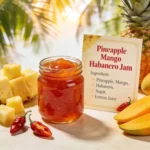
Easy Pineapple Mango Habanero Jam Recipe
- Total Time: 25 minutes
- Yield: 5 half-pint jars 1x
Description
A glossy Pineapple Mango Habanero Jam with sweet tropical fruit, floral heat, and a bright finish that works on cream cheese, appetizer boards, shrimp, and chicken glazes.
Ingredients
- 2 cups finely diced pineapple
- 2 cups finely diced ripe mango
- 2 to 3 habanero peppers, minced
- 1/4 cup bottled lime juice
- 1 box powdered pectin
- 5 cups granulated sugar
- 1 teaspoon grated fresh ginger, optional
- Clean half-pint jars and lids
Instructions
- Wash, peel, and finely dice the pineapple and mango.
- Put on gloves, then mince the habaneros, adjusting seeds and membranes to your preferred heat level.
- Prepare clean jars, lids, and a boiling water bath canner if canning.
- Add the pineapple, mango, habanero, lime juice, optional ginger, and powdered pectin to a heavy pot.
- Bring the mixture to a full boil over medium-high heat, stirring often.
- Add all the sugar at once and stir until dissolved.
- Return the mixture to a hard rolling boil that does not stop when stirred.
- Boil hard for exactly 1 minute.
- Remove from heat and skim foam if needed.
- Ladle into prepared jars, leaving 1/4 inch headspace.
- Wipe rims, apply lids, and process in a boiling water bath if making shelf-stable jam.
- Cool completely and let the jam set for at least 24 hours before judging the final texture.
Notes
Wear gloves while handling habaneros.
Do not reduce the sugar or double the batch if you want the best set.
The hard rolling boil must last exactly 1 minute after the sugar is added.
Leave 1/4 inch headspace for proper canning.
Wait 24 to 48 hours before deciding the jam is too thin.
- Prep Time: 15 minutes
- Cook Time: 10 minutes
- Category: Condiment
- Method: Stovetop
- Cuisine: American
Nutrition
- Serving Size: Per 1 tablespoon
- Calories: 45 kcal
- Sugar: 10g
- Sodium: 0mg
- Carbohydrates: 11g
Discover new recipes, tips, and kitchen hacks daily. Follow now: Chef Adriana on Facebook and keep your meals exciting!