German Chocolate Cake 1957 – The Story Behind America’s Most Beloved Vintage Dessert
German chocolate cake 1957 marks more than just a date—it’s a delicious reminder of an era when home baking was filled with heart, handwritten recipe cards, and the rich aroma of coconut pecan frosting wafting through family kitchens. In this article, I’m sharing the heartwarming story, original ingredients, step-by-step baking instructions, and cultural history of this iconic dessert. Whether you’re a vintage recipe collector or simply curious about why this cake became a legend, you’ll love what’s coming. As we journey back to 1957, don’t miss similar vintage gems like this Elvis Presley cake recipe that ruled Southern tables.
Table of Contents
Table of Contents
A Sweet Slice of History
Remembering the First Bite – A 1957 Kitchen Memory
As a pastry chef with roots deep in my grandmother’s Southern kitchen, few recipes transport me the way the German chocolate cake 1957 does. I remember the first time I tasted it—I was six years old, sitting on a yellow vinyl stool in my grandmother’s warm kitchen while she carefully layered the cake she called “the one from the newspaper.”
Her fingers moved with practiced ease as she folded the coconut into the glossy, caramel-like frosting. The layers were dark and rich, made with that signature chocolate that was neither too bitter nor too sweet. When she finally sliced into it and handed me a plate, I was hooked. That moment—sunlight hitting the tiled counter, the clinking of her serving knife, the way she smiled as I took my first bite—was the beginning of my lifelong love affair with this cake.
This isn’t just a recipe. It’s a story.
And that story began in 1957, when a Texas homemaker submitted a unique chocolate cake recipe to The Dallas Morning News. She used a chocolate developed over a century earlier by a man named Samuel German, whose name would become synonymous with this luxurious dessert.
But despite popular belief, German chocolate cake isn’t German at all. It’s proudly American, born from post-war optimism, when families gathered around the dinner table and desserts crowned every celebration. Just like this Upside Down Pear Gingerbread Cake, the German chocolate cake became a symbol of home, hospitality, and holidays.
In 1957 kitchens, cakes like this weren’t just dessert—they were centerpieces. They appeared at birthdays, anniversaries, graduations. When a woman made German chocolate cake, it meant someone was loved. That’s what my grandmother taught me.
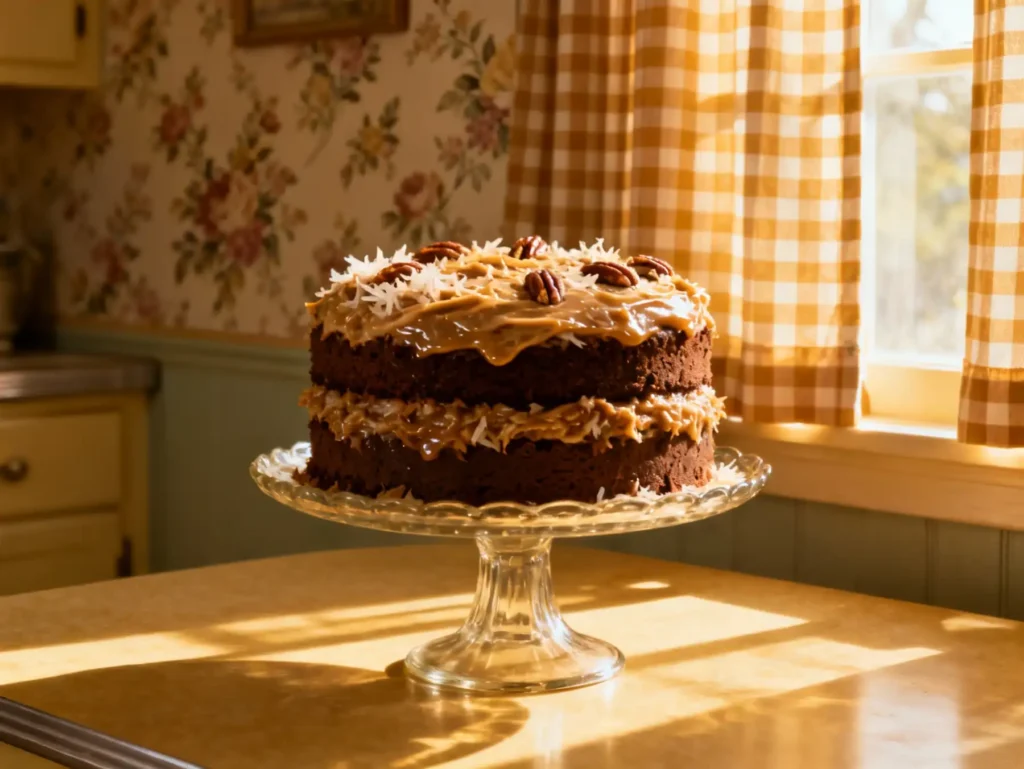
Where Did German Chocolate Cake Really Come From?
To understand the roots of German chocolate cake 1957, you have to go back further than the fifties.
In 1852, Samuel German created a sweet baking chocolate for the Baker’s Chocolate Company. Unlike darker unsweetened baking chocolates, this one had added sugar and a milder taste. It was called Baker’s German’s Sweet Chocolate.
Fast-forward to 1957. A Dallas housewife sent a recipe using German’s chocolate to The Dallas Morning News, calling it “German’s Chocolate Cake.” General Foods, which owned the Baker’s brand, loved the idea and promoted it nationally—dropping the apostrophe along the way. Overnight, the recipe became a nationwide sensation.
It wasn’t just clever marketing. The cake’s appeal was universal—three moist layers of chocolate cake slathered with a coconut-pecan custard frosting that didn’t require buttercream or piping bags. It was approachable yet special, rustic yet elegant.
Soon, it was everywhere—from Sunday potlucks to glossy holiday magazine spreads. And though the name “German chocolate cake” confused a few, Americans embraced it wholeheartedly. The dessert was sweet, indulgent, and distinctive—just like the 1950s themselves.
In fact, it became so popular, other cakes tried to follow its lead. You’ll find variations and influences in desserts like the Caramelized Baked Apples with Brie, which also blend sweet richness with a home-baked feel.
Ingredients of the Era – What Made 1957 Baking Special
Key Ingredients in the Original German Chocolate Cake
The charm of German chocolate cake 1957 goes beyond its irresistible flavor—it lies in the simple, authentic ingredients that reflect the values and pantry staples of mid-century America. Back in 1957, you wouldn’t find coconut flour or organic maple syrup in your grandmother’s cabinet. What you would find, though, were evaporated milk, Baker’s German’s Sweet Chocolate, shredded coconut, and chopped pecans—the cornerstones of this beloved cake.
The original recipe called for:
- 1 package of Baker’s German’s Sweet Chocolate (4 oz)
- Boiling water
- Cake flour
- Butter
- Sugar
- Eggs (separated)
- Buttermilk
- Baking soda
- Vanilla extract
But the real magic came from the frosting—a dreamy combination of evaporated milk, egg yolks, sugar, butter, shredded coconut, and pecans, cooked until thick and caramelized. It wasn’t overly sweet like modern frostings; instead, it had a deeply toasted, almost custard-like richness that elevated every bite.
You’d rarely see people skimp on the pecans or try to replace the coconut—it was all part of the texture and flavor harmony. In fact, the coconut’s chewy contrast with the silky cake layers was what made the dessert stand out on any table.
If you’re nostalgic for desserts that stick to simple, rich flavors, this Grandma’s Apple Crumb Bars recipe has that same traditional touch.
As someone who’s baked hundreds of cakes both professionally and at home, I can tell you: nothing beats the original German chocolate cake ingredients when it comes to delivering that nostalgic, full-bodied flavor we all crave.

1950s Pantry Staples Then vs. Now
Let’s take a step back and look at how a typical baker’s pantry in 1957 compared to what we often keep in our kitchens today. Back then, things were simpler—and more economical. You didn’t have 20 types of flour or a shelf of gourmet extracts. You had all-purpose flour, cake flour, lard or butter, cane sugar, and cocoa—and that was enough to make magic.
Here’s a quick comparison:
It’s no surprise that desserts tasted different in 1957—fewer preservatives, less processing, and baking that happened from scratch, often guided by handwritten cards passed between neighbors and families.
Many 1950s cooks also kept ingredients like cornmeal, molasses, and lard on hand, all of which shaped the texture and depth of flavor in their dishes. One bite of a Quick and Easy Gingerbread Cake or similar spiced treat can remind you of just how comforting and satisfying these simple ingredients could be.
When making German chocolate cake 1957 style, I always recommend using the original brands where possible. Baker’s chocolate is still available, and while it’s tempting to sub in newer chocolate varieties, the results just aren’t the same. There’s a reason why this exact combination stood the test of time.
Print
German Chocolate Cake 1957
- Total Time: 55 minutes
- Yield: 12 servings 1x
Description
A rich, classic three-layer German chocolate cake made the traditional 1957 way, using Baker’s German’s Sweet Chocolate and layered with thick, buttery coconut-pecan frosting. A timeless dessert that brings comfort and nostalgia to every bite.
Ingredients
For the Cake:
- 1 package (4 oz) Baker’s German’s Sweet Chocolate
- ½ cup boiling water
- 2 cups granulated sugar
- 1 cup unsalted butter, softened
- 4 egg yolks
- 4 egg whites, beaten until stiff
- 1 tsp vanilla extract
- 2½ cups sifted cake flour
- 1 tsp baking soda
- ½ tsp salt
- 1 cup buttermilk
For the Frosting:
- 1 can (12 oz) evaporated milk
- 1½ cups granulated sugar
- ¾ cup unsalted butter
- 4 egg yolks
- 1½ tsp vanilla extract
- 2 cups sweetened shredded coconut
- 1½ cups chopped pecans
Instructions
- Preheat oven to 350°F. Grease and flour three 9-inch round cake pans.
- Melt chocolate in boiling water, stir until smooth, and cool.
- Cream butter and sugar until light and fluffy.
- Beat in egg yolks one at a time. Stir in melted chocolate and vanilla.
- Sift flour, baking soda, and salt together. Add to the batter alternately with buttermilk.
- Gently fold in stiffly beaten egg whites.
- Divide batter evenly into pans and bake for 30 minutes. Let cakes cool in pans for 10 minutes, then remove and cool completely.
- For the frosting: In a saucepan, combine evaporated milk, sugar, butter, and egg yolks. Cook over medium heat, stirring constantly until thickened (about 12 minutes).
- Remove from heat, stir in vanilla, coconut, and pecans. Let cool until thick enough to spread.
- Assemble cake by spreading frosting between layers and on top. Leave sides unfrosted for traditional presentation.
Notes
Don’t skip whipping the egg whites — it gives the cake its classic light texture.
Frosting can be made a day ahead and refrigerated.
Best served at room temperature.
Store covered at room temp for 2 days or refrigerated for up to 5.
- Prep Time: 25 minutes
- Cook Time: 30 minutes
- Category: Dessert
- Method: Baking
- Cuisine: American
Nutrition
- Serving Size: Per Slice
- Calories: 520 kcal
- Sugar: 46g
- Sodium: 260mg
- Fat: 30g
- Saturated Fat: 17g
- Unsaturated Fat: 11g
- Trans Fat: 0g
- Carbohydrates: 58g
- Fiber: 2g
- Protein: 6g
- Cholesterol: 120mg
Step-by-Step Recipe – Baking German Chocolate Cake the Classic Way
Recreating the Authentic 1957 Method Today
To bake a German chocolate cake 1957 style is to step into a time when baking was an act of love, not a race. There were no shortcuts, no boxed mixes—just patience, purpose, and pantry staples. This cake is no exception. With its delicate layers and luscious frosting, it demands care, but rewards you with every single bite.
In 1957, this was the showstopper on every celebration table. What made it stand out? Its signature combination of Baker’s German’s Sweet Chocolate (slightly milder than semisweet), fluffy chocolate cake, and that unforgettable coconut-pecan custard frosting. There was no piped buttercream or fondant—just rustic charm.
To make it the classic way, you’ll prepare three chocolate cake layers using cake flour, softened butter, sugar, egg yolks and whipped whites, baking soda, buttermilk, and melted German’s chocolate. Once baked, the cakes are cooled and layered with a rich custard made from evaporated milk, sugar, egg yolks, butter, vanilla, coconut, and chopped pecans, stirred over heat until thickened and golden.
And here’s the twist: you don’t frost the sides. That’s part of the charm. You want the golden frosting oozing out slightly, the cake peeking through with confidence.
This isn’t a cake for minimal effort, but it’s not hard either. It’s honest, timeless, and unforgettable—just like the memory it brings back for anyone who grew up in a home where baking was a weekend ritual.
Looking for another recipe with a decadent twist and modern flair? Try these Crispy Cotton Candy Cheesecake Bombs. They’re playful, sweet, and perfect for your next dessert table.
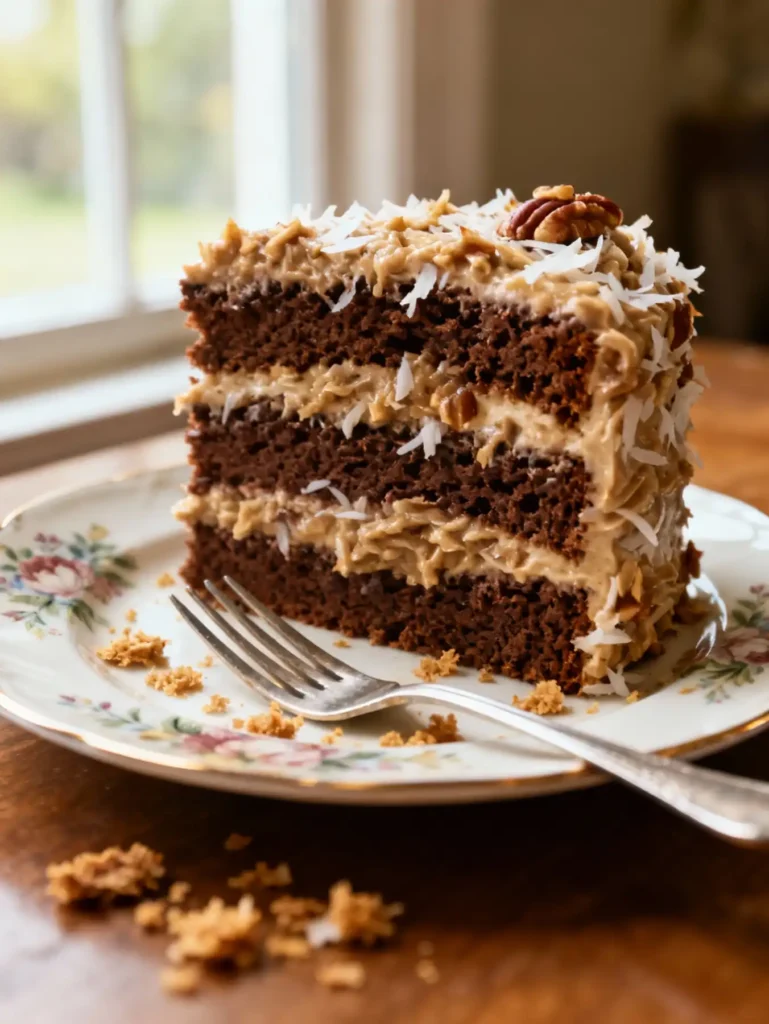
Tips for the Perfect Moist Chocolate Layers & Coconut Frosting
As a chef who’s tested dozens of chocolate cakes over the years, let me tell you—there are a few small secrets that make a big difference in pulling off the 1957 German chocolate cake perfectly.
Use room-temperature ingredients. Cold butter and eggs can cause the batter to split or bake unevenly. You want everything at room temp so it blends smoothly.
Melt the chocolate carefully. Combine the Baker’s German’s chocolate with boiling water, stir until smooth, and cool slightly before adding to your batter.
Whip egg whites until stiff, not dry. This step is key to achieving a fluffy, tender cake. Gently fold the whipped whites into the batter as the final step.
Alternate dry and wet ingredients. Start and end with the flour mixture. This ensures even distribution and prevents overmixing.
Frost patiently. The frosting must be cooked slowly over medium heat while constantly stirring until it thickens and turns caramel-like. Only then should you fold in the coconut and pecans.
And perhaps most importantly—don’t frost too early. Let both the cake layers and frosting cool completely before assembling. Warm cake with warm frosting is a recipe for a melting mess.
If you’re hosting a party or family gathering, pair this nostalgic classic with something fun like Candy Corn Pretzel Hugs. It’s a playful contrast that adds color and crunch to your dessert spread.
The German chocolate cake 1957 is more than the sum of its ingredients. It’s a reminder that some things are worth the time and effort. You don’t need fancy tools or techniques—just a few bowls, a wooden spoon, and the memory of those who baked before us.
Serving Traditions and Modern Variations
How German Chocolate Cake Was Served in 1957 Homes
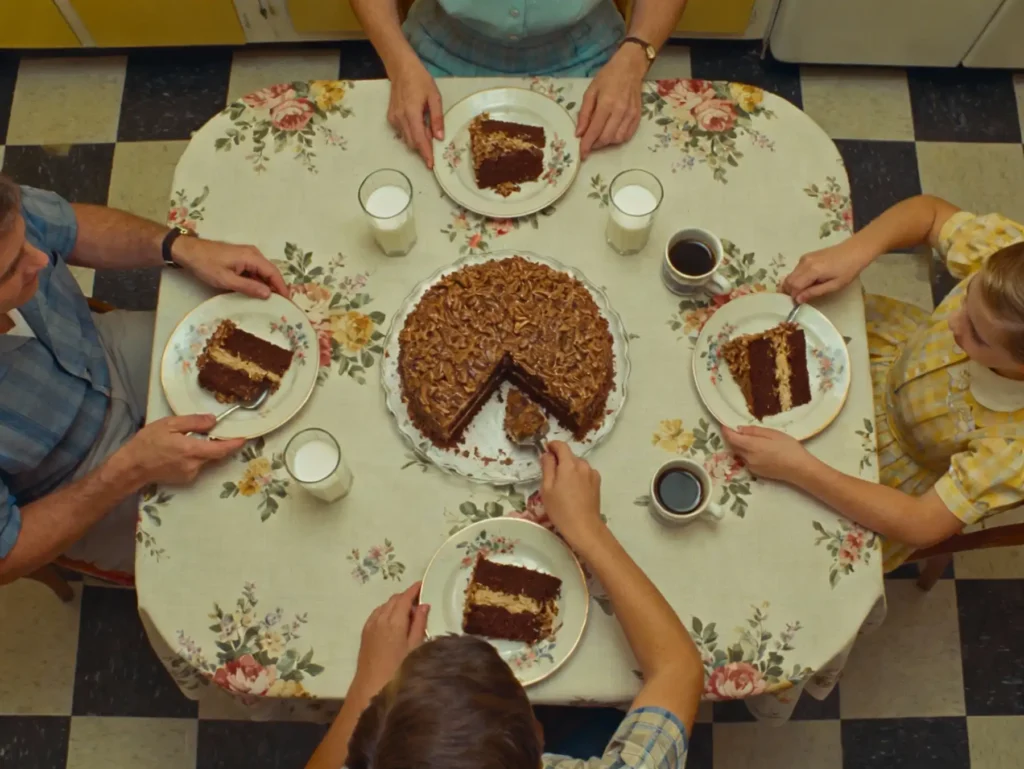
Back in 1957, dessert wasn’t just a sweet ending—it was a celebration. And when German chocolate cake 1957 hit the table, it was always the main event. Whether it was Sunday supper, a birthday, or the church bake sale, this three-layer masterpiece stood proudly at the center, often plated on a pedestal dish or cut and served right from the pan.
But what made its presentation iconic wasn’t perfection—it was comfort.
The cake was rarely covered in elaborate decorations. Instead, you’d see the deep brown cake layers peeking through between generous helpings of glossy coconut-pecan frosting. The sides were often left unfrosted, which let the homemade nature of the cake speak for itself. This rustic, layered look was part of its vintage charm. No piping, no frills—just a rich, glistening crown of caramelized coconut.
At my grandmother’s house, she’d slice the cake with a serrated knife, place each portion onto floral china plates, and serve it with ice-cold milk or fresh percolated coffee. Guests didn’t just take a piece—they lingered over it. That was the power of this cake. It brought people together.
For larger gatherings, she would bake it in a rectangular dish instead of layers. It may not have had the same towering elegance, but the flavor remained king. I’ve taken inspiration from that simplicity in other desserts, like this Cherry Slab Pie, which also serves beautifully for a crowd.
And when the holidays came around, slices of German chocolate cake often joined plates filled with other festive favorites—spiced cookies, candied nuts, and buttery bars. Its unique flavor profile stood out, even among the sweets.
Creative Modern Spins While Staying True to Tradition
While I’ll always have a soft spot for the original, the German chocolate cake 1957 isn’t frozen in time. Today’s bakers have found fresh ways to reinterpret this classic while honoring its essence.
Here are a few ways to enjoy the flavor in updated forms:
1. Cupcakes
All the flavor of the traditional cake in convenient single servings. Top each cupcake with a generous spoonful of the coconut-pecan frosting. These are especially fun for bake sales or kids’ parties.
2. Gluten-free or dairy-free adaptations
Using almond flour or oat flour can lighten the cake while still maintaining flavor. For example, these Oat Flour Pumpkin Pancakes showcase how flour swaps can be delicious and still feel homemade.
3. Frosted Bundt cakes or sheet cakes
Rather than baking multiple layers, try a single bundt or sheet pan version for easier slicing. Pour the frosting right over the top and let it drip naturally for a vintage-modern look.
4. Ganache drizzle finish
Some chefs add a thin chocolate ganache drizzle on top before spreading the frosting, creating a layered contrast that adds richness without overpowering the classic flavor.
5. Ice cream pairing
Vanilla bean or caramel swirl ice cream makes the perfect companion to a slice of German chocolate cake. It complements the deep flavors without taking away the spotlight.
If you’re drawn to reimagining vintage recipes with new twists, try this Quick and Easy Gingerbread Cake. It captures the same warm spice and nostalgia with a simplified prep.
And remember, when updating old recipes, the goal isn’t to reinvent them—it’s to honor the memory while bringing it into the present.
Whether served on fine china, cut into picnic squares, or adapted into cupcakes for a school event, German chocolate cake 1957 remains a dessert that bridges generations.
In the final part of this article, we’ll explore the cultural legacy of this cake—how it continues to connect families, stir memories, and live on as a treasured heirloom of American baking.
The Cultural Legacy of German Chocolate Cake
Why This 1957 Cake Still Captures Hearts Today
More than six decades after it first appeared in a Texas newspaper, German chocolate cake 1957 still graces kitchen counters, birthday tables, and family reunions. But why does this dessert, among so many others, continue to stir such affection?
The answer lies in its uniqueness and honesty.
Unlike trend-driven desserts with fleeting popularity, this cake has soul. Its flavor combination is unlike any other—deeply chocolatey layers contrasted with a buttery, nutty, coconut custard that offers chew, crunch, and a touch of caramel. It doesn’t rely on frosting roses or fondant flair to impress. It relies on substance over show, flavor over flair.
It also represents something bigger: a connection to family, heritage, and time spent together in the kitchen. It’s the kind of cake that invites stories with every slice—how Grandma made it “just so,” how Mom only pulled it out for special occasions, how your aunt swore by letting the frosting rest overnight.
It’s no surprise that in the same era where this cake was born, simple homemade desserts like Orange Date Walnut Passover Cake also became symbols of tradition passed down through generations.
Today, we live in a fast-paced world filled with instant mixes and digital everything. Yet this cake reminds us to slow down. To stir the frosting by hand. To wait for layers to cool. To lick the spoon with your child, just like your mom did with you.
It’s more than dessert—it’s a ritual of love.
Passing the Recipe Down – Baking With Family
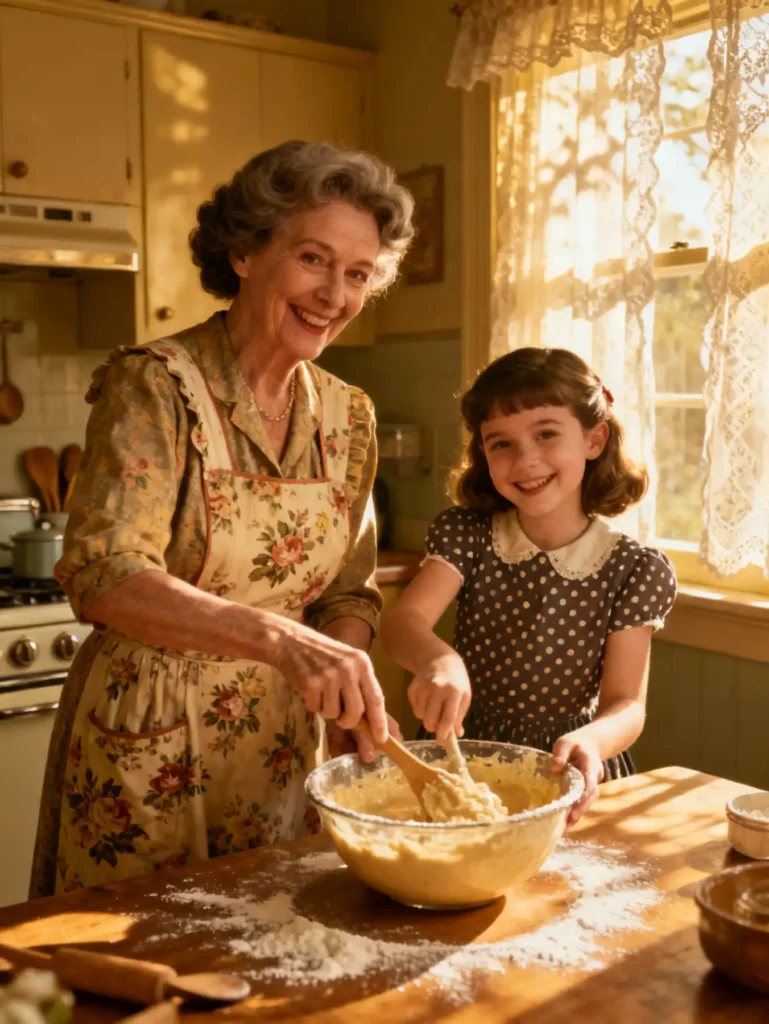
When I bake German chocolate cake 1957 style, it’s never just about the ingredients. It’s about sharing the story of where the recipe came from, what it meant to my grandmother, and how that love has traveled through the hands of every woman in my family. And now, I pass it down to my own children.
Whether you’re baking with your child or teaching your grandkids, this recipe invites connection. It gives us an excuse to pause, to measure, to mix, and to laugh together in the kitchen. It’s a memory waiting to happen.
Want to introduce younger bakers to family-style sweets? Try a treat like this Zucchini Coffee Cake Bread—easy, forgiving, and filled with the same homemade charm.
Or keep it classic with a timeless Strawberry Shortcake Recipe that pairs beautifully with a baking day full of love.
And here’s the truth: Not every slice will be perfect. One layer may lean a little, frosting might drip off-center—but none of that matters. What matters is the joy of passing on a tradition that has already lasted over 60 years and will no doubt live on for many more.
This cake endures because it means something. It carries the flavor of time, love, and nostalgia in every bite.
Frequently Asked Questions (FAQs)
What makes German chocolate cake different from other chocolate cakes?
Unlike traditional chocolate cakes, German chocolate cake uses a sweet baking chocolate (not dark or cocoa powder) and is layered with a coconut-pecan frosting instead of buttercream. Its mild chocolate base and custard-style topping make it completely unique.
Is German chocolate cake actually German?
No. Despite its name, it’s not from Germany. The name comes from Samuel German, the baker who developed the sweet chocolate for Baker’s Chocolate Company. The cake became famous in 1957 after a Texas homemaker’s recipe was published in a newspaper.
Can I make German chocolate cake without coconut?
You can, but it wouldn’t be traditional. The coconut is essential to the cake’s identity and flavor balance. However, some variations use chocolate ganache or nut-only frostings if coconut is an allergy concern.
How do I store leftover German chocolate cake?
Store it covered at room temperature for up to 2 days or refrigerate for up to 5 days. Bring it to room temperature before serving for best flavor.
What frosting is traditionally used on German chocolate cake?
A cooked custard-style frosting made from evaporated milk, sugar, butter, egg yolks, shredded coconut, and chopped pecans. No buttercream is used.
Can I freeze German chocolate cake?
Yes. Wrap the cake tightly in plastic and foil, and freeze for up to 2 months. Frosting may separate slightly upon thawing, so freeze without frosting for best results and add it fresh.
Conclusion
The German chocolate cake 1957 isn’t just a dessert—it’s a piece of culinary history. From its humble beginnings in a Texas kitchen to becoming a beloved staple at family gatherings, this cake reminds us that the best recipes are the ones we pass down.
Whether you’re baking it for the first time or the fiftieth, each slice is a reminder of tradition, flavor, and love.
Want to explore a historical twist on this classic from another family’s kitchen? Check out the Willard Family German Chocolate Cake recipe for even more vintage inspiration.