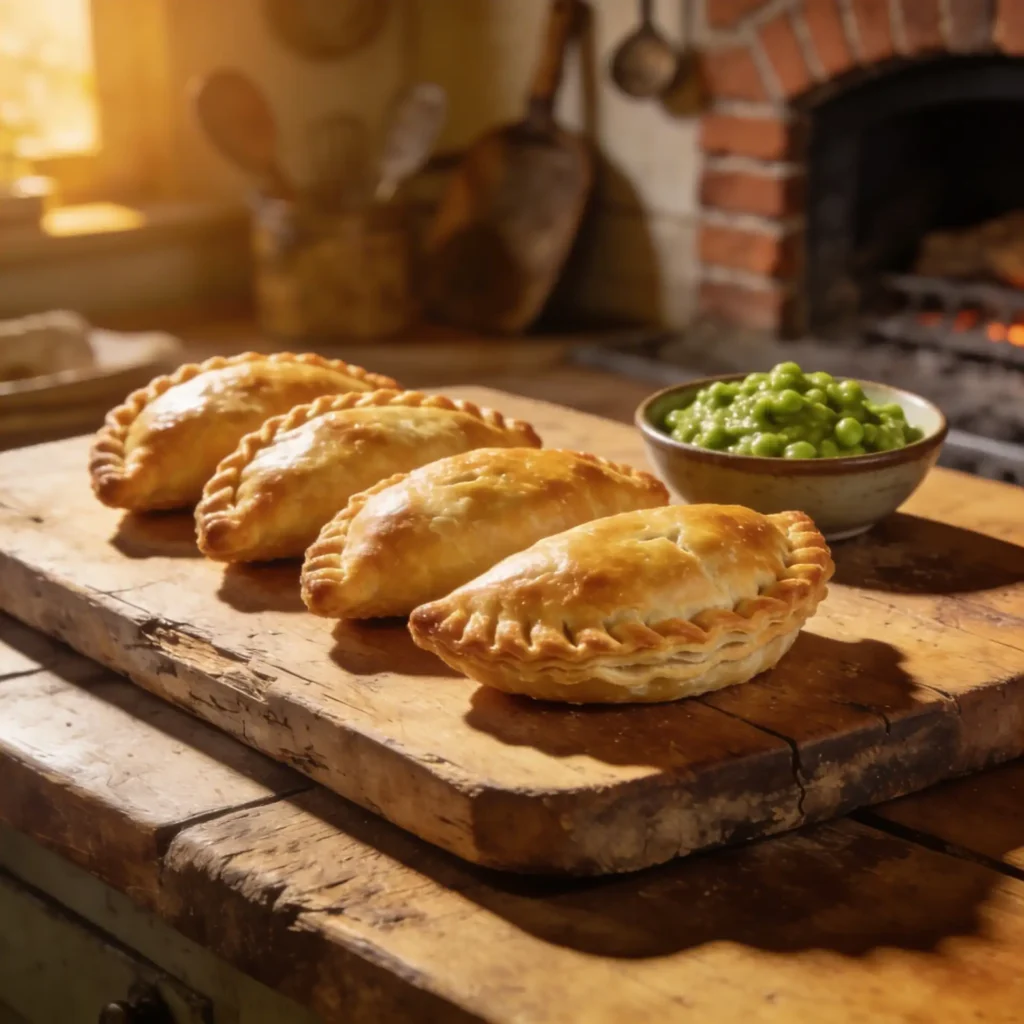
Easy Cornish pasty recipe nights always feel like a small win in my kitchen. I get the deep, savory comfort of a classic British handheld meat pie without spending half the day fussing over complicated steps. In this guide, I’ll show you how to make a flaky shortcrust pastry shell, build a rich filling with beef skirt steak, potato, swede, and onion, and crimp the edge so each pasty looks beautiful and bakes up golden.
If you love hearty, handheld meat pies, don’t miss our easy beef empanadas recipe, which brings the same cozy, grab-and-go appeal in a different style.
On busy weekends, I reach for this easy Cornish pasty recipe because it gives me the comfort of old-world baking without turning the kitchen into an all-day project. I learned to love handheld savory pies while testing lunch recipes for catering clients who wanted something hearty, tidy, and full of flavor. The first pasty I made looked rough, but the flaky crust and rich beef filling won everyone over. Now I keep the method simple, dice everything small, crimp with confidence, and bake until golden. That mix of tradition and ease is why these pasties still feel special each time.
Table of Contents
Table of Contents
Easy Cornish Pasty Recipe
- Total Time: 1 hour 25 minutes
- Yield: 4 large pasties 1x
Description
An easy Cornish pasty recipe with beef skirt steak, potato, swede, onion, and flaky shortcrust pastry baked until golden.
Ingredients
- 1 pound beef skirt steak, finely diced
- 1 medium potato, peeled and finely diced
- 1 cup swede (rutabaga), peeled and finely diced
- 1 small onion, finely diced
- 1 teaspoon kosher salt
- 3/4 teaspoon black pepper
- 2 tablespoons cold butter, cut into 4 small pieces
- 14 ounces shortcrust pastry or 2 refrigerated pie crusts
- 1 large egg
- 1 tablespoon water
Instructions
- Heat the oven to 400°F and place a baking sheet inside to preheat.
- Add the diced beef skirt steak, potato, swede, and onion to a large bowl. Season with salt and black pepper, then toss well.
- Roll the shortcrust pastry and cut it into 4 circles about 8 inches wide.
- Spoon the filling onto one half of each pastry circle, leaving a border around the edge.
- Top each mound of filling with a small piece of butter.
- Beat the egg with the water. Brush the edge of each pastry circle lightly.
- Fold the pastry over the filling, press out trapped air, and crimp the edge firmly to seal.
- Cut a small vent in the top of each pasty and brush the outside with egg wash.
- Chill the pasties for 10 to 15 minutes.
- Bake at 400°F for 20 minutes. Lower the heat to 350°F and bake 25 to 30 minutes more, until the crust turns deep golden and the filling cooks through.
- Rest for 10 minutes before serving.
Notes
Dice the filling very small so the beef and vegetables cook at the same pace.
Use shortcrust pastry for the most traditional texture.
A side crimp gives the most classic Cornish look.
Freeze unbaked pasties for up to 2 months.
- Prep Time: 35 minutes
- Cook Time: 50 minutes
- Category: Main Course
- Method: Baking
- Cuisine: British
Nutrition
- Serving Size: 1 pasty
- Calories: 615 kcal
- Sugar: 4g
- Sodium: 720mg
- Fat: 34g
- Saturated Fat: 14g
- Unsaturated Fat: 16g
- Trans Fat: 0g
- Carbohydrates: 42g
- Fiber: 4g
- Protein: 22g
- Cholesterol: 105mg
Why This Easy Cornish Pasty Recipe Works
A great easy Cornish pasty recipe respects tradition while keeping the method friendly for a home kitchen. You still get the classic filling of beef, potato, swede, and onion. You still bake the meat raw inside the pastry, which gives the filling its signature juicy, layered flavor. But you can also use ready-made shortcrust pastry if you want dinner on the table faster.
The reason this recipe works so well comes down to balance. The beef brings richness. The diced swede, also called rutabaga, adds a gentle earthy sweetness. The onion melts into the filling and gives every bite depth. The potato absorbs juices and turns the inside hearty instead of watery. When those simple ingredients bake together, they create the kind of savory turnover that feels humble and deeply satisfying.
Cornwall has long claimed the pasty as its own, and good reason supports that pride. Traditional British baking often leans on simple ingredients and careful technique rather than heavy seasoning. Cornish pasties follow that same idea. The filling stays straightforward, the crust stays sturdy, and the side crimp gives the pasty its classic look. The Cornish Pasty Association keeps that traditional identity front and center, and even in an easier version, that spirit still matters.
Why trust us
I’m Chef Adriana, and I’ve spent years making handheld savory pies for family dinners, weekend parties, and catering trays. I know how quickly a crust can split, how fast a filling can turn soggy, and how much small knife work changes the final bite. This easy Cornish pasty recipe comes from that hands-on kitchen work, not from guesswork.
Essential Ingredients for a Rich Filling
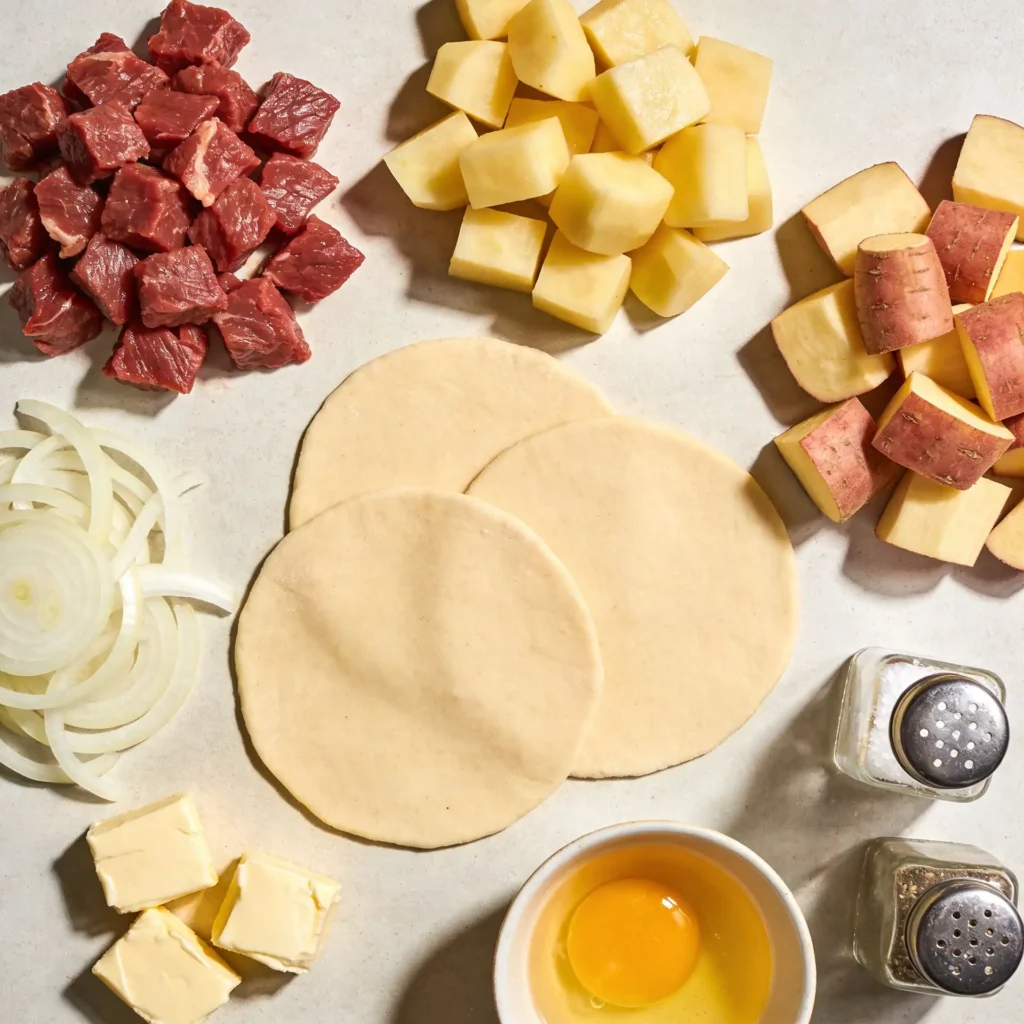
The filling in an easy Cornish pasty recipe should taste rich, beefy, and balanced. That starts with the meat. Beef skirt steak gives the filling the texture most cooks want. It stays meaty and full of character after baking, especially when you dice it small. Ground beef works in a pinch, but it changes the texture and makes the result feel more like a pie filling than a true Cornish-style pasty.
| Cut of Beef | Texture After Baking | Best Use |
|---|---|---|
| Beef skirt steak | Chunky, juicy, traditional, and full of bite | Best choice for a classic Cornish-style filling |
| Ground beef | Softer, looser, less distinct | Useful only when you need a budget or quick swap |
The vegetable trio matters just as much. Potato gives body. Swede adds sweetness and holds its shape. Onion softens and seasons the filling from the inside out. Dice all three very small. That step helps them cook in the same amount of time as the beef.
Salt and pepper do most of the seasoning work. A Cornish pasty does not need a long list of spices. It needs clean flavor. To build a better meat base, see our guide on cooking with pink salt. And if you want another fun beef-and-dough recipe for a different night, try our garlic parmesan cheeseburger bombs.
For the pastry, you can make homemade shortcrust pastry or use a good store-bought version. Because this is an easy Cornish pasty recipe, I often use refrigerated pie pastry when time feels tight. It still gives you a flaky crust, and it keeps the recipe realistic for weeknights.
Step-by-Step Assembly and the Famous Crimp
A good easy Cornish pasty recipe depends on clean prep and confident assembly. Start by cutting the beef skirt steak, potato, swede, and onion into very small, even pieces. I aim for pieces close to a quarter inch. That way, the filling cooks through at the same pace, and the pastry closes neatly around it.
Use these same knife skills when you prep vegetables for our old fashioned goulash recipe. Small, even cuts always help food cook more evenly.
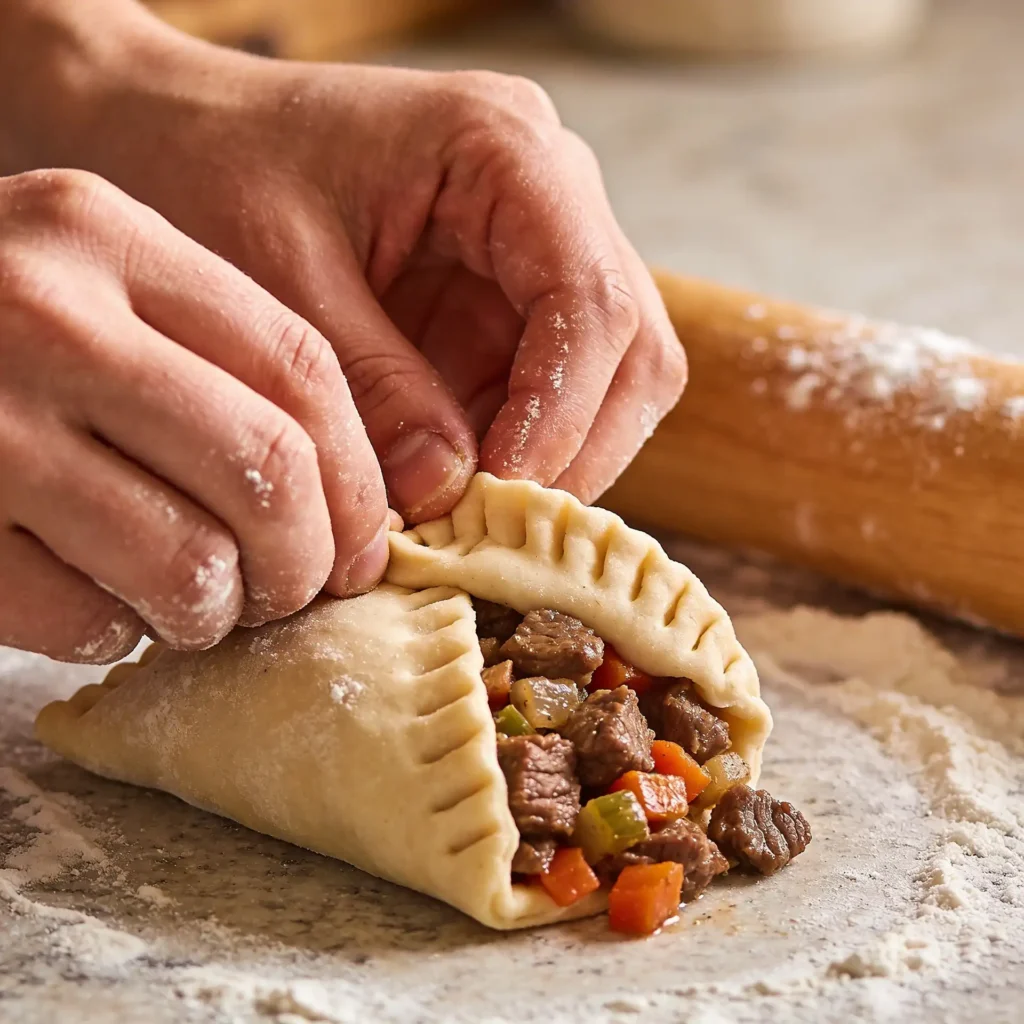
Here’s the method I use every time:
- Heat your oven to 400°F and place a baking sheet inside so it gets hot.
- Dice the beef skirt steak, peeled potato, peeled swede, and onion very small.
- Toss the filling with salt and black pepper in a large bowl.
- Roll the shortcrust pastry and cut it into four circles, about 8 inches wide.
- Spoon the filling onto one half of each circle, leaving a clean border.
- Add a small knob of butter on top of each mound of filling.
- Brush the pastry edge with water or beaten egg.
- Fold the dough over to create a half-moon shape.
- Press out trapped air and crimp the edge firmly.
- Cut a tiny steam slit on top and brush the outside with egg wash glaze.
- Chill the pasties for 10 to 15 minutes so the crust stays firm.
- Bake until golden and crisp.
Chef’s note
Home bakers often debate the side-crimp versus the top-crimp. A true Cornish look uses a side crimp. A top crimp still tastes good, but the side crimp gives your easy Cornish pasty recipe that classic bakery feel. I side-crimp whenever I want the pasties to look traditional.
Baking for a Golden, Flaky Crust
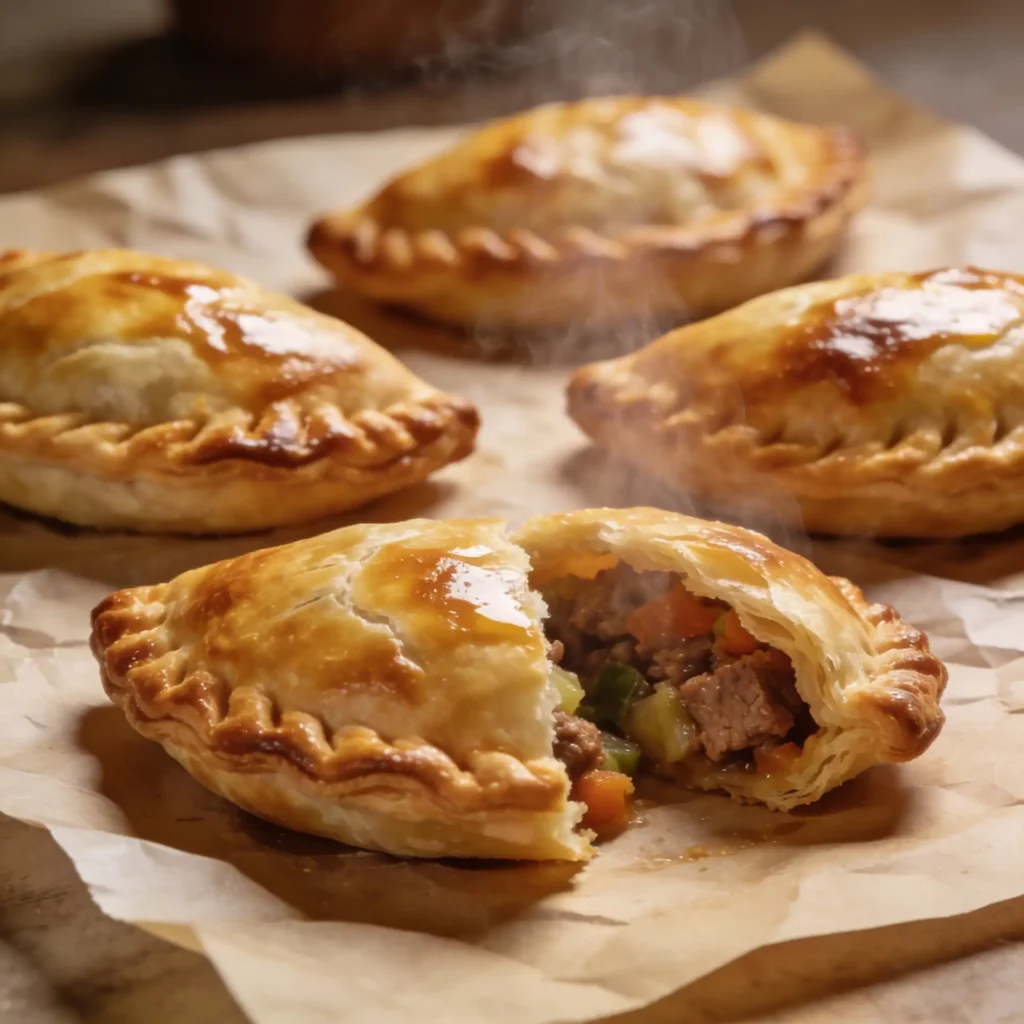
The crust on an easy Cornish pasty recipe should look deeply golden and feel sturdy enough to hold in your hand. That starts with egg wash. A beaten egg with a spoonful of water gives the pastry shine, richer color, and better visual appeal. Brush it lightly over the top, but do not let thick egg wash pool near the crimp or the steam vent.
The second key is heat control. I like to start the pasties on a hot baking sheet. That first blast of heat helps the bottom crust set quickly, so it does not sit in juices and soften. Then I lower the temperature slightly so the filling cooks through without burning the pastry.
A soggy bottom usually comes from one of three things. The filling pieces are too large. The pastry gets too warm before it hits the oven. Or the baking sheet starts cold. So keep the dice small, chill the assembled pasties briefly, and bake them on a hot tray.
Pro tip
Add a small knob of butter inside each pasty before you fold and crimp it. That little bit of fat melts into the filling and keeps the beef and vegetables juicy without making the pastry wet.
If you want more practice with golden pastry color and browning, our mummy hot dogs with puff pastry make a fun side lesson in crust color and oven timing.
Serving and Pairing Suggestions
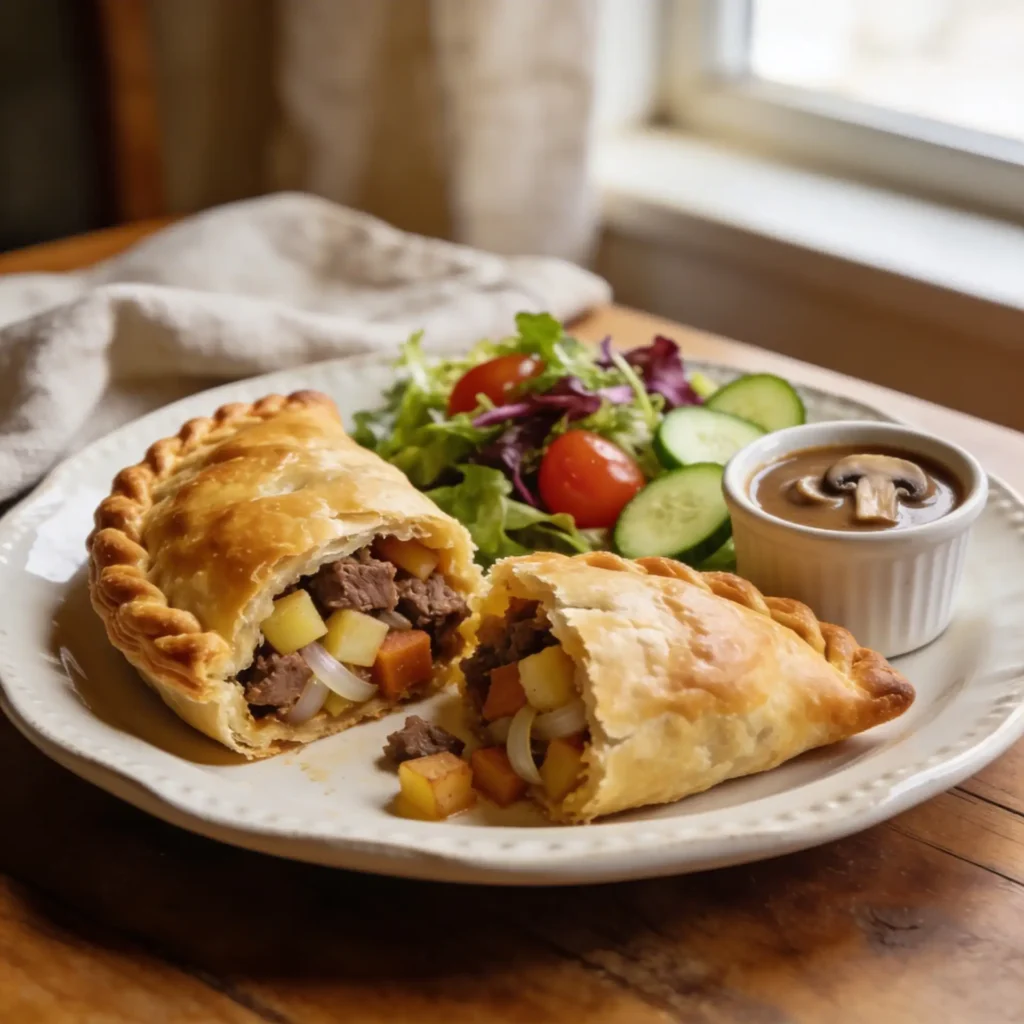
An easy Cornish pasty recipe can stand on its own, but the right sides make the meal feel complete. For a traditional mood, serve the pasties with mushy peas or a simple side salad. Mushy peas keep things classic and soft. A side salad adds crunch and freshness, which balances the rich filling.
For a richer plate, spoon a little mushroom gravy recipe alongside the pasty instead of over it. That way, the crust stays crisp while you still get that extra savory layer.
If you want something lighter and brighter, pair the pasties with our sbarro cucumber tomato salad. The cool vegetables and sharp dressing cut through the buttery pastry beautifully.
Pasties also make an excellent work lunch. Let them cool fully, then store them in an airtight container in the fridge for up to 3 days. Reheat them in a 350°F oven for 15 to 20 minutes. I skip the microwave when I can because the crust softens fast there.
Creating a Full British-Inspired Menu
I love serving an easy Cornish pasty recipe as the centerpiece of a comfort-food dinner. The meal feels warm, simple, and deeply satisfying. Start with the pasty, add a crisp salad or peas, and finish with a dessert that leans nostalgic.
For a casual finish, bring out our grandmas apple crumb bars. Their buttery topping and soft fruit center fit the same cozy feeling that makes a Cornish pasty so appealing.
If you want a slightly more elegant dessert for guests, bake our italian almond ricotta cake. Its tender crumb and gentle almond flavor feel special without making the meal too heavy.
That kind of menu works beautifully for a weekend lunch, a rainy-day dinner, or a dinner party where you want people to feel relaxed the minute they sit down.
Troubleshooting Common Pasty Problems
Even a reliable easy Cornish pasty recipe can hit a bump or two. The good news is that most problems have a simple fix.
If your pastry breaks during crimping, the dough probably got too cold and stiff, or you rolled it too thin. Let it sit for a minute or two at room temperature, then patch small tears with a scrap of pastry and keep going. If your filling leaks, you may have overfilled the dough or left moisture on the edge before crimping.
If the beef or potatoes seem undercooked, the pieces were likely too large. Cut everything smaller next time. Small dice matter more than most people think in a pasty.
| Problem | Likely Cause | Solution |
|---|---|---|
| Pastry cracks during crimping | Dough too cold or rolled too thin | Let dough soften slightly and patch small tears |
| Pasties leak in the oven | Too much filling or loose crimp | Use less filling, press out air, crimp tighter |
| Bottom crust turns soggy | Cold tray or wet filling | Preheat the tray and keep the filling dry |
| Beef or potatoes stay firm | Pieces cut too large | Dice everything into small, even cubes |
Frequently Asked Questions
What is the secret to a real Cornish Pasty?
The secret to a real Cornish pasty is the classic combination of beef skirt steak, potato, swede, and onion baked raw inside shortcrust pastry. The side crimp also matters. A true easy Cornish pasty recipe keeps the filling simple and lets the ingredients cook together inside the crust.
Can I use puff pastry instead of shortcrust?
Yes, you can use puff pastry, but it will not feel traditional. Puff pastry bakes lighter and flakier, while shortcrust pastry gives a sturdier shell. For an authentic-style easy Cornish pasty recipe, I always choose shortcrust.
Why is there swede in a Cornish Pasty?
Swede adds a subtle sweetness and a firm texture that holds up during baking. It also balances the richness of the beef. In the US, you’ll often see it labeled rutabaga, but it plays the same role in the filling.
Do you cook the meat before putting it in the pasty?
No, you do not cook the meat first in a traditional Cornish-style pasty. You dice the beef small and bake it raw with the vegetables. The juices from the meat season the potato, swede, and onion as everything cooks together.
How do I stop my pasties from leaking?
Do not overfill them. Keep the edge clean. Press out trapped air before crimping. Then cut only a small vent on top. A tight side crimp and a short chill before baking also help a lot.
Can I freeze unbaked Cornish Pasties?
Yes. Freeze the assembled, unbaked pasties on a tray until firm, then wrap them well. Bake them straight from frozen and add extra oven time. That makes this easy Cornish pasty recipe great for meal prep.
Conclusion
This easy Cornish pasty recipe gives you everything people love about a traditional handheld meat pie: flaky shortcrust pastry, savory beef skirt steak, diced swede and potato, and that beautiful side crimp that makes the whole thing feel classic. Keep your filling small, your crimp tight, and your baking sheet hot, and you’ll get a golden, satisfying result every time.
When you bake a batch, share your crimping photos and let me know whether you went fully traditional or took the easier shortcut with ready-made pastry. And if you enjoy easy beef dinners, check out our easy one pot beef and shells next.
There’s always a smile in Chef Adriana’s kitchen! With fresh ingredients, a joyful spirit, and a heart for sharing, she makes cooking a true celebration. See more of her work and find inspiration for your own table.