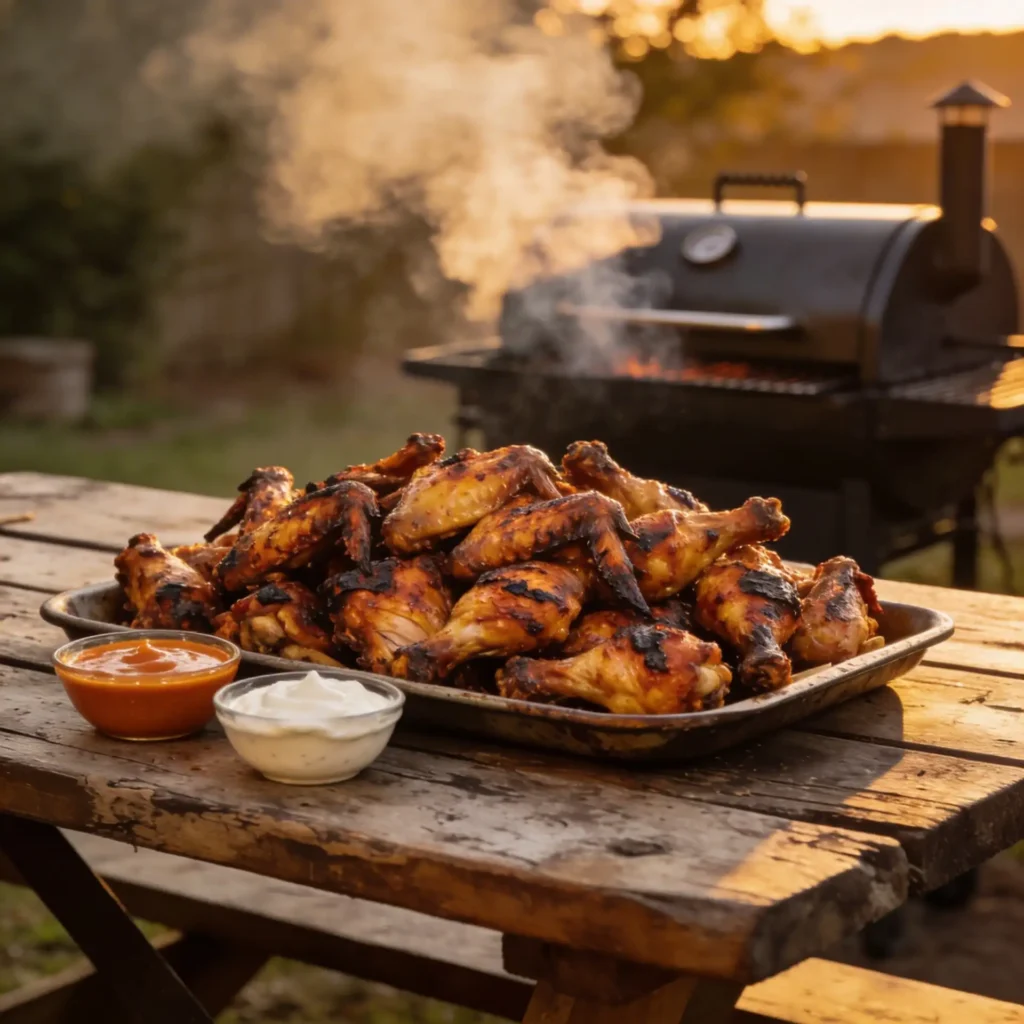
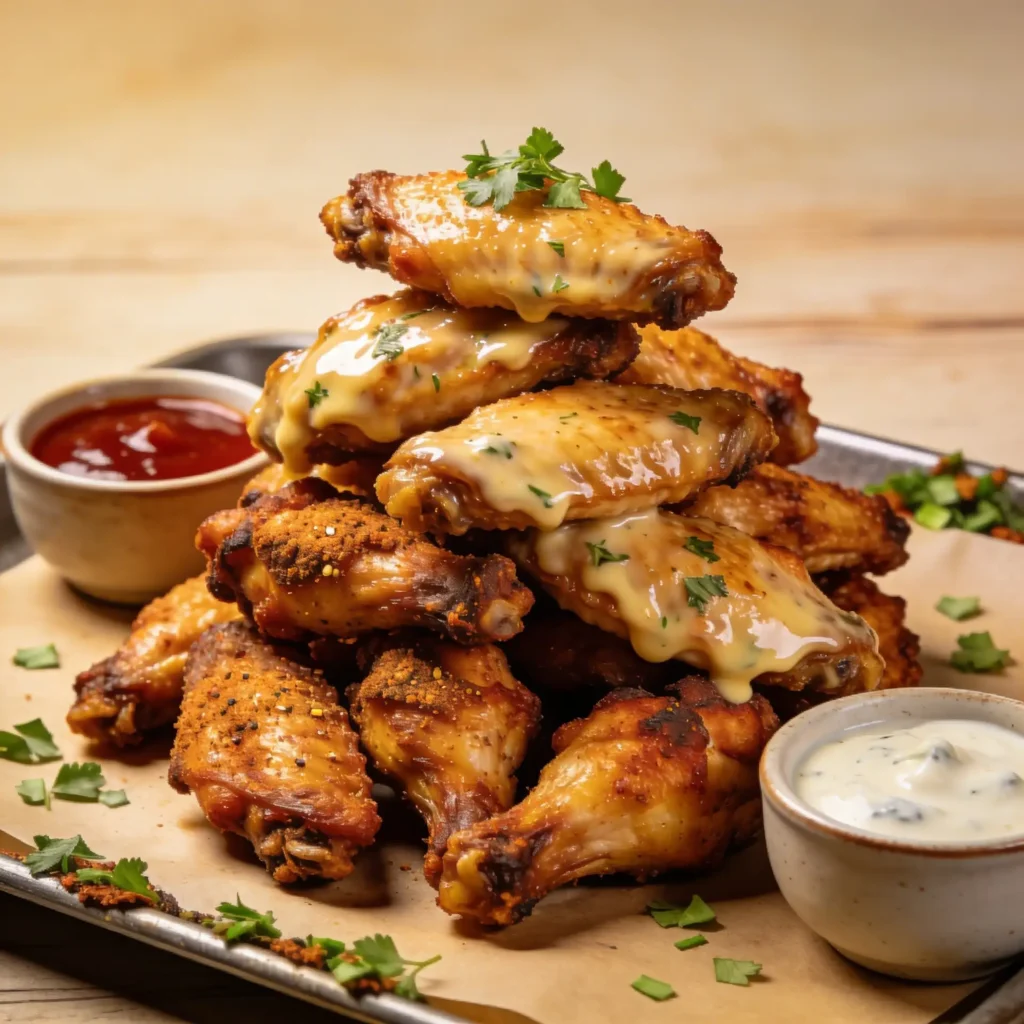
Crispy smoked chicken wings always take me back to late summer cookouts, when the grill stayed hot long after sunset and everyone hovered near the smoker waiting for “just one more wing.” I’m Chef Adriana, and I love the moment when smoky flavor meets shattering skin. That contrast turns good wings into the first platter to disappear. In this guide, I’ll show you how I get crispy smoked chicken wings with deep barbecue flavor, why the baking powder trick works, when to raise the heat, and when a fast fry makes sense. You’ll also get serving ideas, troubleshooting help, FAQs, and a full recipe card.
The Science Behind Crispy Smoked Chicken Wings
The biggest problem with smoked wings comes from cooking them low and slow for too long. Chicken skin holds fat and moisture. When you cook wings at a gentle temperature the whole time, the fat starts to render, but the skin often stays soft and rubbery. You still get smoke flavor, but you miss that bite-through crunch everyone wants. So, if you want crispy smoked chicken wings, you need a method that dries the skin first, then pushes enough heat to finish the job.
I use the same patience-first, heat-finish mindset that I bring to bigger barbecue cuts like this smoked chuck roast. First, let the smoke build flavor. Then, finish with higher heat so the outside tightens, browns, and crisps.
The second key sits in your pantry: aluminum-free baking powder. It changes the game because it helps dry the skin and raises its pH just enough to help browning move faster. When you coat wings lightly and let them rest uncovered, the skin starts drying before it ever hits the smoker. That prep step matters. Wet skin steams. Dry skin crisps.
Chef Adriana’s note: I don’t chase heavy sauce first. I chase dry, tacky skin and clean smoke. Once I get that base right, I can add buffalo sauce, barbecue glaze, or keep the wings dry-rubbed and still win either way.
Crispy smoked chicken wings also need airflow. Don’t crowd the grate. Don’t stack the wings. Give each piece space so the hot air can move all around it. That small detail often decides whether you serve crackly wings or chewy ones.
Table of Contents
Table of Contents
Essential Ingredients for the Perfect Dry Rub
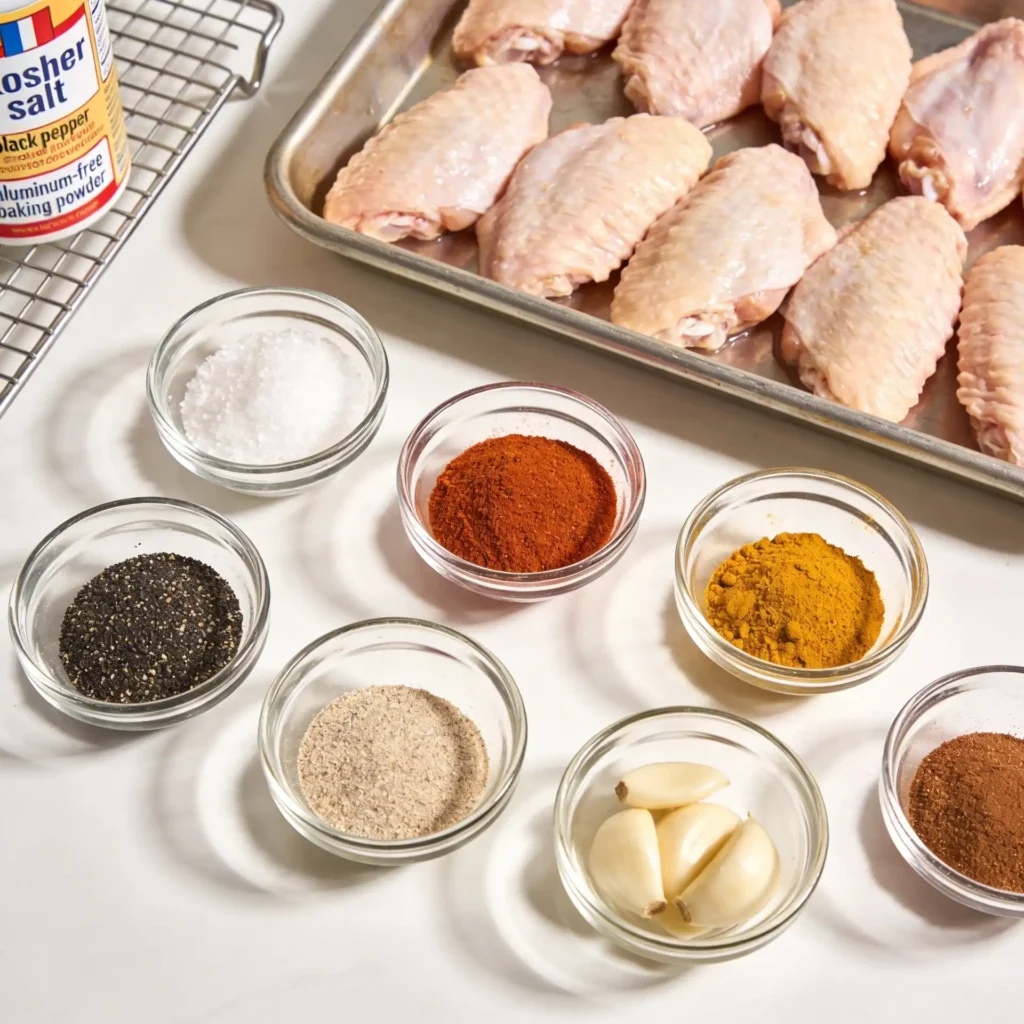
Start with party wings or whole wings split into drums and flats. Then pat them very dry with paper towels. After that, let them sit on a wire rack in the fridge for a few hours, or overnight if you have time. That fridge rest acts like a dry brine. Salt pulls out some moisture, and the cool air helps the surface dry.
For seasoning, I keep the rub balanced. I want smoke, savory depth, a little sweetness, and just enough color. My go-to mix uses kosher salt, black pepper, garlic powder, onion powder, smoked paprika, mustard powder, and a small spoonful of brown sugar. The sugar helps browning, but I keep it modest so it doesn’t burn during the high-heat finish.
If you like how mineral-rich seasoning changes savory food, take a look at cooking with pink salt for more flavor ideas. I still use kosher salt for the wings themselves, but pink salt can give you fun side ideas and extra kitchen inspiration.
Now for the critical dry mix: aluminum-free baking powder. Use enough to coat the wings lightly, not enough to leave a chalky layer. Baking soda tastes harsh here, and it can ruin the batch fast. Baking powder works because it helps dry and brown the skin without leaving the wings with a bitter edge.
| Ingredient | What It Does | Best Choice? |
|---|---|---|
| Aluminum-free baking powder | Dries skin, helps browning, keeps flavor clean | Yes |
| Baking soda | Raises pH fast but can leave a metallic, soapy taste | No |
Some people love sticky wings, and that works too. If you want a glossy finish after the crisp stage, toss the wings lightly in this 3-ingredient BBQ sauce right before serving. I never drown them early because sauce softens crisp skin fast.
Step-by-Step Smoking and Crisping Process
I cook crispy smoked chicken wings in two phases. First, I smoke the wings at 250°F. Then I crank the heat to 400°F or higher so the skin tightens and blisters. That two-part method gives the wings time to absorb smoke and enough direct heat to finish strong.
Phase 1: Smoke at 250°F
At 250°F, the fat begins to render without scorching the rub. I like applewood or a mild fruit wood here because it gives the wings a clean, sweet smoke that doesn’t bury the chicken. Place the wings skin side up and leave space between each piece. As the wings cook, the surface dries even more and the color deepens.
Phase 2: Finish at 400°F+
Once the wings reach about 165°F to 170°F internally, I raise the smoker or grill to 400°F to 425°F. This step changes everything. The skin starts bubbling, tightening, and crisping. You can flip once if your cooker has hot spots, but don’t fuss too much. Let the heat work.
If you like this smoke-then-hot-finish style, you’ll probably enjoy the same bold backyard flavor in this Hawaiian BBQ chicken recipe.
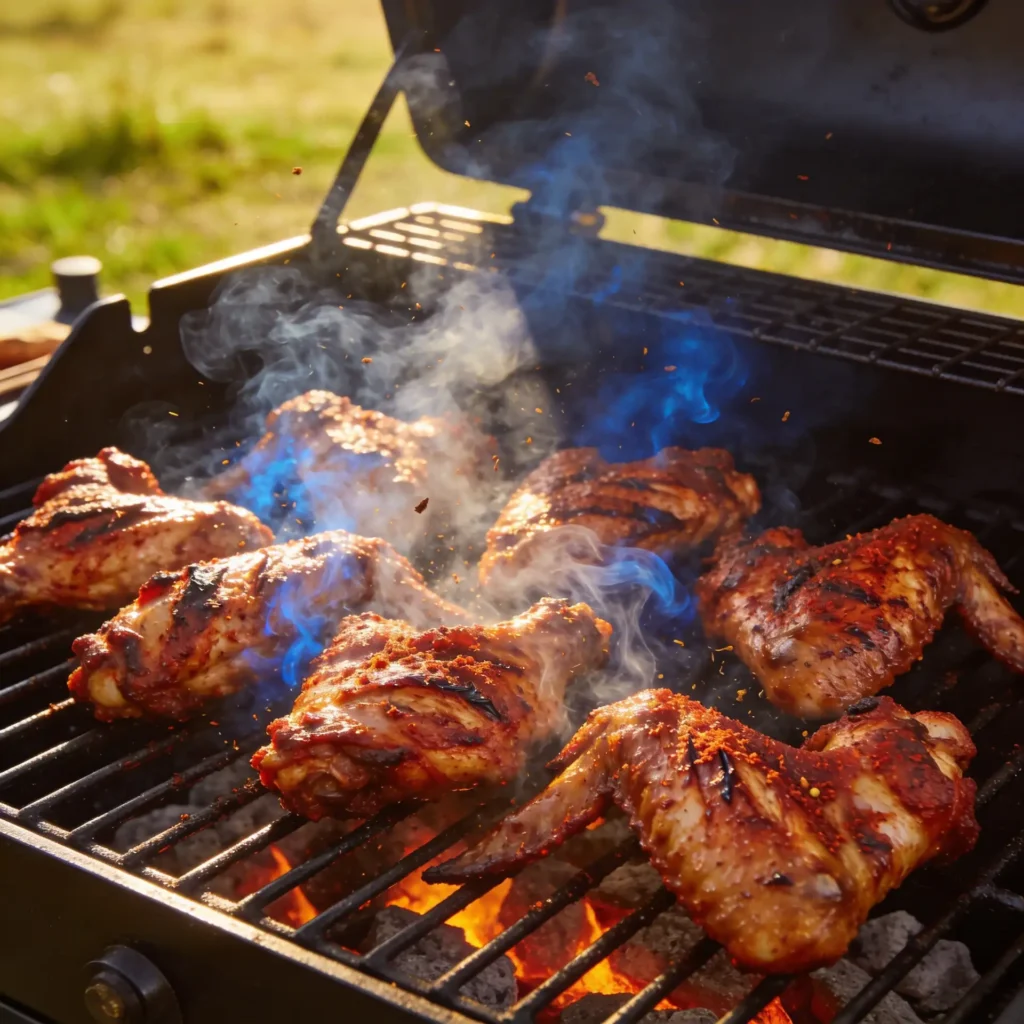
Here’s the exact process I use:
- Pat 2 pounds of wings very dry.
- Toss them with baking powder, salt, pepper, garlic powder, onion powder, smoked paprika, mustard powder, and brown sugar.
- Rest the wings uncovered on a wire rack in the fridge for at least 4 hours.
- Smoke at 250°F for 45 to 60 minutes, until the wings pick up color and reach about 165°F to 170°F.
- Raise the heat to 400°F to 425°F and cook 15 to 25 minutes more, until the wings hit about 185°F and the skin looks crisp.
- Rest 5 minutes, then sauce lightly or serve dry.
Chef’s note: Don’t crowd the grate. Airflow helps crispy smoked chicken wings more than extra flipping ever will.
The Ultimate Crunch: Smoking Then Frying
Sometimes I want the smoker to handle all the flavor and hot oil to handle the final texture. That method works beautifully when I cook for game day and want restaurant-style crunch. Smoke the wings first, then fry them fast at 375°F for about 1½ to 2 minutes. The wings already hold smoke and color, so the fryer only needs to crisp the skin.
This trick works best after the wings have nearly finished on the smoker. I smoke them until they hit a safe internal temperature and carry solid color. Then I move them carefully to the fryer in small batches. The oil should stay hot, or the wings soak up grease and lose that clean finish.
If you serve wings with a buffalo-style spread, this crock-pot buffalo chicken dip fits right in on the same table.
Pro tip from Chef Adriana: lower the wings into the oil gently and never drop wet wings into hot oil. Also, keep a splatter screen nearby, use a deep pot or fryer, and leave enough headroom so the oil stays calm. I love this method, but I always treat it with respect.
When I use the smoke-then-fry route, I sauce the wings after frying, not before. That order keeps the skin crisp longer. If I want a dry wing, I add a final pinch of rub while the wings still glisten from the fryer.
Best Sauces and Dipping Variations
Crispy smoked chicken wings taste great plain, but sauce can push them in totally different directions. Buffalo sauce brings heat, tang, and that sports-bar feel people know and love. A dry-rub wing leans more into smoke, spice, and texture. I usually make both because guests always split into two camps.
For a creamy dip with a little heat and sweetness, I like this bang bang sauce recipe. It clings well to crispy wings and gives the platter a different mood than blue cheese or ranch.
When I want a classic buffalo toss, I melt butter with hot sauce and a little garlic. Then I toss the wings fast and serve them right away. When I want a dry wing, I dust them with extra paprika, black pepper, and a pinch of salt right off the heat. That simple finish keeps the skin louder and crunchier.
Creamy dips also cool the heat and balance the smoke. Blue cheese dip adds sharpness. Ranch keeps things mellow. Bang bang sauce brings sweet heat. Even a quick garlic mayo can work if you want something rich without much prep.
What to Serve with Wood-Fired BBQ Wings
Smoked wings bring rich fat, salt, and smoke, so I like sides that cut through that weight. Acid helps. Crunch helps. Cold sides help too. That’s why I often set out crisp vegetables, pickles, and chilled salads next to the platter.
A scoop of this best potato salad recipe turns crispy smoked chicken wings into a full backyard meal. The creamy texture balances the smoky crust, and the cool temperature gives every bite a break.
I also love quick, sharp toppings. A few strands of these quick pickled red onions wake up the plate right away. They cut through chicken fat, brighten the smoke, and add color that makes the whole spread look more alive.
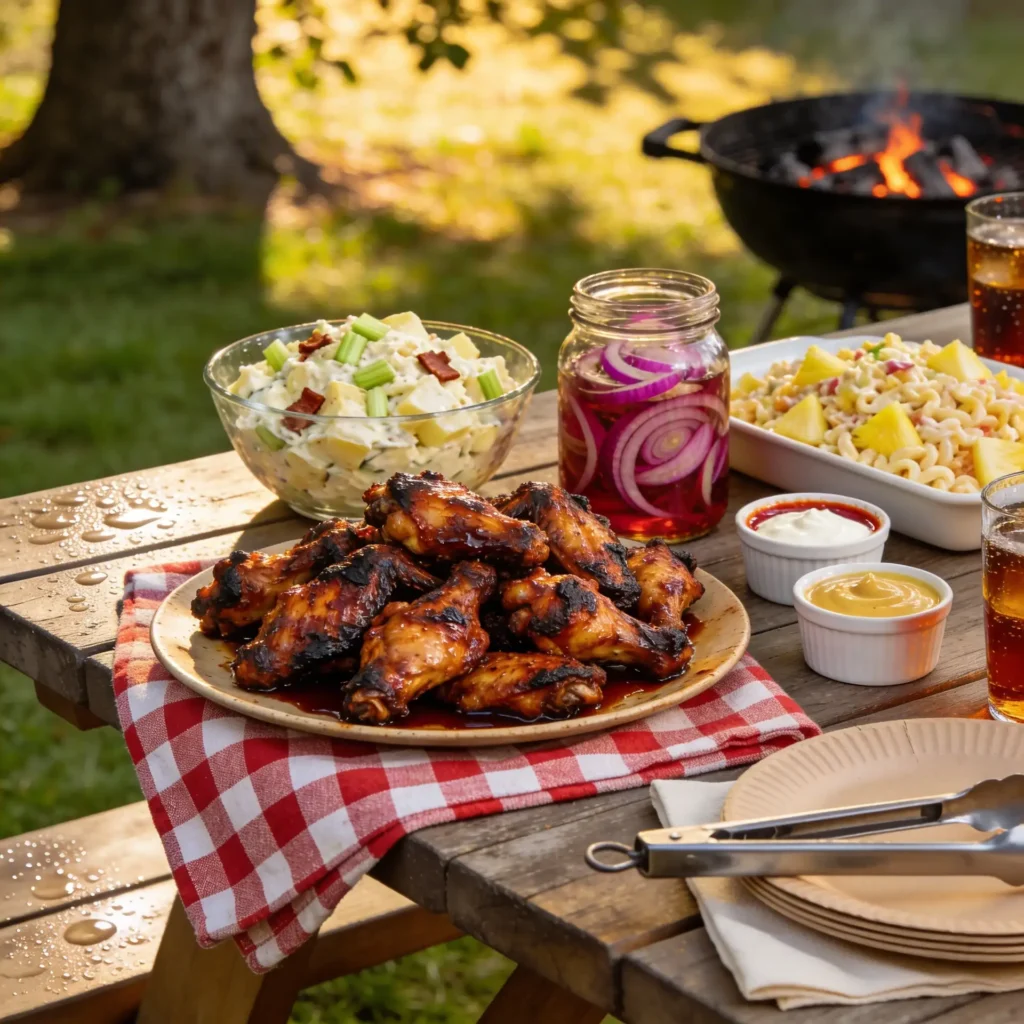
For a sweeter, creamier side, I often add this Hawaiian macaroni salad recipe. That soft, cool side plays really well with peppery dry-rub wings and hotter buffalo versions.
Celery and carrot sticks still belong here too. They’re classic for a reason. They cool the mouth, add crunch, and make saucy wings easier to handle. If I host a bigger cookout, I’ll add grilled corn, pickles, and a watermelon salad to round things out.
Troubleshooting Tough Meat or Rubbery Skin
If your wings turn tough, you usually cooked them too long at the wrong temperature, or you pulled them before the fat rendered fully. Crispy smoked chicken wings often finish best around 180°F to 185°F internal temperature. That number sounds high if you think about chicken breast, but wings hold more fat and connective tissue. They get better when you give them a little more time.
Rubbery skin points to moisture or low finishing heat. The skin needs dry air and strong heat. So pat the wings dry, let them air-dry on a rack, use baking powder, and finish hotter than you think.
| Problem | Likely Cause | Fix |
|---|---|---|
| Rubbery skin | Skin stayed wet or cooker never got hot enough | Dry longer, add baking powder, finish at 400°F+ |
| Tough wings | Pulled too early or overheld after cooking | Cook to 180°F–185°F, rest briefly, serve fast |
| Pale color | Weak heat in final stage | Raise heat or flash fry 1½–2 minutes |
| Bitter taste | Too much baking powder or harsh smoke | Use a light coating and clean-burning pellets |
And here’s a quick time and temperature guide:
| Phase | Pit Temp | Approx. Time | Target Internal Temp |
|---|---|---|---|
| Smoke phase | 250°F | 45–60 minutes | 165°F–170°F |
| Crisp phase | 400°F–425°F | 15–25 minutes | 180°F–185°F |
| Optional fry finish | 375°F oil | 1½–2 minutes | Already cooked through |
Frequently Asked Questions
How do you get crispy skin on smoked wings?
You get crispy skin on smoked wings by drying the wings well, coating them lightly with aluminum-free baking powder, and finishing them over high heat. Crispy smoked chicken wings need dry skin and a hot finish. I smoke first for flavor, then raise the pit to 400°F or higher so the skin tightens and browns instead of steaming.
How do you get crispy skin on a smoked chicken?
You get crispy skin on a smoked chicken by drying the bird uncovered in the fridge, seasoning under and over the skin, and finishing with hotter heat near the end. The same idea works for whole birds and crispy smoked chicken wings. Dry skin, good airflow, and stronger finishing heat give you bite-through skin instead of soft skin.
What’s the trick to crispy chicken wings?
The trick to crispy chicken wings is simple: dry the wings, use a little baking powder, and cook in two stages. First, build flavor with smoke or moderate heat. Then, finish hot. That second stage gives crispy smoked chicken wings their crackly outside. If you skip the drying step or the hot finish, the skin usually turns chewy.
Can you smoke wings then fry them?
Yes, you can smoke wings and then fry them, and that method gives you huge flavor and very crisp skin. I smoke the wings until they cook through and pick up color, then I fry them for 1½ to 2 minutes at 375°F. That fast fry doesn’t replace the smoke. It simply sharpens the texture of the crispy smoked chicken wings.
Can you smoke chicken and then fry it?
Yes, you can smoke chicken and then fry it, as long as you cook it safely and handle the hot oil carefully. This method works especially well for wings because they benefit from a quick crunch finish. I smoke first for flavor, then fry briefly for texture. I always dry the surface well before the wings hit the oil.
Why are my smoked chicken wings tough?
Your smoked chicken wings usually turn tough because you cooked them too long at low heat, or you pulled them before the fat finished rendering. Wings need enough heat to tenderize and crisp. Crispy smoked chicken wings often taste best around 180°F to 185°F internal temperature, followed by a short rest and fast serving.
Conclusion
Crispy smoked chicken wings come down to a few smart moves: dry the skin, season with a balanced rub, use baking powder lightly, smoke at 250°F, and finish hot. After that, you can keep them dry, sauce them, or flash fry them for even more crunch. Once you make them this way, you’ll notice the difference right away in both texture and flavor.
And if you want another bold, crunchy chicken dinner for your table, try this bang bang chicken. If you make these wings, rate the recipe card and tell me which wood pellets you used.
Feel free to connect and follow more themed recipes on my official page Chef Adriana on Facebook.
Print
Crispy Smoked Chicken Wings
- Total Time: 1 hour 40 minutes
- Yield: 4 servings 1x
Description
Crispy smoked chicken wings with smoky dry rub flavor, a baking powder skin trick, and an optional flash-fry finish for extra crunch.
Ingredients
- 2 pounds chicken wings
- 1 tablespoon aluminum-free baking powder
- 1 1/2 teaspoons kosher salt
- 1 teaspoon black pepper
- 1 teaspoon garlic powder
- 1 teaspoon onion powder
- 1 teaspoon smoked paprika
- 1/2 teaspoon mustard powder
- 1 teaspoon brown sugar
- 1 tablespoon olive oil
- Optional buffalo sauce or barbecue sauce for serving
Instructions
- Pat the chicken wings very dry with paper towels.
- Mix the baking powder, salt, pepper, garlic powder, onion powder, smoked paprika, mustard powder, and brown sugar in a bowl.
- Toss the wings with olive oil, then coat them evenly with the dry rub mixture.
- Place the wings on a wire rack and chill uncovered for at least 4 hours, or overnight.
- Heat the smoker to 250°F and smoke the wings for 45 to 60 minutes, until they reach 165°F to 170°F internally.
- Raise the heat to 400°F to 425°F and cook 15 to 25 minutes more, until the wings reach 180°F to 185°F and the skin turns crisp.
- Rest the wings for 5 minutes.
- Serve dry, toss lightly in sauce, or flash fry at 375°F for 1½ to 2 minutes for extra crunch.
Notes
Use aluminum-free baking powder for the cleanest taste.
Do not crowd the grate.
Finish with sauce only after crisping.
Nutrition values are estimates and can change with sauce or frying.
- Prep Time: 20 minutes
- Cook Time: 1 hour 20 minutes
- Category: Appetizer
- Method: Smoker / Grill
- Cuisine: American
Nutrition
- Serving Size: 6 wings
- Calories: 430 kcal
- Sugar: 3g
- Sodium: 780mg
- Fat: 29g
- Saturated Fat: 8g
- Unsaturated Fat: 18g
- Trans Fat: 0g
- Carbohydrates: 7g
- Fiber: 1g
- Protein: 34g
- Cholesterol: 145mg