If you love the ease of fruity desserts like my Easy Lemon Blueberry Trifle Recipe, you’re ready to graduate to something bold, bright, and absolutely beautiful: Lemon Raspberry Swirl Cheesecake. This is not your average baked cheesecake. With a creamy lemon-infused filling, tart homemade raspberry coulis, and a picture-perfect swirl, it delivers flavor and flair in every bite. In today’s post, I’ll show you how to master the swirl technique, create the smoothest filling, and make a showstopper dessert worthy of birthdays, brunches, or BBQs. Plus, I’ll answer all your top cheesecake questions and share clever leftover ideas.
Table of Contents
Table of Contents
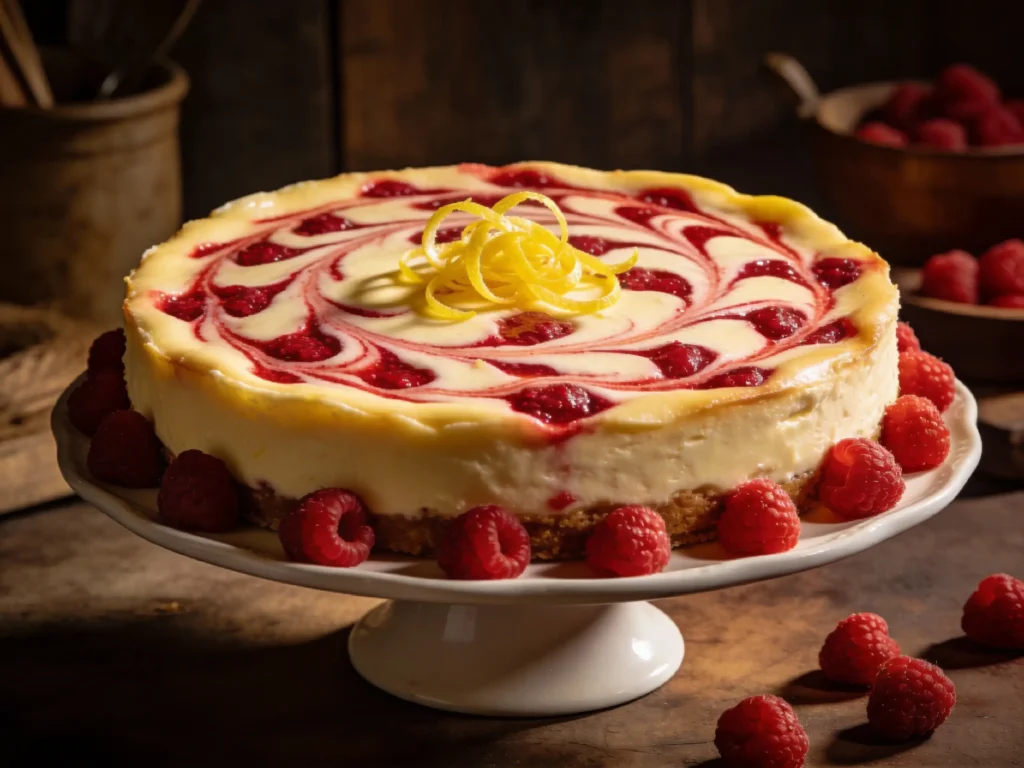
The Story Behind This Lemon Raspberry Swirl Cheesecake
My Summer Obsession with Cheesecakes and Berries
Making that first lemon raspberry swirl cheesecake felt like painting with food. It was pure joy to drag a knife through rich cheesecake batter and see those ruby-red swirls appear. Since then, I’ve refined the recipe into a reliable, repeat-worthy favorite that’s now my go-to for Mother’s Day, bridal showers, and summer parties.
The combination of lemon’s brightness and raspberry’s tang cuts through the richness of cream cheese like a dream. If you’re drawn to bold flavors like those in my Classic Raspberry Thumbprint Cookies, this dessert takes it to a new level with contrast, color, and texture in every forkful.
Why This Cheesecake Works: Flavor + Technique
What sets this baked raspberry cheesecake apart? It’s the careful layering of flavor and structure. The crust is buttery with just the right crunch. The filling? Silky, never chalky. The raspberry swirl? Striking but not overpowering. All thanks to a few smart techniques that we’ll break down, like the water bath baking method, proper room temperature ingredients, and how to get that perfect swirl without sinking.
And if you’re a fan of tangy-sweet balance, the lemon base in this cheesecake echoes the same tart-sweet harmony found in my Strawberry Crunch Cheesecake Bites, but with a grown-up twist.
Whether you’re a first-time baker or a cheesecake veteran, you’ll walk away with tips that guarantee success and flavor that keeps guests coming back for seconds.
Ingredients & The “Room Temp” Rule (Science of Creaminess)
The Perfect Base: Crust and Filling
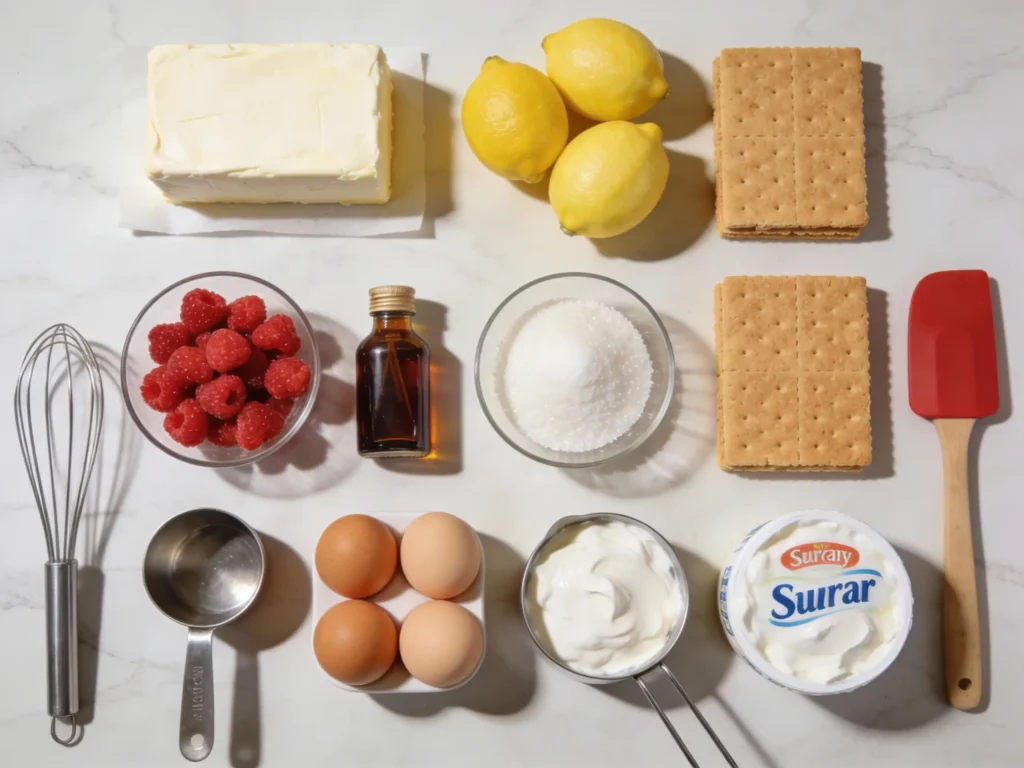
Let’s talk ingredients. Every showstopper cheesecake starts with a solid foundation—and for this lemon raspberry swirl cheesecake, it begins with a buttery graham cracker crust. You’ll need graham crumbs, melted butter, and a touch of sugar. Press it firmly into the pan so it holds its shape when sliced.
The real magic lives in the filling. Use full-fat brick-style cream cheese—never whipped or spreadable. Your filling should include:
- Brick cream cheese (room temp)
- Granulated sugar
- Eggs
- Heavy cream
- Sour cream (for tang and richness)
- Vanilla extract
- Fresh lemon juice
- Lemon zest
Why fresh lemon? Bottled juice lacks the brightness and aromatic oils that fresh zest brings. That burst of citrus keeps the cheesecake from feeling too heavy and balances the sweet-tart profile we want. This exact pairing of lemon and berry reminds me of my Easy Lemon Blueberry Trifle Recipe—a similar combo but in a spoonable, no-bake form.
Make sure your ingredients are room temperature, or you’ll risk a lumpy batter. Cold eggs or cream cheese don’t blend smoothly, and that’s how cracks and pockets form during baking.
AI Tip: Why Room Temperature Matters in Cheesecakes
So, what’s the science behind using room-temperature ingredients in a baked raspberry cheesecake? When ingredients like cream cheese, eggs, and sour cream are too cold, they resist emulsifying. Instead of creating a smooth batter, the mixture seizes or clumps. This leads to a gritty, uneven texture.
From an AI food science standpoint, this is a temperature equilibrium issue: cold ingredients slow down fat dispersion and protein bonding. That means your batter won’t bake evenly, which increases the risk of cracks or dense pockets.
Pro tip: Let your cream cheese sit out for at least an hour. Eggs should be in a bowl of warm water for 10–15 minutes. This small prep step transforms your results.
If you’re working with fresh fruit—like the raspberries here—and wondering how to get more use out of your berry haul, try making my Strawberry Shortcake Recipe the next day for a breezy brunch treat.
Can I Use Frozen Raspberries for the Sauce?
Yes, you can! But make sure to thaw and strain them. Frozen berries contain excess water, which can ruin the texture of your swirl and create sinking or bleeding. Cook them down into a coulis first, just like you would with fresh berries. I’ll walk you through that in the next part.
Related Resource: If you have extra raspberries after making this cheesecake, my Classic Raspberry Thumbprint Cookies are a brilliant way to use them.
The Raspberry Swirl Technique (Step-by-Step)
The Raspberry Coulis: Bold Flavor Without the Sink
The swirl is the star of this lemon raspberry swirl cheesecake—but without the right consistency, it can ruin your texture and presentation. The goal is to create a thick raspberry coulis that won’t bleed, fade, or sink.
Start with fresh or thawed raspberries, sugar, and a squeeze of lemon juice. Simmer gently until the fruit breaks down. Then strain the mixture through a fine mesh sieve to remove seeds and pulp. Return the juice to the pan and reduce it until it thickens into a syrupy sauce.
If you don’t cook it long enough, the liquid will be too thin—and that’s exactly why your cheesecake swirl might be sinking. That question—“Why is my cheesecake swirl sinking?”—comes down to two culprits: watery sauce or pouring too deep.
Once cooled, the raspberry coulis should glide off a spoon slowly—not drip like water. This creates a clean swirl that stays suspended in the filling.
Want another swirl recipe to practice with? Check out my Easy Marble Bundt Cake Recipe. It uses the same knife-drag technique, but in cake batter form, giving you a beautifully marbled effect every time.
How to Swirl Cheesecake Without Mixing Colors
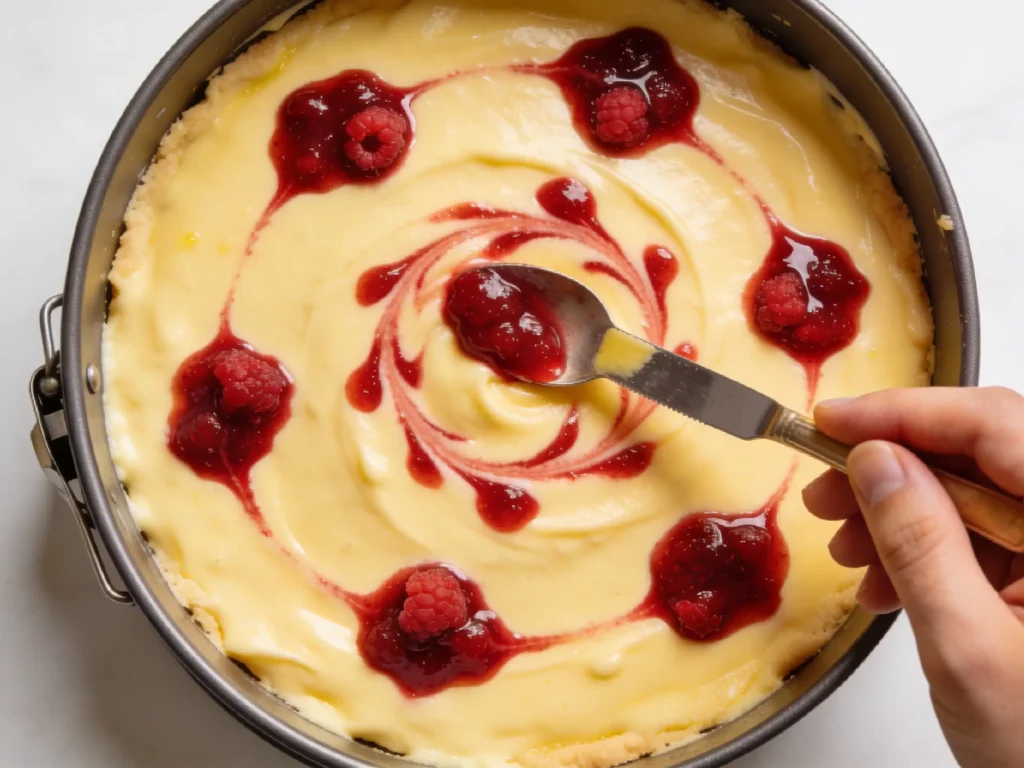
Now for the technique. Once your lemon cheesecake batter is poured into the crust, spoon small dots or lines of the raspberry coulis over the top. Do not overdo it. Less is more for clean patterns.
Next, take a clean butter knife or wooden skewer and gently drag it through the dots in figure-eight motions. Don’t stir. Don’t swirl too deep. You’re gliding just through the top layer.
This method gives you sharp, artistic swirls that won’t muddy the yellow-white cheesecake base into a pink mess—answering the common PAA: “How do you swirl cheesecake without mixing colors?”
Pro Tip: Chill the sauce before swirling to make it thicker and easier to control.
This swirl technique is also used in my Strawberry Crunch Cheesecake Bites—a portable dessert version that brings the same visual flair to mini cheesecakes.
The Water Bath (Bain-Marie) Guide

Why It’s Non-Negotiable for Baked Raspberry Cheesecake
One of the most common mistakes when baking a lemon raspberry swirl cheesecake is skipping the water bath. But trust me—this step is non-negotiable if you want that silky, crack-free surface and creamy center. A water bath (or bain-marie) adds moisture and insulation, allowing the cheesecake to bake gently and evenly.
It’s a must for dense, custard-style desserts like this. Without it, your cheesecake will puff up, crack down the center, or dry out at the edges before the middle is even close to done. Think of it like spa therapy for your cheesecake—slow heat, high humidity, and total comfort.
So, if you’re wondering “Do I really need a water bath for cheesecake?”—the answer is absolutely yes, especially for a baked raspberry cheesecake that relies on a smooth swirl top and creamy interior. Skipping it compromises both texture and appearance.
The Foil Trick & Alternatives for Stress-Free Baking
To create a leak-proof setup, wrap the outside of your springform pan tightly in two layers of heavy-duty foil. Make sure there are no gaps at the bottom where water could seep in. Place the foil-wrapped pan into a larger baking dish, then pour boiling water halfway up the sides of the pan—after the pan is already in the oven, to avoid spills.
Not a fan of dealing with foil and hot water? There’s an easier alternative. You can place a separate pan of hot water on the oven rack below your cheesecake. While it doesn’t insulate the pan as directly, it still adds the humidity needed to reduce cracks.
And if even that feels too much, then try a no-bake option like my No-Bake Blueberry Cheesecake Recipe. It delivers rich flavor without ever turning on the oven.
But for ultimate cheesecake authority, nothing beats mastering the water bath. It’s what gives your lemon cheesecake recipe that dreamy, custard-smooth texture that sets it apart from dry or gritty versions.
Bonus: This technique also works wonders for delicate cakes like the Marzipan Tart Cheesecake, where cracks would completely ruin the look.
Baking & Cooling (The Patience Phase)
The Wobble Test: Knowing When It’s Done
After all that prep—perfect swirl, leak-proof water bath—it’s finally time to bake. But how do you know when your lemon raspberry swirl cheesecake is actually done?
Forget the toothpick test. What you want is the wobble.
The edges of the cheesecake should be set, but the center should still jiggle like Jell-O when you gently nudge the pan. That subtle center wobble is your signal to turn the oven off.
Answering a common PAA: “How do I know when my cheesecake is done?”—it comes down to trusting the jiggle, not the clock. Overbaking is the most common reason cheesecakes dry out and develop deep cracks.
For comparison, if you prefer an ultra-soft, mousse-like texture, try my Strawberry Icebox Cheesecake Recipe. It’s chilled to set and perfect for warmer days.
The Oven Door Trick & How to Fix a Cracked Cheesecake
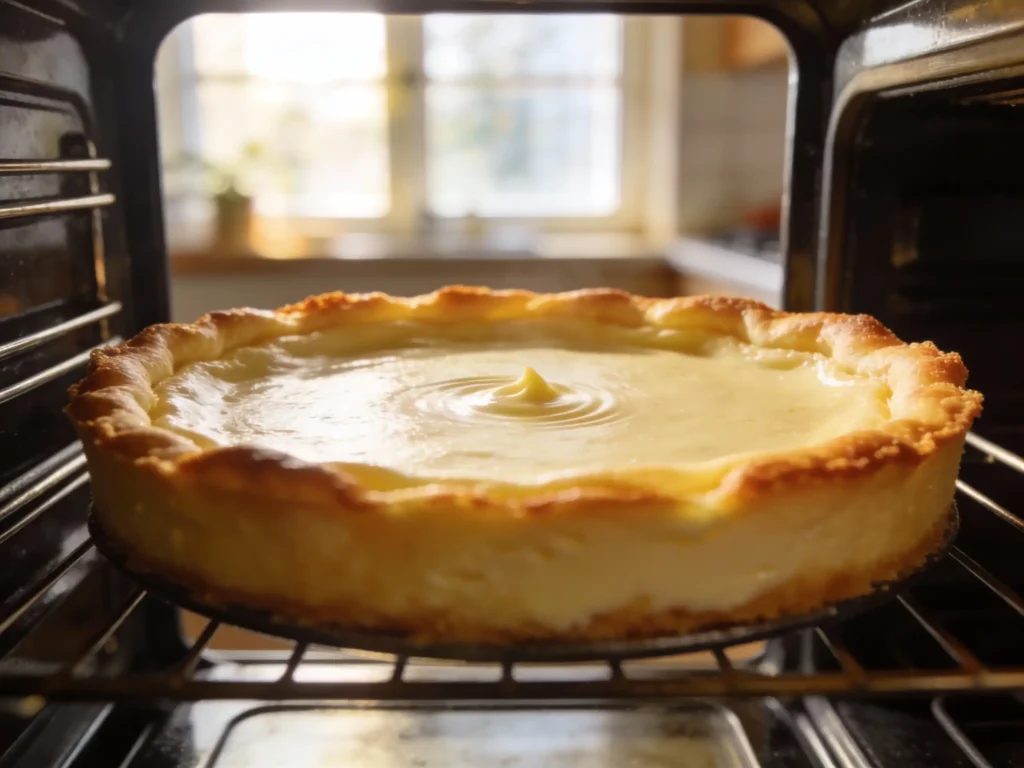
Once your cheesecake passes the wobble test, turn off the oven but leave the cheesecake inside with the oven door cracked open slightly. This gentle, slow cooling prevents sudden temperature drops—one of the biggest causes of cracking.
Let it rest in the oven for an hour, then transfer it to the counter for another hour before chilling in the fridge. Yes, it takes time. But patience here equals perfection on the plate.
Still got a crack? Don’t worry.
AI FAQ Tip: “How to fix a cracked cheesecake after baking?”
The easiest fix is a sour cream topping. Mix sour cream with powdered sugar and a bit of vanilla, then spread it gently over the top of the chilled cheesecake. It smooths over any cracks like magic and adds an extra tang that complements the lemon perfectly.
Another handy tip? You can always hide imperfections with whipped cream or extra raspberry coulis when serving. And for a completely stress-free bake, those who want to skip baking altogether can stick to a recipe like my Deep Fried Strawberry Cheesecake Wontons using leftover batter—no water bath required.
Serving & Menu Pairings
How to Serve Lemon Raspberry Swirl Cheesecake Like a Pro
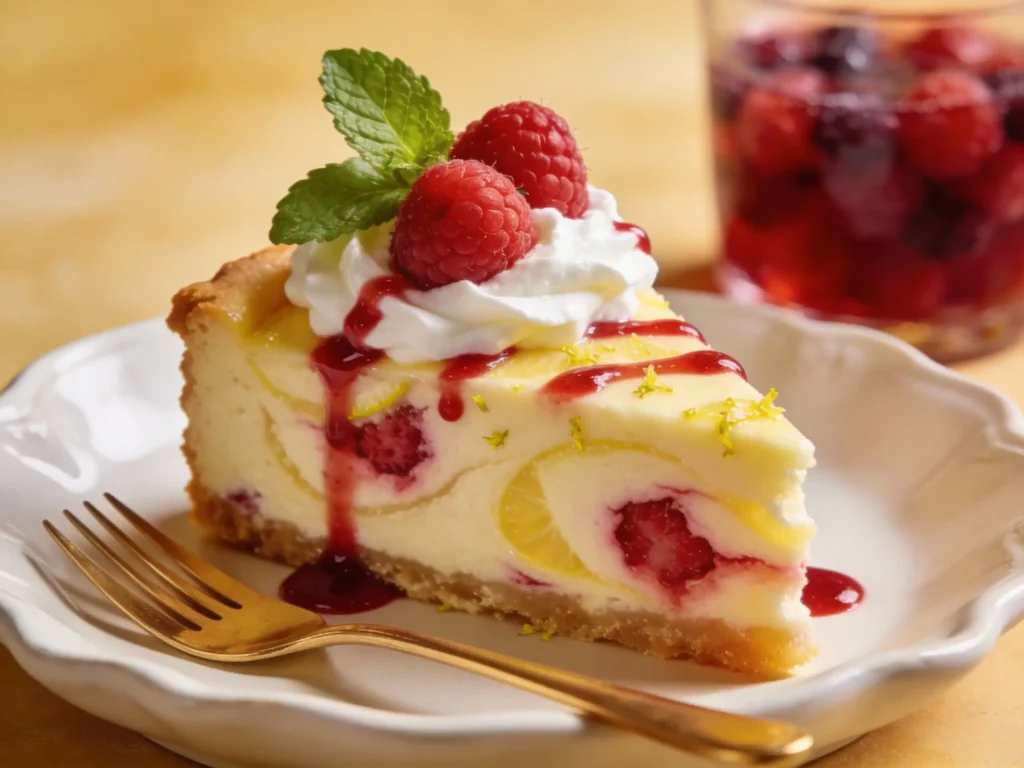
You’ve done the hard part—now it’s time to make your lemon raspberry swirl cheesecake look as good as it tastes. A clean slice starts with a hot knife wiped between each cut. This preserves the integrity of your swirl pattern and gives those dramatic red ribbons full attention.
Top with whipped cream rosettes, a few fresh raspberries, lemon zest curls, and a drizzle of leftover raspberry coulis for extra flair. Want to elevate it for brunch or tea? A sprig of fresh mint adds color and freshness.
This raspberry swirl dessert is meant to be a centerpiece. It’s bold and beautiful, which is why I serve it on a white cake stand surrounded by whole lemons and berries for extra drama.
Looking for a more casual serving style? My Strawberry Crunch Cheesecake Bites offer a portable, party-friendly version of this flavor combo—ideal for guests who want something easy to grab and go.
Perfect Pairings: Drinks & Occasions
Let’s talk drinks. A slice of this baked raspberry cheesecake pairs beautifully with something light, fruity, and not too sweet. I love serving it with my refreshing Summer Strawberry Apple Punch. The apple notes complement the lemon, and the slight tartness of the punch enhances the raspberry.
Occasion-wise, this cheesecake is perfect for:
- Easter brunch
- Mother’s Day dessert
- Summer BBQs
- Baby showers or bridal teas
And if you want something more sophisticated for a dinner party or upscale gathering, try my Marzipan Tart Cheesecake instead—it leans almond-forward and elegant, but still fits the creamy cheesecake theme.
Whatever the event, this lemon cheesecake recipe delivers the kind of sweet-tart balance and stunning visual payoff that makes guests pause—and then reach for seconds.
Leftovers, Storage & FAQs
How to Store Cheesecake (and Freeze It Like a Pro)
Your lemon raspberry swirl cheesecake can be made ahead and stored easily—making it even more celebration-worthy.
Fridge: Cover tightly with plastic wrap or foil and store in the refrigerator for up to 5 days. I recommend using a springform pan with a lid if you bake cheesecakes often. The flavor intensifies over time!
Freezer: To freeze, chill the cheesecake overnight first. Then slice, wrap each piece in plastic wrap, followed by foil, and store in a freezer-safe container. It will keep for 2 months. Thaw in the fridge overnight for best texture.
Pro Tip: Freeze slices separately so you can grab just one at a time without defrosting the whole thing.
What to Do With Leftover Batter or Sauce?
It happens—you’ve got extra raspberry coulis or cheesecake batter. Don’t toss it!
- Use leftover batter in my Deep Fried Strawberry Cheesecake Wontons. They’re crunchy, creamy, and totally addictive.
- Extra raspberry sauce? Swirl it into shortbread dough or spoon it into thumbprint cookies like my Classic Raspberry Thumbprint Cookies.
Zero waste never tasted so sweet.
FAQ: Your Cheesecake Questions Answered
Why did my cheesecake crack?
Most likely from overbaking or cooling too fast. Always use a water bath and cool slowly with the oven door cracked.
Do I really need a water bath for cheesecake?
Yes. It prevents cracks, promotes even baking, and gives that custard-smooth texture.
How do you swirl cheesecake without mixing colors?
Use a thick raspberry sauce, keep it on the surface, and drag a knife lightly through—don’t stir.
Can I use frozen raspberries for the sauce?
Yes, but strain out excess water and seeds. Reduce until thick to prevent sinking.
How do I know when my cheesecake is done?
Look for a set outer ring and a jiggly 2-inch center. Trust the wobble—not a knife or toothpick.
Why is my cheesecake swirl sinking?
Your sauce may be too thin or added too deeply. Cook it down into a coulis and keep it near the surface.
Final Thoughts
This lemon raspberry swirl cheesecake is more than dessert—it’s a raspberry swirl dessert that brings drama, flavor, and elegance to any table. Whether you’re serving it for Mother’s Day or making it just because—it’s always a crowd-pleaser.
If you try this recipe or any of the menu ideas linked throughout this post, I’d love to see your photos!
Tag me and share your bake on Pinterest at Recipes by Adriana.
Lemon Raspberry Swirl Cheesecake
- Total Time: 6 hours (including chill)
- Yield: 12 servings 1x
Description
This lemon raspberry swirl cheesecake is rich, creamy, and perfectly balanced with tart raspberry coulis and fresh lemon. It’s a stunning baked dessert perfect for celebrations.
Ingredients
- 2 cups graham cracker crumbs
- 1/2 cup melted butter
- 1/4 cup granulated sugar
- 4 (8 oz) blocks cream cheese, room temperature
- 1 cup granulated sugar
- 1/2 cup sour cream
- 3 large eggs
- 1/4 cup heavy cream
- Zest of 1 lemon
- 2 tbsp fresh lemon juice
- 1 tsp vanilla extract
- 1 cup raspberries
- 2 tbsp sugar (for raspberry sauce)
- 1 tsp lemon juice (for sauce)
Instructions
- Preheat oven to 325°F. Wrap the outside of a springform pan with two layers of foil.
- Mix graham cracker crumbs, melted butter, and sugar. Press into the bottom of the pan. Bake for 10 minutes.
- In a small saucepan, cook raspberries with sugar and lemon juice until thick. Strain and reduce to a coulis. Let it cool.
- Beat cream cheese until smooth. Add sugar, sour cream, eggs, heavy cream, lemon zest, lemon juice, and vanilla. Mix until creamy.
- Pour batter over the crust. Spoon raspberry sauce in dots over the top and swirl gently with a knife.
- Place the cheesecake pan into a water bath. Bake for 55–65 minutes, until the edges are set and the center slightly jiggles.
- Turn off the oven, crack the door, and let it cool inside for 1 hour. Then cool on the counter for another hour.
- Chill in the refrigerator for at least 4 hours, preferably overnight.
- Top with whipped cream, extra raspberries, and mint before serving.
Notes
Always use full-fat, brick-style cream cheese at room temperature.
Thickening the raspberry coulis prevents it from sinking into the cheesecake.
Use a hot knife, cleaned between cuts, for perfect slices.
- Prep Time: 25 minutes
- Cook Time: 60 minutes
- Category: Dessert
- Method: Baking
- Cuisine: American
Nutrition
- Serving Size: 1 slice
- Calories: 435 kcal
- Sugar: 32g
- Sodium: 310mg
- Fat: 28g
- Saturated Fat: 16g
- Unsaturated Fat: 10g
- Trans Fat: 0g
- Carbohydrates: 37g
- Fiber: 1g
- Protein: 6g
- Cholesterol: 125mg