Chicken Broth Recipe: How to Make Easy Homemade Chicken Broth That’s Full of Flavor
There’s something timeless and soul-soothing about a pot of chicken broth simmering on the stove. Whether you’re making it to cure a cold, stretch a roasted chicken, or infuse flavor into weeknight meals, having a go-to chicken broth recipe in your back pocket is a true game-changer in the kitchen.
In my home, this golden liquid isn’t just a cooking ingredient — it’s a base for comfort, creativity, and nourishment. And once you try easy homemade chicken broth, you’ll wonder why you ever settled for store-bought.
The flavor, depth, and versatility of homemade broth are unmatched — especially when you use it in soup. If you haven’t tried my Lemon Chicken Orzo Soup yet, that’s where your broth should go next. Trust me: this is where your cooking gets elevated.
Let’s dive into why this recipe is such a staple in my kitchen and how to make your own batch of liquid gold from simple, wholesome ingredients.
Table of Contents
Table of Contents
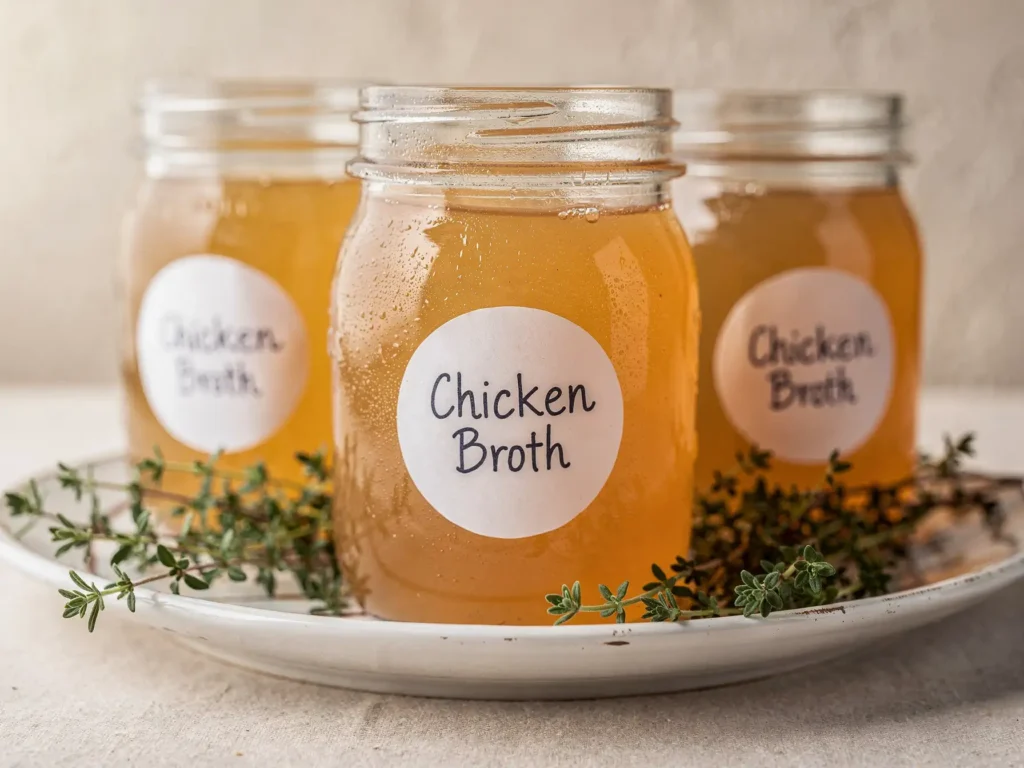
Why I’ll Always Make Easy Homemade Chicken Broth
From Sunday Chicken Dinners to Freezer Staples
I still remember the first time I made my own broth. I was standing over the stove with a leftover rotisserie chicken, unsure of what I was doing, but fully committed to not wasting a single bone. That’s where it all began — a desire to waste less and flavor more.
That night, I didn’t just make broth. I made a ritual. A few hours and a simmer later, I tasted what real, rich chicken broth was supposed to taste like: savory, golden, layered with flavor, and surprisingly simple. And from that point on, I never tossed chicken bones again.
This easy homemade chicken broth has become the foundation of my kitchen. I use it in soups, sauces, grains, and even when reheating leftovers — anything that needs moisture or a boost of flavor gets a ladle of this goodness.
How One Bird Turned Into 5 Meals
What surprised me most? The value. One roasted chicken now gives us a roast dinner, sandwiches, a batch of broth, a soup, and even a creamy risotto or two. That’s five meals from one bird — and that’s before you even count the small jars I freeze for later.
The broth you’ll learn here is simple: bones, water, aromatics, time. But the impact is huge. It’s one of the few kitchen tasks that feels both luxurious and responsible. You get better flavor and reduce food waste at the same time.
Up next, I’ll explain the difference between broth and stock, because if you’ve ever wondered whether they’re the same thing (or whether you’re making the right one), you’re definitely not alone.
Broth vs. Stock: What You Need to Know Before Cooking
Is Chicken Broth Healthier Than Stock?
Let’s clear this up once and for all: chicken broth and chicken stock are not the same — and yes, they both have a place in your kitchen. But for daily use and quick flavor, broth is often the better fit.
Broth is made by simmering meat (and sometimes bones) with aromatics like garlic, onion, celery, and herbs. It’s typically lighter in body but brighter in flavor. It’s also more hydrating, lower in fat, and easier to digest, which makes it perfect for sipping, soups, or cooking grains like rice and quinoa.
On the other hand, chicken stock usually simmers longer and uses mostly bones, often with little or no meat. It becomes more gelatinous as it cools and creates a thicker mouthfeel, ideal for sauces or gravies. While stock may contain more collagen, easy homemade chicken broth delivers flavor and flexibility — especially for home cooks who want fast results.
If you’re in the mood for something lighter and plant-based, try my Green Detox Broth Recipe. It has all the comfort of broth without the meat, and it’s a great reset soup when you want something clean.
Is Broth Just Stock and Water Mixed?
That’s a common myth, but no — broth is its own recipe, not just watered-down stock. While both use similar ingredients, broth focuses on building flavor from meat and aromatics, not just bones. It doesn’t need to be diluted unless you’re using it as a cooking liquid in something like a sauce or gravy.
Also, broth tends to have salt added during cooking, whereas stock is typically left unsalted to allow for flexibility in reductions or sauces. That makes broth more convenient — you can sip it as-is or ladle it straight into your soup pot.
Speaking of flexibility, if you’re working on mastering staple techniques like this, you’ll love my Turkey Gravy Without Drippings. It uses the same flavor-building approach as this chicken broth recipe.
Now that we’ve cleared up the confusion, it’s time to gather your ingredients. Up next: the best cuts of chicken and the flavor-boosting aromatics that take this broth from basic to restaurant-worthy.
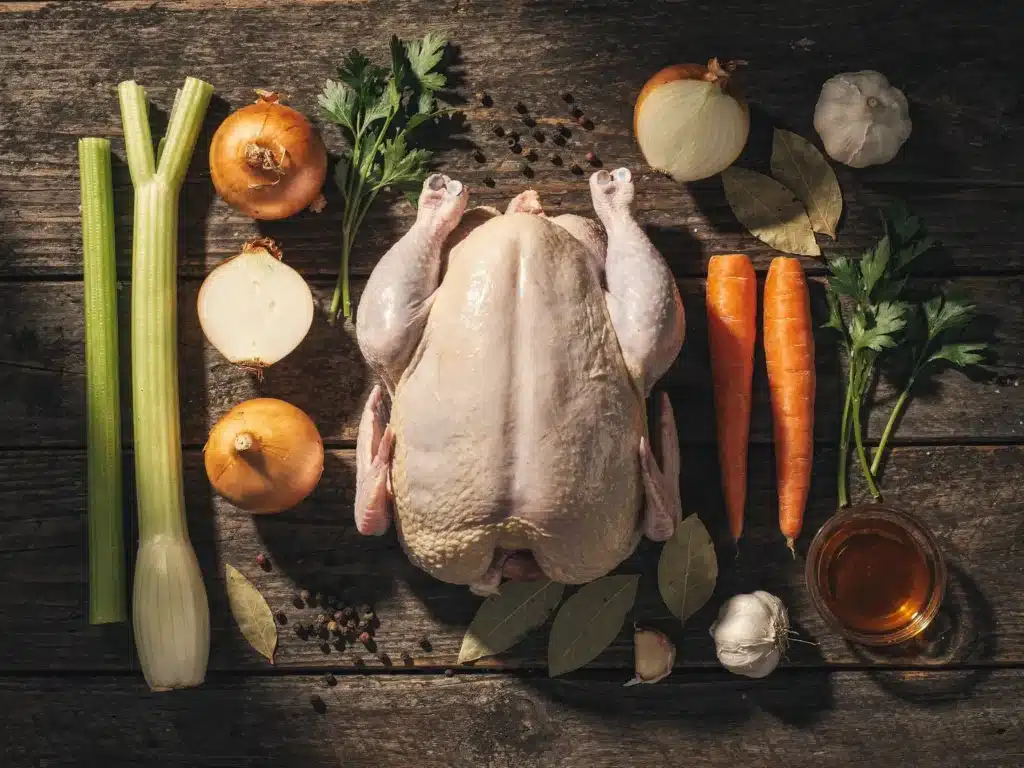
What You Need to Make Chicken Broth
The Best Chicken Cuts to Use for Broth
If you’ve ever asked yourself what kind of chicken makes the best broth, here’s the answer: it depends on what you have — but some cuts give more flavor than others.
For a rich and balanced chicken broth recipe, you want a mix of meat and bone. That’s why I love using leftover roasted chickens, especially the carcass. The combination of roasted bones, bits of meat, skin, and cartilage gives your broth incredible depth.
You can also use:
- Raw chicken wings, backs, or necks (for gelatin and body)
- Bone-in thighs or drumsticks (great flavor)
- A whole chicken (if you want broth and poached meat for soup later)
If you’re prepping chicken for a dinner like my Hawaiian Huli Huli Chicken Stack or something like Mushroom Stuffed Chicken Breast, save those raw scraps, bones, and skins in a freezer bag. One or two meals later, you’ve got enough to make a pot of broth.
And don’t worry if the meat’s been seasoned or glazed — a quick rinse in water will tone down any strong flavors. Your broth will still shine.
Aromatics & Herbs That Bring It to Life
Now for the secret to flavor: aromatics. These ingredients build that savory, layered taste that separates bland broth from one you want to sip straight from the ladle.
Here’s what I always toss into the pot:
- Onion (halved, skin on if organic)
- Carrots (rough chopped)
- Celery (with leaves)
- Garlic cloves (crushed)
- Fresh thyme or parsley stems
- Bay leaves
- Whole black peppercorns
- A splash of apple cider vinegar (helps extract minerals from the bones)
No need to peel or finely chop — just rinse, rough cut, and toss it all in. You’re not eating the veggies; you’re steeping their essence into your easy homemade chicken broth.
If you want a deeper flavor, roast the bones and vegetables before simmering. That caramelization adds color and umami, especially useful for dishes like my Pinto Bean Chili where broth flavor carries the whole pot.
Next, I’ll show you exactly how to make chicken broth, step by step — whether you’re using the stove or the Instant Pot.
How to Make Chicken Broth Step-by-Step (Stovetop & Instant Pot)
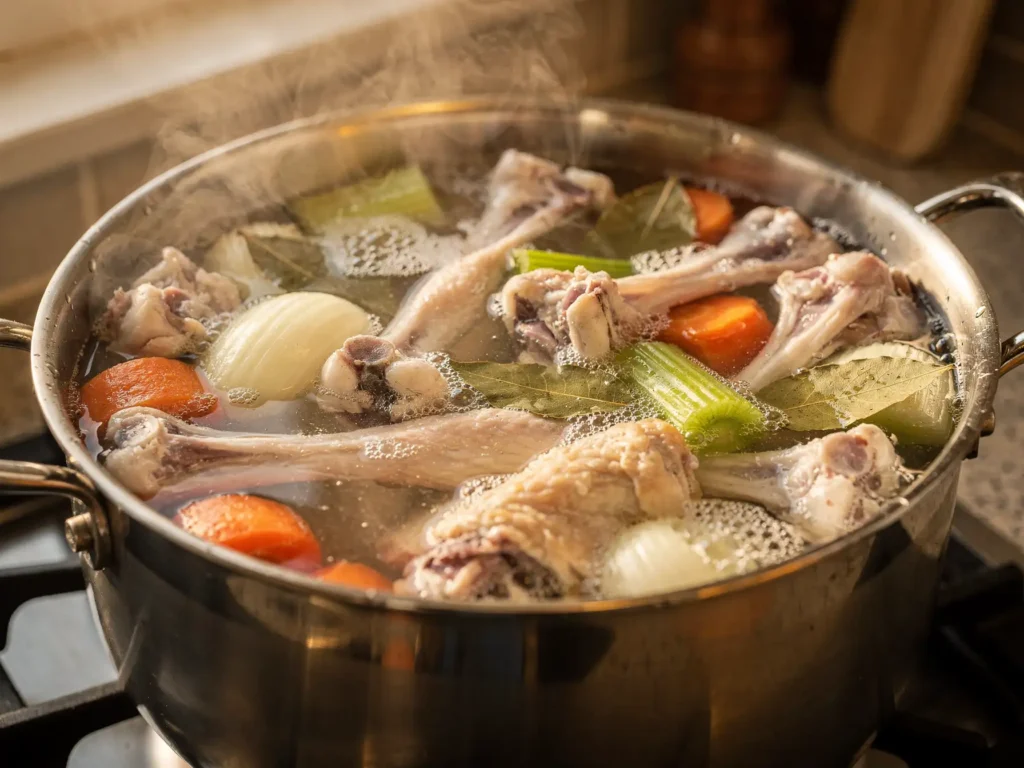
The Stove Method: My Foolproof Technique
You don’t need to be a professional chef to master this chicken broth recipe. You just need a large pot, basic ingredients, and a few hours of gentle simmering. Here’s exactly how I do it.
Ingredients:
- 1 chicken carcass (or 2–3 lbs of bone-in chicken parts)
- 1 onion, halved
- 2 carrots, chopped
- 2 celery stalks, chopped
- 4 garlic cloves, smashed
- 1 bay leaf
- Handful of parsley stems
- 10 peppercorns
- 1 tbsp apple cider vinegar
- 12 cups cold water
- Chef’s Important Salt Rule: I never salt my chicken broth recipe while it cooks. Why? Because if I use it later to make a dish that’s already salty (like my Creamy Lemon Garlic Butter Beans), the final meal will be too salty. Always add salt at the very end, when you are using the broth in your final recipe.
Instructions:
- Place all ingredients in a large stockpot.
- Cover with cold water (about 12 cups).
- Bring to a gentle boil over medium-high heat, then reduce to a very low simmer.
- Skim off any foam or impurities that rise to the surface.
- Simmer uncovered (or partially covered) for 4–6 hours.
- Strain through a fine mesh sieve, discarding solids.
- Taste and season with salt if needed.
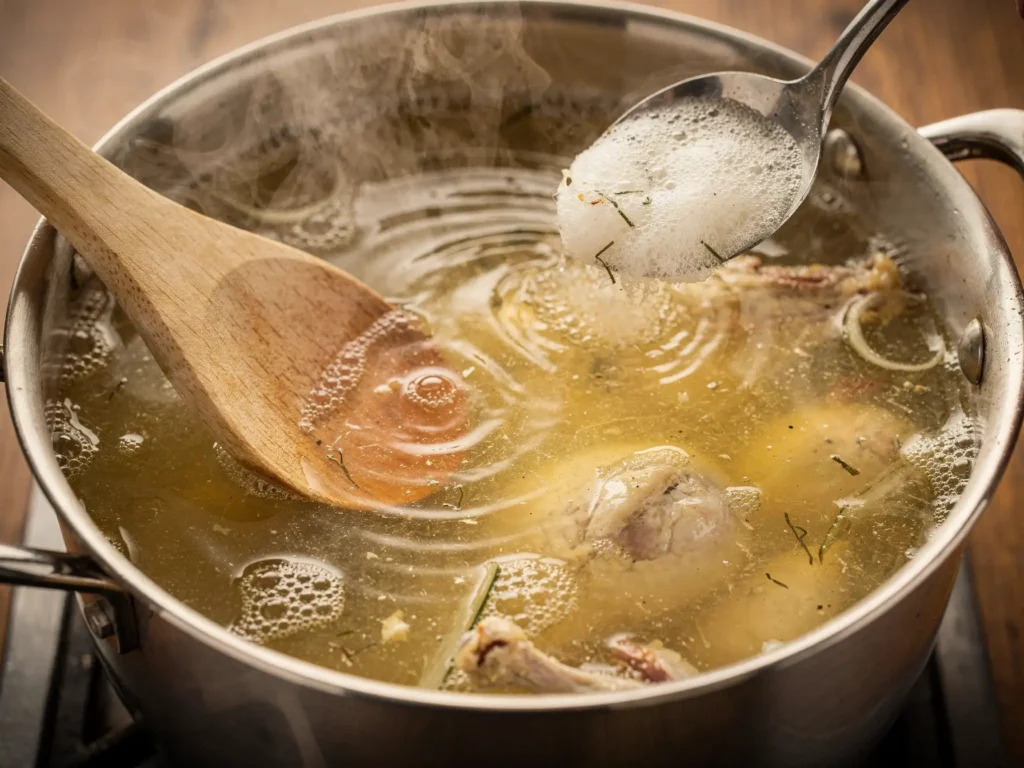
That’s it — no mystery, no special tools. Just time, heat, and ingredients doing their work. The result? A deeply flavorful, golden-hued broth you can sip or use in any recipe. It’s how easy homemade chicken broth becomes a kitchen power move.
Need to multitask or you’re short on time? Let’s talk pressure cooking.
Instant Pot Chicken Broth in Under an Hour
If you want the same flavor in a fraction of the time, the Instant Pot is your best friend. It locks in all the goodness under pressure and gets the job done fast — no babysitting required.
Instructions:
- Add the same ingredients to your Instant Pot.
- Fill with water to just below the Max Fill line.
- Close the lid and set to Manual/Pressure Cook on High for 45 minutes.
- Let the pressure release naturally (at least 20 minutes).
- Strain and store as usual.
Because pressure cookers extract more flavor in less time, you’ll still get a robust broth. It might be slightly cloudier — but the taste? Just as rich. Use this version for any of your soups, especially when you’re short on time.
And if you love learning pantry basics like this, check out my guide on How to Make Oat Flour at Home — another easy skill that transforms your cooking.
Next, I’ll show you how to store and freeze your chicken broth like a pro (no more mystery bags in the back of the freezer).
Smart Ways to Store and Freeze Homemade Chicken Broth
Fridge vs. Freezer: Timing & Containers
Once you’ve made a beautiful batch of easy homemade chicken broth, the next step is knowing how to store it so you can use every drop. Done right, you’ll always have liquid gold ready for soups, sauces, and quick dinners.
Here’s how I do it:
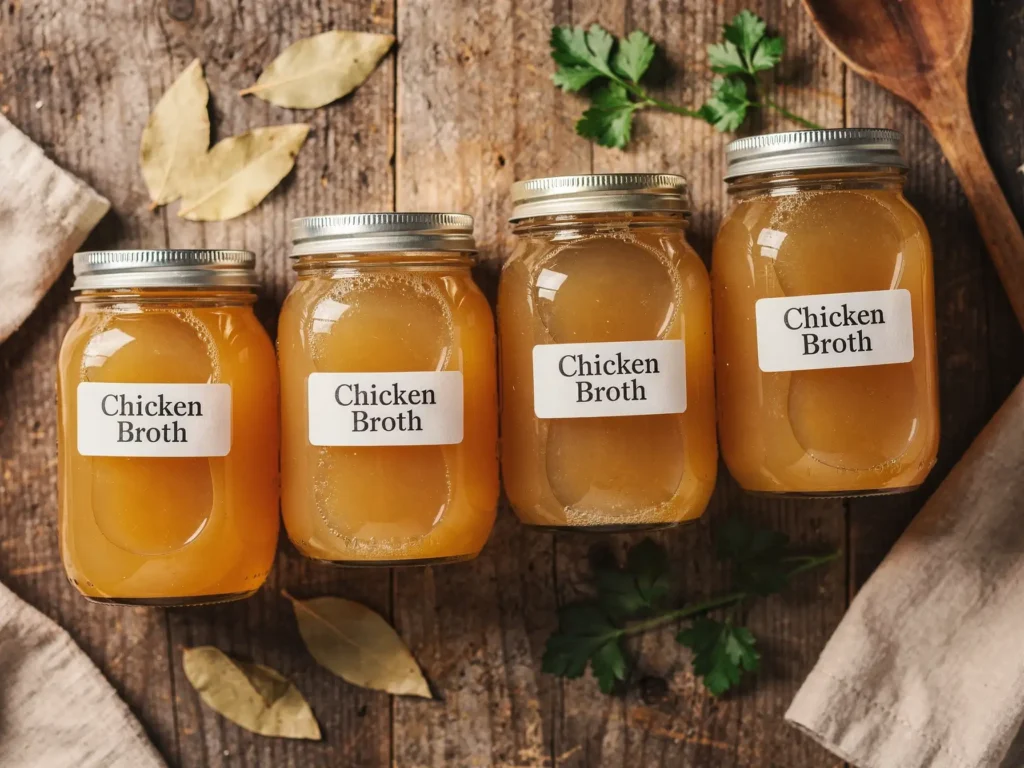
- Refrigerator: Store broth in glass jars or airtight containers. It keeps for 4–5 days max. Let it cool completely before sealing, and always label with the date.
- Freezer: For long-term storage, divide your cooled chicken broth into small portions:
- Use silicone trays or ice cube molds to freeze broth in small amounts. Perfect for deglazing pans or adding to grains.
- Store larger batches (1–2 cups) in freezer-safe jars or resealable flat bags. Lay them flat to save space.
Pro tip: Always leave at least 1 inch of headspace in jars to prevent cracking when the broth expands during freezing.
And don’t forget to label each jar or bag with the date and portion size. You’ll thank yourself later.
Leftover Broth Hacks You’ll Wish You Knew Sooner
Small amounts of broth can do big things in the kitchen — especially when you’re working with recipes that need just a splash of liquid to come alive.
Try these simple ideas:
- Use a few tablespoons of broth when sautéing garlic or onions — it adds flavor without extra oil.
- Add a frozen broth cube to cooked rice or quinoa as it finishes steaming.
- Thin out sauces or mashed potatoes with broth instead of milk for a savory twist.
Some of my favorite broth-enhanced dishes include Creamy Lemon Garlic Butter Beans and Fresh Green Bean Casserole Without Mushroom Soup. Even a few spoonfuls of broth can take these from good to unforgettable.
And for deglazing? A frozen cube of broth in the skillet with ground meat works wonders — just like I do in Mongolian Ground Beef Noodles.
Now that your freezer’s stocked and your options are endless, let’s explore what recipes truly deserve your homemade chicken broth.
The Best Recipes to Use Your Homemade Broth
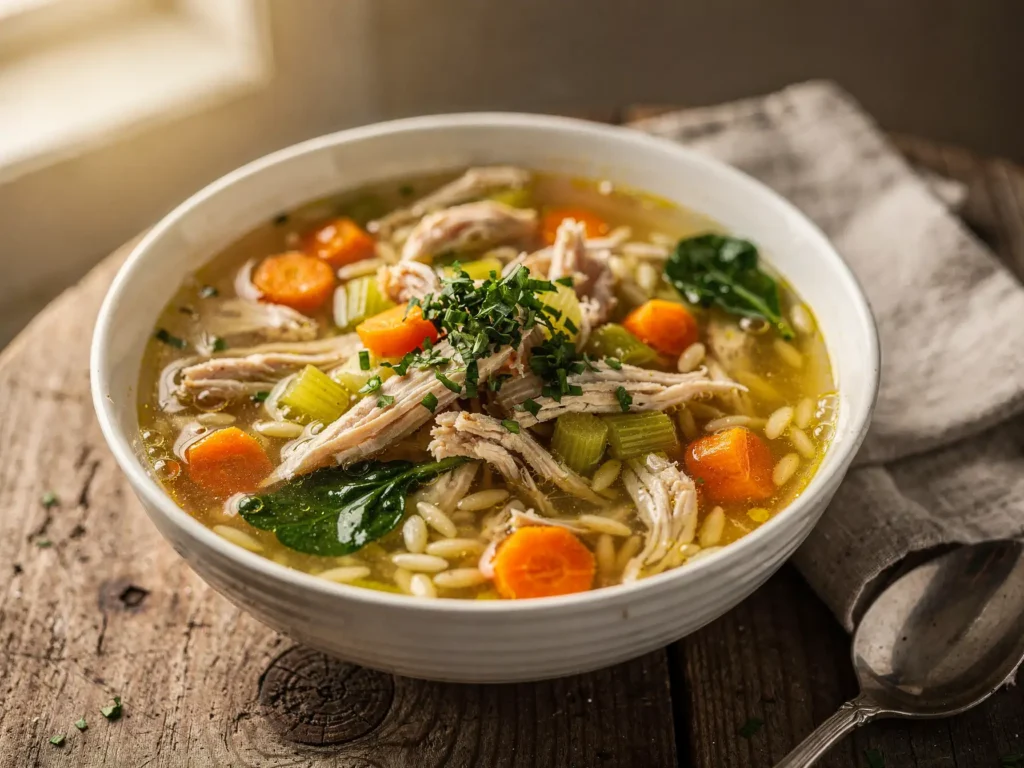
Soups That Deserve This Liquid Gold
You’ve followed the steps, simmered with care, and now your house smells like comfort. But what do you make with all that flavorful chicken broth?
The answer is simple: start with soups that let your homemade base shine.
One of the best ways to showcase it is in my Easy Wonton Soup. That soup relies on a clear, savory broth to carry the entire dish. Using homemade broth takes it from “quick and easy” to “better than takeout” in one ladle.
Another absolute go-to? Lemon Chicken Orzo Soup. The citrus and herbs blend beautifully with the richness of your broth, creating a meal that’s bright, cozy, and full of layers.
If you’re after something creamy yet wholesome, Creamy Butternut Squash Soup with Apple benefits tremendously from a homemade broth base. It balances the sweetness of the squash and apple with a subtle savory depth.
For hearty, rustic flavor, there’s my Butternut Squash and Sausage Tortellini Soup — where your chicken broth mingles with rich sausage and soft pasta pillows to create a crave-worthy bowl that’s surprisingly simple.
And if you love set-it-and-forget-it comfort food, my Crockpot Lasagna Soup with Marinara Sauce lets your broth simmer into layers of flavor with ground beef, noodles, and Italian seasoning.
Savory Dishes That Need a Flavor Boost
Homemade broth isn’t just for soups — it’s a secret weapon in everything from casseroles to skillet dinners.
Try adding a splash when reheating grains, sautéing vegetables, or thinning sauces. It adds complexity without overpowering the dish.
My Detox Cabbage Turkey Soup is a fantastic example. It’s light, clean, and healing — and this chicken broth recipe works just as well with leftover turkey bones from your holiday bird.
Speaking of leftovers, my Leftover Turkey Orzo Soup is another smart way to use up both broth and holiday scraps. Swap chicken bones for turkey carcass when making the broth, and enjoy a nourishing, no-waste meal.
Whether you’re cooking soups, reheating rice, blending sauces, or building casseroles, your homemade broth gives everything an edge. It’s clean, honest flavor — the kind you just can’t buy in a box.
Coming up next: my personal chef tips that take even a basic broth to the next level — including the acid trick and how I stretch one chicken into multiple batches.
Chicken Broth Secrets from My Kitchen to Yours
The “Clean Broth” Acid Trick You Should Be Using
Here’s something most recipes won’t tell you: a splash of acid makes broth better.
Adding apple cider vinegar or white wine vinegar at the beginning of your simmering process does two magical things. First, it helps draw minerals like calcium and magnesium from the bones — making your chicken broth recipe more nutritious. Second, it enhances clarity and flavor without overpowering the broth’s natural taste.
I use 1–2 tablespoons per pot. It’s subtle but transformative. You’ll notice your broth comes out brighter, more balanced, and even a little more “restaurant-quality.”
You can also add a squeeze of lemon juice at the end for a final lift — a trick I borrowed from my Bang Bang Chicken recipe, where acidity cuts through richness beautifully.
Why I Always Save Turkey and Chicken Bones
Another pro move? Start keeping a “broth bag” in your freezer.
Anytime you make a dish with chicken — like my Hawaiian Huli Huli Chicken Stack or even crispy roasted drumsticks — toss leftover bones, skin, wing tips, and even parsley stems into a labeled freezer bag.
Once it’s full, you’ve got everything you need to make another batch of easy homemade chicken broth. It’s cost-effective, waste-reducing, and honestly… addicting.
I do the same thing after Thanksgiving or a big roast. If you have turkey leftovers, apply the exact method and you’ll get a rich, savory broth perfect for winter soups like Leftover Turkey Orzo Soup or Detox Cabbage Turkey Soup.
Don’t let those bones go to waste — they’re the secret to flavor-packed meals all year long.
Frequently Asked Questions About Chicken Broth
How to make chicken broth?
Making chicken broth is easy, affordable, and incredibly rewarding. Start by placing bones, meat (like a leftover carcass), vegetables, and aromatics into a pot. Cover with cold water, add a splash of vinegar, and simmer for 4–6 hours. Strain, cool, and store. This chicken broth recipe delivers deep, rich flavor using everyday ingredients. For a quicker version, follow my Instant Pot method above. Once you’ve tasted this easy homemade chicken broth, you’ll never go back to boxed broth again.
Is chicken broth just boiled chicken water?
Not quite! True chicken broth involves more than just boiling chicken. A great chicken broth recipe includes not only chicken but aromatics like onion, garlic, celery, herbs, and a touch of acid to extract deep flavor. The result is a complex, savory liquid that tastes far more sophisticated than simple boiled water. It’s the foundation of dozens of comforting, flavorful dishes.
What is the secret to the best chicken broth?
The real secret to an unforgettable chicken broth recipe is balance. Use a mix of meat and bones, always add aromatics (like garlic, herbs, and celery), and never skip the splash of apple cider vinegar. This acid helps draw out the richness locked inside bones and brings clarity to the broth. A low, slow simmer makes all the difference. That’s why my easy homemade chicken broth tastes clean, bold, and satisfying every time.
Are chicken stock and broth the same?
They’re close, but not identical. Chicken stock is usually made from bones and simmered longer, resulting in a thicker, gelatinous texture. Chicken broth, on the other hand, is often made with meat and bones, yielding a lighter, more versatile liquid. This chicken broth recipe focuses on maximum flavor in less time, making it perfect for sipping, soups, and everyday cooking.
Is chicken broth healthier than stock?
In many cases, yes. While stock has more collagen due to long-simmered bones, chicken broth is lower in fat, lighter, and easier to digest. It hydrates better, works for clean eating goals, and still offers plenty of nutritional benefits. My easy homemade chicken broth also avoids preservatives and unnecessary sodium, making it a smarter, cleaner option than many commercial products.
Is broth just stock and water?
No — chicken broth is its own preparation, not a diluted version of stock. This chicken broth recipe uses intentional layers of flavor from meat, vegetables, herbs, and seasoning. Unlike stock, it’s often salted and ready to enjoy on its own. Whether you’re sipping it or building a soup, broth stands on its own as a flavorful cooking staple.
Chicken Broth Recipe
- Total Time: Up to 6 hours
- Yield: 8–10 cups 1x
Description
This easy homemade chicken broth is rich, flavorful, and loaded with nutrients. Made with chicken bones, fresh herbs, and pantry vegetables like garlic, carrots, and onion, it’s the perfect base for soups, sauces, and more. Learn how to make chicken broth from scratch using simple, clean ingredients.
Ingredients
- 1 whole chicken carcass or 2–3 lbs chicken bones (raw or cooked)
- 1 large onion, halved (skin on if organic)
- 2 carrots, chopped
- 2 celery stalks with leaves
- 4 garlic cloves, smashed
- 1 tbsp apple cider vinegar
- 2 bay leaves
- Handful of parsley stems or thyme
- 10 whole black peppercorns
- 12 cups cold water
Instructions
- Place chicken bones, vegetables, herbs, and aromatics in a large stockpot or Instant Pot.
- Add cold water to cover ingredients completely (about 12 cups).
- Add apple cider vinegar to help extract nutrients from the bones.
- Bring to a boil, then immediately reduce to a very low simmer.
- Skim off any foam that rises to the top using a spoon.
- Simmer gently for 4–6 hours (or use Instant Pot on high pressure for 45 minutes).
- Carefully strain the broth through a fine mesh sieve into jars or containers.
- Let cool before storing in the fridge or freezer. Add salt to taste only if desired.
Notes
Use roasted bones for deeper flavor.
For a clean broth, avoid stirring while simmering.
Freeze in 1-cup portions or ice cube trays for easy use in recipes.
Save scraps from recipes like roasted chicken or stuffed chicken breast for future broth.
Chef’s Note on Salting: I do not add salt during the simmer. This keeps the broth versatile for later use in recipes that might already have salty ingredients (like soy sauce, bacon, or cheese).
Pink Salt Variation: If you plan to sip this broth plain as a restorative drink, feel free to stir in 1/2 teaspoon of high-quality pink Himalayan salt after you have strained it into jars.
- Prep Time: 10 minutes
- Cook Time: 4–6 hours (or 45 min in Instant Pot)
- Category: Basics, Broth
- Method: Simmering or Pressure Cooking
- Cuisine: American, Classic
Nutrition
- Serving Size: 1 cup
- Calories: 35 kcal
- Sugar: 1g
- Sodium: Varies depending on added salt (typically 40–120mg per cup if lightly salted)
- Fat: 2g
- Saturated Fat: 0.5g
- Unsaturated Fat: 1.5g
- Trans Fat: 0g
- Carbohydrates: 2g
- Fiber: 0g
- Protein: 4g
- Cholesterol: 10mg
Your Chicken Broth Recipe for Life
Once you’ve made your first pot of homemade chicken broth, something shifts in your kitchen. You stop reaching for boxes and start reaching for jars. You plan meals around the broth you’ve made — not just because it’s better, but because you made it.
This chicken broth recipe isn’t just about flavor (though the flavor is unmatched). It’s about building habits, using every part of what you cook, and creating a foundation for soups, sauces, grains, and savory dishes that deserve depth.
Try it once with a leftover chicken, and you’ll quickly see why it’s a non-negotiable in my kitchen. Use your easy homemade chicken broth in dishes like my Lemon Chicken Orzo Soup or even to amp up the sauce in my cozy Slow Cooker Salisbury Steak Meatballs — it’s amazing what one ladle can do.
You’re not just making broth. You’re creating the base of something comforting, resourceful, and deeply satisfying. That’s what real cooking is all about.
Ready to compare with another tried-and-true version? Check out this popular chicken broth recipe from AllRecipes — and see how yours stacks up.
Happy cooking!